Solar panel price in 2026 and what really drives the cost
What the current solar panel price means
Solar panel price is not a single market number. In 2026, a buyer may see a very low module-only price, a much higher installed rooftop price, or a different price for a commercial project. All can be correct if the scope is different. The first question is what the price includes. Public data from the U.S. Department of Energy, EnergySage, IEA PVPS, the IRS, and the U.S. Energy Information Administration points to a market where hardware costs remain low, while installation, policy, financing, labor, permitting, and local electricity rates determine the real economics. For readers comparing product categories and market updates, the solar products section provides related background.
The main point is practical: panels are now a smaller share of the total solar decision. A low module price helps, but the installed cost per watt, expected annual production, warranty quality, interconnection rules, and available incentives usually matter more than the panel sticker price alone.

Panel-only price and installed system price are different markets
Many price comparisons become confusing because the same phrase is used for different scopes. A solar module is the framed panel itself. A solar power system includes modules, inverters, racking, wiring, electrical protection, design, permitting, labor, inspection, interconnection, monitoring, margin, and sometimes financing costs. Battery storage is another major add-on, not a minor accessory.
| Price type | What it usually includes | Recent public benchmark | How to interpret it |
|---|---|---|---|
| Global module price | Solar panel hardware only, usually before local logistics, tariffs, installation, and retail margin | IEA PVPS reported very low module prices in 2024, with lowest reported prices below about $0.10 per watt in some markets | Useful for supply chain direction, but not a home installation price |
| U.S. module price | Panel hardware in the U.S. market, affected by trade rules and domestic supply conditions | DOE solar industry updates reported U.S. module pricing around the high-$0.20 per watt range in Q3 2025 | Important for installers and distributors, but still only one part of an installed system |
| U.S. residential quote | Typical rooftop solar quote before incentives and before battery storage unless stated otherwise | EnergySage marketplace data showed median quoted prices around $2.47 to $2.50 per watt during the second half of 2025 | Helpful for comparison shopping, but marketplace quotes may differ from local final contracts |
| DOE residential benchmark | Modeled complete residential rooftop PV system cost | DOE reported a Q1 2024 modeled market price of $3.15 per watt DC for an 8 kW residential PV system, and H1 2025 residential pricing ranges of about $3.2 to $4.2 per watt DC across methods | Better for understanding full system cost structure |
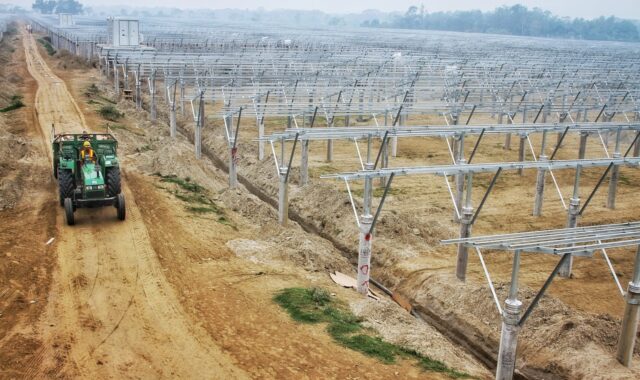
| Utility-scale solar | Large ground-mounted projects with different procurement and labor economics | DOE reported utility-scale pricing near $1.1 per watt DC in H1 2025 | Not comparable with rooftop pricing because scale, design, permitting, and equipment choices differ |
These figures are not quotes from bt1977.com and should not be treated as guaranteed prices. They are public market reference points that help explain why a solar panel can be inexpensive while a complete system still costs thousands of dollars.
Why installed solar costs much more than panels
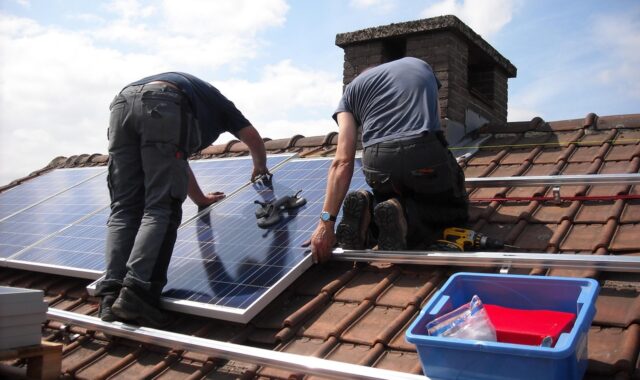
The module is the most visible part of the system, but it is not the whole system. A typical rooftop installation also needs inverters to convert DC electricity into AC electricity, mounting hardware to secure the panels, wiring, disconnects, rapid-shutdown equipment, meters, engineering drawings, permits, inspections, and utility interconnection approval.
Labor and local process can matter as much as hardware. A simple south-facing asphalt-shingle roof may install quickly. A steep roof, tile roof, multiple roof planes, limited attic access, structural repairs, or a main electrical panel upgrade can raise the project cost even when the same modules are used. Local permitting rules can also change the number of site visits and the amount of office work required before the system is energized.
Soft costs explain much of the gap between module price and installed price. These include customer acquisition, design, sales, financing administration, insurance, business overhead, warranty support, and profit margin. In markets with strong installer competition and streamlined permitting, soft costs tend to be lower. In markets with high labor costs, complex utility rules, or limited installer competition, the installed price can be much higher.
What changed for solar economics in 2026
The 2026 market is shaped by two opposing forces. On the supply side, global manufacturing capacity has kept panel hardware prices low by historical standards. IEA PVPS has tied recent module price declines to oversupply after a large wave of manufacturing capacity came online. That helped keep solar equipment affordable, but it also put pressure on manufacturers and created volatility in supply chain margins.
On the policy side, the U.S. residential market changed after the expiration of the federal residential clean energy credit for new expenditures after December 31, 2025. IRS guidance published in 2026 states that the residential clean energy credit is not allowed for expenditures made after that date. This matters because a headline installed price in 2026 is generally a pre-incentive number unless a state, local, utility, or other qualifying incentive applies. Tax situations vary, so buyers should confirm eligibility with a qualified tax professional rather than relying only on a sales proposal.
Financing also affects the effective solar panel price. A cash price and a financed price may describe the same array but produce different total costs. Dealer fees, loan interest, lease escalators, and power purchase agreement terms can shift cost into the payment structure. That is why comparing only monthly payments can be misleading.
Electricity prices complete the picture. The U.S. Energy Information Administration has reported elevated residential electricity prices compared with earlier years and forecast higher average residential prices for 2026. Higher utility rates can improve solar payback, but only if the system produces well, the net metering or export credit rules are favorable, and the upfront price is controlled.
How to compare solar panel prices the right way
A serious price comparison should put every quote on the same basis. The most common metric is dollars per watt DC before incentives, calculated by dividing the total contract price by the total DC system size. For example, a $25,000 system rated at 10,000 watts DC equals $2.50 per watt DC before incentives. If the quote includes a battery, roof work, a main panel upgrade, or loan fees, separate those line items before comparing the solar array itself.
- Ask for the cash price before incentives. This creates a clean baseline and avoids confusing tax credits with discounts.
- Confirm the system size in DC watts. Some proposals emphasize AC output or estimated annual kilowatt-hours; both are useful, but they are not the same as DC size.
- List the exact module and inverter models. A quote should identify wattage, efficiency, product warranty, performance warranty, and inverter type.
- Separate batteries and electrical upgrades. Storage can raise the project cost substantially and should be evaluated as its own decision.
- Review production assumptions. A cheaper system is not better if shading, orientation, or undersized inverters reduce annual output.
- Check interconnection and export rules. The value of solar electricity depends on how unused generation is credited by the utility.
- Compare workmanship and service terms. A low bid with weak service coverage may cost more if troubleshooting is difficult later.
For commercial or industrial buyers, the comparison should also include roof lease issues, structural capacity, demand charges, load profiles, insurance requirements, interconnection study costs, and whether the project will be owned directly, financed, or developed under a power purchase agreement.
What a lower solar panel price does not guarantee
A lower solar panel price does not automatically produce a lower lifetime energy cost. Panel efficiency, degradation rate, temperature performance, warranty backing, system design, and installer execution all influence system value. Two modules with similar wattage may perform differently under heat, shade, wind exposure, or soiling. The same panel can also produce different annual energy in Arizona, New Jersey, Texas, or the Pacific Northwest because sunlight, roof orientation, snow, and utility rules differ. See also: efficiency guides.
Battery storage adds another layer. A battery can provide backup power, shift solar production into evening hours, and reduce reliance on the grid under some rate structures. The economics, however, are highly location-specific. DOE’s Q1 2024 residential benchmark showed that adding a 13.5 kWh battery to an 8 kW rooftop PV system raised the modeled market price from a PV-only benchmark to a much higher PV-plus-storage benchmark. That does not mean storage is a poor choice; it means the buyer should define the goal first: backup resilience, bill savings, time-of-use arbitrage, or self-consumption.
Trade policy can also shift hardware prices without changing the underlying technology. The U.S. module market has often priced above global spot levels because of tariffs, sourcing rules, shipping conditions, and domestic manufacturing strategy. For buyers, this means the cheapest global panel headline may not be available at the same price in a local installed project.
A practical 2026 buying framework
Instead of asking only whether solar panel price is up or down, buyers should match the benchmark to the decision. A homeowner comparing rooftop proposals needs a different reference point than a distributor buying modules or a business evaluating a 500 kW roof project.
| Buyer type | Most useful price metric | Key risk to check |
|---|---|---|
| Homeowner | Cash price per watt DC before incentives, plus expected annual production | Financing fees, roof complexity, export credit rules, and warranty support |
| Commercial building owner | Total installed cost, avoided electricity cost, demand-charge impact, and payback period | Structural work, interconnection delays, lease terms, and tax eligibility |
| Installer or distributor | Module procurement cost, logistics, inventory risk, and tariff exposure | Rapid policy changes and manufacturer financial stability |
| Utility-scale developer | Engineering, procurement, and construction cost per watt plus levelized energy cost | Grid interconnection, land, transmission, curtailment, and equipment bankability |
The strongest quotes are transparent. They show equipment, system size, project scope, payment terms, incentive assumptions, estimated production, warranty coverage, and exclusions. If a proposal hides these details, a low price should be treated cautiously.
Frequently asked questions
Is a lower solar panel price always better?
No. A lower panel price helps reduce hardware cost, but total value depends on system design, inverter selection, installation quality, warranty strength, annual energy production, and local electricity compensation rules. A cheaper module can be a good choice when it is reliable and properly installed; it is not a complete buying criterion by itself.
What is a good solar panel price per watt for a home system?
For U.S. residential solar, recent public marketplace data has shown competitive solar-only quotes in the mid-$2 per watt range before incentives, while broader modeled and reported benchmarks can be higher. The right comparison is a cash price per watt DC before incentives, excluding batteries and unrelated roof or electrical upgrades unless every quote includes the same scope.
Why are installed prices so much higher than wholesale module prices?
Wholesale module prices cover the panel hardware only. Installed system prices include inverters, racking, wiring, design, permits, labor, inspections, interconnection, overhead, warranty service, and business margin. In residential projects, soft costs and local process can be larger than the panel cost itself.
Does battery storage change the solar panel price?
Battery storage does not change the price of the panel, but it changes the total project cost. Storage should be priced separately because its value depends on backup needs, time-of-use rates, export rules, battery capacity, usable energy, warranty terms, and expected cycling.
Did the U.S. federal residential solar tax credit end?
For new residential clean energy expenditures after December 31, 2025, IRS guidance states that the residential clean energy credit is not allowed. Buyers should still check state, local, utility, and project-specific programs, and should consult a tax professional before making financial assumptions.
Data notes
This article summarizes public information available from sources including the U.S. Department of Energy solar cost benchmarks and solar industry updates, EnergySage marketplace reports, IEA PVPS global PV market publications, IRS 2026 guidance on energy credits, and U.S. Energy Information Administration electricity price data. Figures are rounded for readability and are intended as market context, not as project quotes.