Off grid solar system design guide for reliable independent power

What an off grid solar system is designed to do
An off grid solar system is a stand-alone power system that generates electricity from solar panels, stores energy in batteries and supplies loads without relying on the utility grid. The design goal is not to install the largest possible array. It is to balance solar generation, usable battery storage, inverter capacity and daily electricity demand so power remains available overnight, during cloudy weather and through seasonal changes.
That makes off-grid design different from standard grid-tied solar. A grid-tied system can export surplus energy and draw electricity from the utility when solar output drops. An off-grid system has no such fallback unless it includes a generator or another backup source. For that reason, accurate load planning and conservative battery sizing usually matter more than headline panel wattage.

The U.S. Department of Energy describes a photovoltaic system as a combination of modules, mounting hardware, power electronics and, where needed, batteries to store electricity for use when sunlight is unavailable. NREL educational materials also identify the solar array, charge controller, inverter and battery as key parts of an off-grid solar setup. In practice, system reliability depends on how well these parts are matched and controlled.
When off-grid solar makes practical sense
Off-grid solar is most useful where grid access is unavailable, expensive, unreliable or intentionally avoided. Typical applications include remote homes, cabins, farms, telecom sites, field stations, island properties, mobile living, water pumping and small commercial facilities in rural areas. It can also support equipment in locations where trenching utility lines would cost more than a self-contained energy system.
The strongest use case is usually a site with moderate, predictable loads and good solar exposure. Lighting, refrigeration, communications, efficient pumps, security systems and basic household appliances are easier to support than electric resistance heating, large air conditioners or heavy industrial machinery. As high-power or long-duration loads increase, the required solar array and battery bank become larger and more expensive.
Off-grid solar is not automatically cheaper than grid electricity. It can reduce fuel deliveries and improve independence, but it also shifts responsibility for reliability from the utility to the system owner. Batteries age, inverters have operating limits, and poor installation can create safety hazards. Before choosing an off-grid system, the practical question is whether the site load profile is suitable for stand-alone solar power.
Core components and how they work together
A complete off-grid system includes several major components. Each one has a specific role, and undersizing one part can limit the whole installation.
- Solar panels: PV modules convert sunlight into direct current electricity. Output varies with irradiance, temperature, shading, orientation and seasonal sun angle.
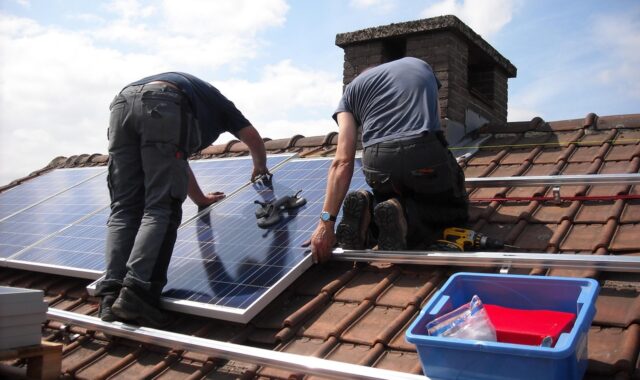
- Mounting structure: Roof, ground or pole mounts hold panels at the required tilt and direction. Good mounting also reduces wind, corrosion and maintenance risks.
- Charge controller: This device manages current and voltage from the PV array into the battery. MPPT charge controllers are widely used because they can optimize panel output under changing conditions.
- Battery bank: Batteries store energy for night use and low-sun periods. Usable capacity, cycle life, temperature tolerance and battery chemistry all affect reliability.
- Inverter: The inverter converts battery DC power into AC electricity for common appliances. It must handle continuous loads as well as short startup surges from motors or compressors.
- Protection and disconnects: Fuses, breakers, surge protection, grounding, isolators and properly rated cables help reduce electrical and fire risks.
- Monitoring: Meters and communication tools track solar output, battery state of charge, load consumption and system alarms.
These parts should be specified as one electrical system. Adding panels without enough charge controller capacity may waste potential generation. Adding battery capacity without enough PV charging power can leave batteries chronically undercharged. A large inverter may seem flexible, but it can increase standby consumption and encourage loads the battery bank cannot support.
How to size an off-grid solar system
Sizing starts with energy demand, not panel count. A practical design process follows four steps: calculate daily loads, estimate solar production, size battery storage and confirm inverter capacity.
Step 1: build a daily load profile
List every device, its wattage and expected hours of use per day. Multiply watts by hours to estimate watt-hours. A 60 W device used for five hours consumes 300 Wh per day. Add all loads, then include a margin for real-world behavior. Refrigerators, pumps and power tools need extra attention because startup surges can be several times higher than running wattage.
Seasonal loads should be separated. A cabin used mainly in summer has a different profile from a year-round home with winter heating demand. If the system must support medical equipment, communications or security loads, identify those critical circuits early and protect them from optional consumption.
Step 2: estimate the solar array size
A simple first-pass formula is daily energy use divided by peak sun hours, then adjusted for system losses. Losses can come from heat, dust, wiring, conversion efficiency, battery charging and shading. A conservative planning factor is often used at the concept stage, but final design should rely on site-specific solar resource data and equipment specifications.
For example, if a site needs 10 kWh per day, receives about 4 peak sun hours in the design season and uses a 0.75 overall efficiency factor, the rough PV array size would be 10 ÷ 4 ÷ 0.75, or about 3.3 kW. This is not a universal recommendation. It shows how local sunlight and system losses affect the required array size.
Step 3: size usable battery storage
Battery capacity is usually based on daily energy demand, desired autonomy and allowable depth of discharge. Autonomy means how long the site should operate with little solar input. A small weekend cabin may accept one day of autonomy. A remote telecom site or full-time residence may require multiple days, depending on risk tolerance and backup options.
Using the same 10 kWh daily load, two days of autonomy would require 20 kWh of usable energy. If the battery design allows 80% usable depth of discharge and the inverter path is estimated at 90% efficiency, nominal battery capacity would be roughly 20 ÷ 0.8 ÷ 0.9, or about 27.8 kWh. Cold climates, high critical-load requirements and long cloudy seasons can increase this number significantly.
Step 4: confirm inverter capacity and surge power
The inverter must support the maximum loads that may run at the same time. Continuous rating matters for normal operation. Surge rating matters for motors, compressors and pumps. If a refrigerator, well pump and power tool can start at the same time, the inverter must tolerate that event or the system may trip even when the battery has enough stored energy.
| Design item | Key question | Why it matters |
|---|---|---|
| Daily energy use | How many kWh are needed each day? | Sets the baseline for panel and battery sizing |
| Peak loads | What is the highest simultaneous wattage? | Determines inverter continuous rating |
| Surge loads | Which motors or compressors start together? | Prevents nuisance shutdowns and equipment stress |
| Autonomy | How many low-sun days must be covered? | Drives usable battery capacity |
| Solar resource | What are the design-season peak sun hours? | Controls required PV array size |
Battery and inverter choices that shape reliability
Batteries are often the most important cost and reliability decision in an off-grid solar system. Lead-acid batteries have long been used in stand-alone systems and can still fit projects where upfront cost is the main constraint. However, depending on type, they require careful charging, ventilation and maintenance, and their usable capacity is usually more limited.
Lithium-based batteries, especially lithium iron phosphate in many stationary applications, are widely chosen for higher usable depth of discharge, lower routine maintenance and strong cycle performance. They still require a suitable battery management system, compatible charging settings and temperature protection. The right choice depends on climate, budget, discharge pattern, maintenance capability and safety requirements. See also: efficiency guides.
Inverter selection is just as important. Pure sine wave inverters are generally preferred for homes and sensitive electronics because many appliances are designed for stable AC power. Hybrid inverter-chargers can combine solar charging, battery management and generator input in one platform. For larger systems, modular inverter architecture can improve redundancy, although it also adds design complexity.
Market data does not mean every off-grid buyer needs the same battery configuration, but it does show why storage is now central to solar planning. SEIA reported that more than 28% of new U.S. residential solar capacity in 2024 was paired with storage, compared with under 12% in 2023. The U.S. Energy Information Administration also reported that California residential solar installations paired with batteries rose sharply after the state changed solar compensation rules. Those are grid-market examples, but they reinforce a broader point: solar value increasingly depends on when energy can be used, not only when it is produced.
Safety, standards and installation limits
Off-grid solar involves high DC voltages, battery fault currents and AC distribution equipment. It should not be treated like a simple plug-in appliance. Cable sizing, overcurrent protection, battery spacing, ventilation, grounding, disconnect locations and enclosure ratings all affect safety and serviceability.
IEC 62548-1:2023 sets design requirements for photovoltaic arrays, including DC wiring, electrical protection, switching and earthing provisions. In the United States, installers also need to consider applicable electrical codes, building rules, fire requirements and local permitting processes. Requirements vary by jurisdiction and system type, so final design should be reviewed by qualified professionals familiar with local rules.
Several design mistakes appear repeatedly in off-grid projects. One is oversizing the inverter while undersizing the battery, which allows large loads to start but quickly depletes storage. Another is sizing from summer sunlight while ignoring winter solar conditions. A third is using long DC cable runs without voltage-drop calculations. Shading is also often underestimated: even partial shading can reduce production, especially if the array layout and electronics are poorly matched.
Maintenance planning should be part of the design. Panels may need cleaning in dusty locations. Terminals and enclosures should be inspected. Battery firmware or monitoring settings may require updates. Generators, if used, need fuel management and exercise schedules. A reliable system is not only well sized on paper; it is also easy to inspect, isolate and repair.
Off-grid solar versus grid-tied solar with battery backup
Off-grid solar and grid-tied solar with battery backup are often confused, but they solve different problems. A grid-tied system with batteries remains connected to the utility and can use the grid as a secondary energy source. During normal operation, it may optimize self-consumption, back up selected circuits or respond to utility rate structures. It can be highly useful, but it is not the same as living without the grid.
An off-grid system must operate independently every day. That changes the design approach. Loads are usually managed more carefully, backup generation may be included, and efficiency upgrades often deliver better value than simply adding more panels. Replacing old appliances, using heat pumps where appropriate, improving insulation or shifting heavy loads to sunny hours can reduce the required battery size.
For many sites, the best starting point is a load-first plan. Before buying equipment, reduce unnecessary demand, identify critical circuits, measure real consumption and decide what level of autonomy is acceptable. Readers comparing different system layouts can also browse related articles in the solar products section for additional product and technology context.
Frequently asked questions
Can an off-grid solar system power an entire house?
Yes, but only if the solar array, battery bank and inverter are sized for the house loads and local solar conditions. A full-time off-grid home usually needs a detailed load audit, energy-efficient appliances, sufficient battery autonomy and often a backup generator for long low-sun periods.
How many batteries does an off-grid solar system need?
The number of batteries depends on daily kWh consumption, desired autonomy, battery voltage, usable depth of discharge and inverter efficiency. Counting batteries before calculating energy demand can lead to an unreliable or unnecessarily expensive system.
Is off-grid solar better than grid-tied solar?
Neither is automatically better. Off-grid solar is valuable where independence or remote power is the priority. Grid-tied solar is usually simpler where utility service is available and reliable. The better option depends on site access, electricity prices, outage risk, permitting and the cost of required storage.
Does an off-grid solar system need a generator?
Not always, but many serious off-grid installations include one as backup. A generator can protect battery life and maintain critical loads during extended storms, seasonal low sunlight or unexpected high demand. The trade-off is fuel cost, maintenance and noise.
What is the biggest mistake in off-grid solar design?
The most common mistake is starting with equipment before understanding loads. A reliable system begins with measured or carefully estimated energy use, then sizes the PV array, batteries, inverter and protection equipment around that demand.
Key takeaway
An off-grid solar system is a complete energy ecosystem, not a bundle of panels and batteries. Reliable design starts with a realistic load profile, uses conservative solar and storage assumptions, and follows applicable safety standards. The most successful projects usually combine efficient appliances, disciplined energy use, properly matched components and professional installation review. When those pieces align, off-grid solar can provide dependable independent power for sites where the grid is unavailable, unreliable or simply not part of the plan.