Solar panels in 2026 and the buying signals that matter

The 2026 context for solar panels
Solar panels are now a mainstream power technology, shaped by record deployment, heavy manufacturing competition and changing incentive rules. For buyers in 2026, the question is not simply whether solar works. It is how to choose panels that fit the site, tariff structure, installation quality and expected operating life. Global data from the International Energy Agency shows solar PV additions passed 600 GW in 2025, while cumulative solar PV capacity reached around 2,800 GW. That scale has helped bring module prices down, but it has also made product selection more complex. Buyers need to compare solar panels by performance, reliability, system design and policy risk, not only by headline wattage.
For more background on renewable energy equipment and market updates, readers can follow the solar products section.
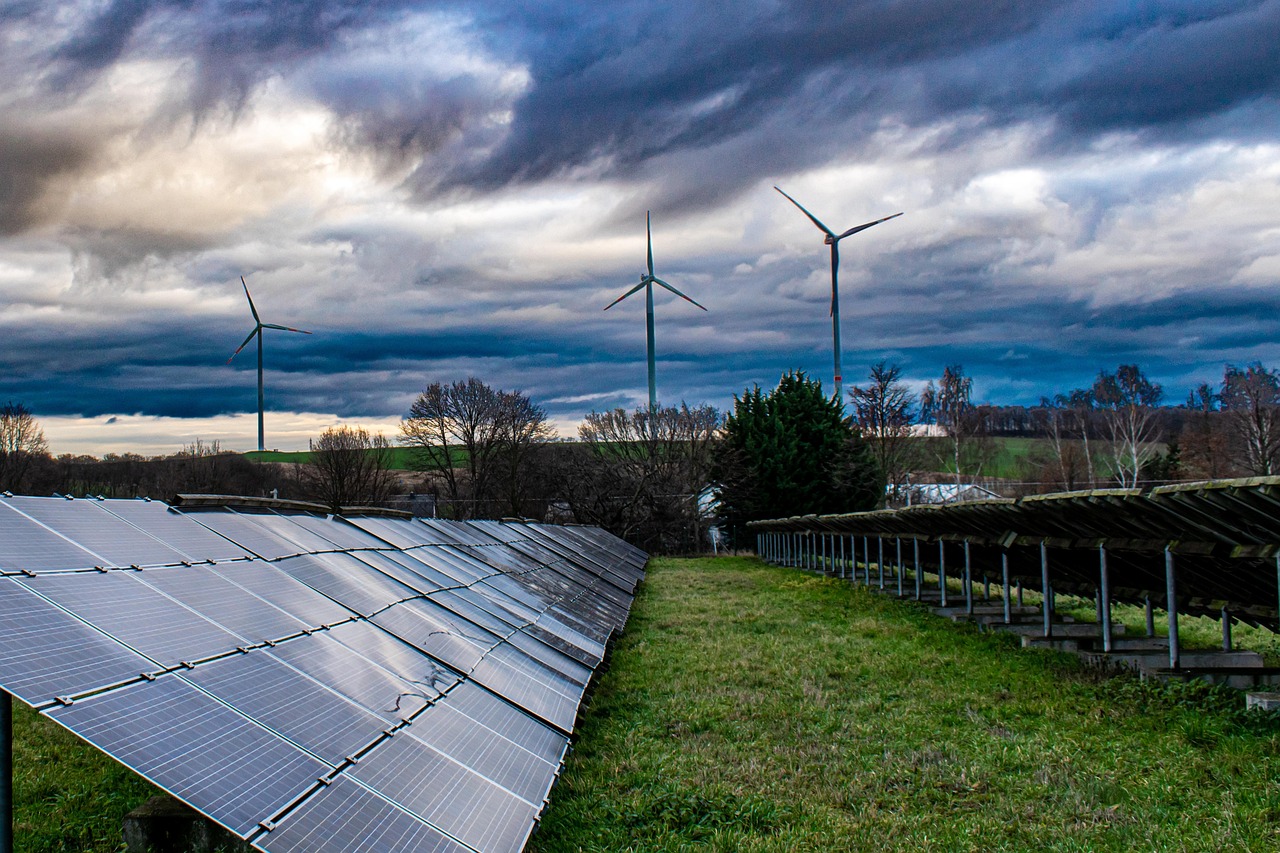
Market signals behind today’s solar panel choices
The first signal is scale. According to the International Energy Agency’s Global Energy Review 2026, global renewable capacity additions rose to about 800 GW in 2025, and solar PV represented more than three quarters of that new renewable capacity. Solar PV additions increased by around 12% and crossed 600 GW for the first time. The IEA also reported that 30 countries installed more than 1 GW of solar PV in a single year, showing that the market is no longer dependent on a small group of early adopters.
The second signal is regional concentration. China remained the largest driver of deployment, commissioning nearly 370 GW of solar PV in 2025. The European Union installed almost 70 GW, India added almost 50 GW, and the United States remained a major market even as its solar growth moderated. This matters for buyers because supply chains, technology roadmaps and module availability are still shaped by manufacturing concentration and regional policy decisions.
The third signal is price pressure. IEA analysis in Renewables 2025 linked low module costs to manufacturing overcapacity and strong price competition, noting that global wholesale spot prices reached record lows in 2024 and stabilized at low levels in the first half of 2025. Lower module prices can improve project economics, but they do not make every installed system cheap. Labor, permitting, racking, inverters, interconnection, financing and local rules still determine the final installed cost.
In the United States, SEIA and Wood Mackenzie reported that the solar industry installed 43.2 GWdc in 2025, down 14% from 2024, while solar still accounted for 54% of new electricity-generating capacity added to the grid. The message is mixed but important: solar remains central to new power capacity, while policy shifts, project timing and equipment availability can still affect installation volumes.
How to compare solar panel specifications without overbuying
Many buyers start with wattage, but wattage is only one part of the decision. A 460 W panel may be a better fit than a 420 W panel on a space-constrained roof, but the higher rating may come from a larger module rather than a major efficiency gain. EnergySage marketplace data for the second half of 2025 showed that most quoted residential panels were in the 400 W to 460 W range. That range is useful as a market reference, but it does not replace a site-specific production estimate.
Solar panel efficiency also needs context. Efficiency measures how much sunlight hitting the module is converted into usable electricity under standard test conditions. Commercially available residential modules commonly sit around the high teens to low twenties in percentage efficiency, while research cells can reach much higher results under laboratory conditions. A record cell result should not be treated as the same thing as a widely available panel specification.
| Specification | Why it matters | How to read it |
|---|---|---|
| Rated power | Shows output under standard test conditions | Compare with panel dimensions and roof area, not in isolation |
| Efficiency | Indicates power density | Most valuable where space is limited |
| Temperature coefficient | Shows output loss as panel temperature rises | Important in hot climates and low-ventilation rooftops |
| Degradation rate | Estimates annual output decline | Use with performance warranty terms to judge lifetime production |
| Product warranty | Covers materials and workmanship | Check the manufacturer’s terms, exclusions and support structure |
| Performance warranty | Promises a minimum output level over time | Compare first-year and annual degradation assumptions |
| Module type | Signals cell architecture and use case | TOPCon, HJT, back-contact and bifacial designs have different strengths |
A practical approach is to compare expected annual energy production, not only panel nameplate capacity. Two systems with the same total watts can perform differently if one is affected by shade, poor orientation, high roof temperature or inverter clipping. The stronger proposal is usually the one that explains the assumptions clearly and shows realistic production modeling.
Technology trends that matter and those that need caution
The commercial solar panel market has moved steadily toward higher-efficiency crystalline silicon technologies. Fraunhofer ISE’s 2026 Photovoltaics Report describes a market dominated by crystalline silicon and n-type TOPCon, while also noting the growing role of newer architectures such as heterojunction and back-contact designs. These technologies can improve conversion efficiency, temperature behavior or power density, but buyers should evaluate them against bankability, warranty support and real-world availability.
TOPCon has become important because it allows higher efficiency than older mainstream PERC technology while using manufacturing pathways that can be scaled. HJT can offer attractive temperature coefficients and strong efficiency potential, but cost and supply availability vary by manufacturer. Back-contact modules can deliver high power density and a clean appearance because electrical contacts are moved away from the front surface, but buyers should still compare warranty terms and installer experience.
Bifacial solar panels are useful in the right setting, but they are sometimes oversold. They generate power from both the front and rear sides when reflected light reaches the back of the module. This can add value on commercial rooftops, carports, ground-mounted systems or light-colored surfaces, but the gain depends on mounting height, ground reflectivity and row spacing. On a dark, flush residential roof, the extra benefit may be limited.
Perovskite and tandem solar cells attract attention because they offer a path beyond the efficiency limits of conventional single-junction silicon. For most buyers in 2026, however, they remain technologies to watch rather than the default choice for standard projects. The key questions are durability, warranty confidence, manufacturing scale and long-term field data. A buyer should not pay a large premium for a technology story unless the proposal shows measurable project value.
Costs, incentives and project risks to check before purchase
Module prices are only one part of solar economics. A solar panel may cost less than it did several years ago, but the installed system can still be affected by labor rates, electrical upgrades, roof condition, permitting fees, interconnection delays, inverter selection and financing costs. For commercial and utility projects, transformer availability, grid studies, land use and power purchase terms can matter as much as the module itself.
Policy is another major factor. In the United States, the IRS issued guidance after Public Law 119-21, commonly known as the One Big Beautiful Bill, stating that the Section 25D Residential Clean Energy Credit is not allowed for expenditures made after December 31, 2025. The IRS also clarified that, for residential clean energy property, the expenditure is generally treated as made when the original installation is completed. This means 2026 residential buyers should verify federal, state and utility incentives carefully instead of relying on older summaries that still describe the previous 2032 schedule.
Business and utility-scale projects face a different incentive and timing landscape. SEIA and Wood Mackenzie noted that revised tax credit timelines and safe harbor dynamics affected U.S. project behavior in 2025, especially in the utility-scale sector. That does not mean solar demand disappeared. It means project developers had to pay closer attention to construction dates, qualification rules, tariffs and supply-chain documentation.
For a household or business buyer, a sound economic review should include several scenarios: current electricity rates, expected rate escalation, export compensation, battery attachment, financing cost, maintenance assumptions and the effect of local incentives. Payback claims without these assumptions are incomplete. A shorter payback is useful only if the model is transparent and the equipment is reliable enough to deliver energy over the expected life of the system. See also: efficiency guides.
Installation design is as important as the module
Solar panels produce direct current electricity, but the full system determines how much usable power reaches the building or grid. Orientation, tilt, shading, inverter design, wiring, ventilation and monitoring all influence the final output. A high-efficiency panel installed in a shaded location can underperform a standard panel installed on a better roof plane.
Shading deserves close attention. Even partial shade from chimneys, trees, roof vents or neighboring buildings can reduce production, especially when shade falls across strings of modules. Module-level power electronics, such as microinverters or DC optimizers, can help in complex shade conditions, but they add cost and additional components. The right choice depends on the roof layout and the expected shading pattern through the year.
Storage is increasingly part of the solar conversation. The IEA has noted that distributed solar applications paired with storage are growing in markets where households and businesses want bill control or backup support. Batteries can improve self-consumption and resilience, but they should be sized for the actual load profile. Oversizing a battery for occasional backup can weaken project economics, while undersizing it may limit the value of stored solar energy.
Grid constraints also matter. In high-solar regions, interconnection delays, export limits or curtailment can affect project value. IEA-PVPS has highlighted curtailment as an increasingly important issue in high-penetration markets. This is why a proposal should explain not only annual generation, but also how much energy is expected to be self-consumed, exported, stored or potentially limited by grid rules.
Durability, maintenance and end-of-life planning
Solar panels are long-lived assets, but they do not remain unchanged forever. The U.S. Department of Energy describes PV systems as having 20- to 30-year lifespans, and NREL materials often discuss module degradation in the range of roughly 0.5% to 1% per year, depending on technology, climate and system conditions. Even small annual losses matter because they compound across decades.
Good durability starts with the module, but installation quality is just as important. Poor cable management, water intrusion, incompatible clamps, weak grounding or careless handling can shorten system life. Mechanical stress from hail, high wind, snow load or walking on modules can also create damage that may not be obvious immediately. Buyers should ask how the racking system is rated, how roof penetrations are sealed, and how the installer documents commissioning.
Maintenance is usually modest, but it is not zero. Monitoring should be checked regularly so faults are noticed quickly. In dusty, agricultural or wildfire-prone areas, soiling can reduce output and may justify periodic cleaning. Inverters typically have different lifespans and warranty terms from the panels, so replacement or extended warranty costs should be considered in the project model.
End-of-life planning is becoming more important as installed capacity grows. Recycling and reuse systems vary by region, and regulations are still developing. NREL research on photovoltaic circularity has emphasized that longer-lived modules can reduce material demand and provide more time to improve recycling infrastructure. For buyers, warranty strength, manufacturer stability and responsible disposal options are not side issues; they are part of long-term project quality.
Frequently asked questions
Are higher-watt solar panels always better?
No. Higher wattage can help when roof or land area is limited, but it may also reflect a physically larger panel. Compare energy production per available area, temperature performance, warranty terms and installed system cost before paying a premium.
How long do solar panels usually last?
Many PV systems are planned around 20- to 30-year operating lives. Output gradually declines over time, often discussed in the range of about 0.5% to 1% per year depending on module type, climate and installation conditions.
Do U.S. homeowners still have a federal solar tax credit in 2026?
For new residential solar expenditures after December 31, 2025, IRS guidance states that the Section 25D Residential Clean Energy Credit is not allowed. Homeowners should confirm current federal, state and utility rules before signing a contract, because older incentive summaries may be outdated.
Should buyers wait for next-generation solar panels?
Waiting only makes sense if a clearly available product will improve the project economics or solve a site constraint. For most buyers, proven modules with strong warranties, good installation design and transparent production modeling are more important than waiting for laboratory-stage technology.
What is the most important question to ask an installer?
Ask how the proposed system will perform at your specific site. A useful answer should cover shade, orientation, inverter design, expected annual production, degradation assumptions, export rules, monitoring and warranty responsibilities.