Solar fan guide for ventilation, cooling, and off-grid use
What a solar fan can and cannot do
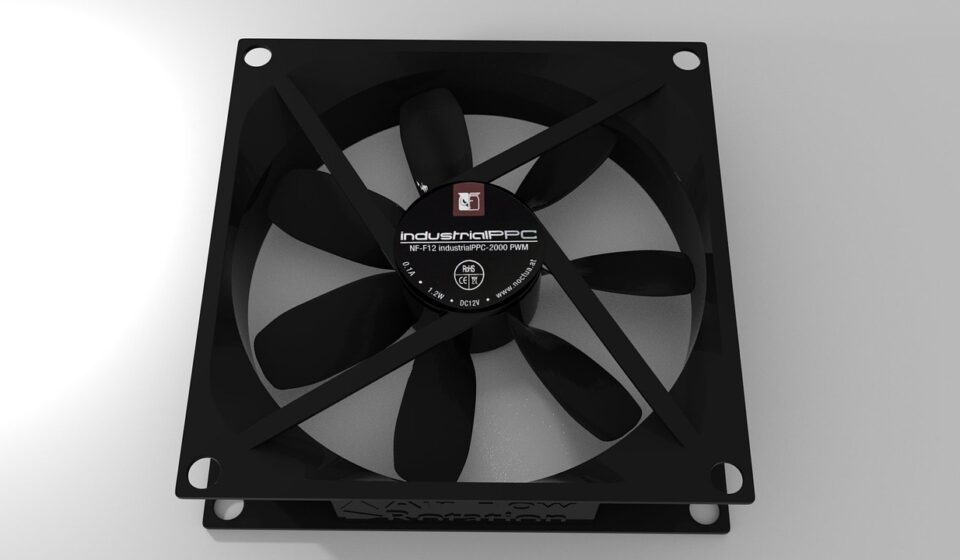
A solar fan is a low-power fan that runs from a photovoltaic panel, either directly in sunlight or as part of a battery-supported system. It can improve air movement, help exhaust hot or humid air, and reduce reliance on grid electricity for small ventilation tasks. It is not an air conditioner, because it does not lower air temperature through refrigeration.
The practical value of a solar fan is strongest when the need for airflow overlaps with daylight. Common use cases include attic ventilation, greenhouse air exchange, sheds, cabins, RVs, boats, outdoor seating, small livestock spaces, and backup ventilation. For broader context on related renewable equipment, see our solar products section.
Why solar fans are receiving more attention
Cooling demand is becoming a larger electricity issue, not just a comfort issue. The International Energy Agency reported in a commentary published on July 10, 2026, that global electricity demand for space cooling had grown by about 50% since 2015, reaching around 2,900 TWh. The same analysis estimated that cooling contributed roughly 1,400 GW of peak electricity demand in 2025. Those figures refer mainly to active space cooling, but they help explain why low-power air movement is being considered as part of wider cooling strategies.
Fans are relevant because air movement can improve perceived comfort and support ventilation with far less power than compressor-based cooling. The IEA also noted that using a fan with an air conditioner set at 26°C can provide comfort similar to an air conditioner alone set at 24°C, while reducing energy use by around 25%. This does not mean a solar fan replaces air conditioning. It means fans can reduce cooling load in some situations when combined with shading, insulation, night ventilation, and efficient AC operation.
The solar element adds a practical timing advantage: fan output is often highest when sunlight is strongest. A direct-drive solar fan will slow down under clouds and stop at night, but that operating pattern can still fit many daytime ventilation needs. Battery-supported models add evening or overnight operation, although they also add cost, weight, maintenance considerations, and battery sizing requirements.
How a solar fan works
The basic system is straightforward. A photovoltaic panel converts sunlight into direct-current electricity. That electricity powers a DC motor, which turns the fan blades and moves air. The U.S. Department of Energy describes photovoltaic cells as semiconductor devices that absorb sunlight and convert it into electricity. In a solar fan, the same principle is applied to a small electrical load instead of a whole-building system.
Most products fall into three operating designs. A direct solar fan connects the panel to the fan motor and runs only when enough sunlight is available. It is simple and usually affordable, but airflow changes with irradiance. A solar fan with battery storage charges a battery during the day and can run when sunlight is weak or absent. A hybrid fan can use solar power when available and switch to grid or adapter power when needed. Hybrid operation is useful where ventilation is not optional, such as animal housing, equipment rooms, or enclosed workspaces.
Panel size, motor efficiency, blade design, duct resistance, and controls all affect real performance. A product described as solar powered is not automatically efficient. A small panel paired with a poorly designed fan may deliver weak airflow. A better system matches panel wattage, motor load, airflow requirement, and installation conditions.
Where solar fans make the most sense
A solar fan is most useful when the main job is air movement rather than direct temperature reduction. The table below summarizes common applications and the main decision points.
| Application | Good fit | Main limitation |
|---|---|---|
| Attic or roof ventilation | Exhausting hot attic air during sunny periods | Must not disturb balanced roof ventilation or pull conditioned air from the living space |
| Greenhouses | Daytime air exchange, humidity control, and plant airflow | Requires correct airflow sizing and backup during low-sun periods |
| RVs, boats, and cabins | Low-power ventilation where grid access is limited | Battery capacity and weatherproofing become important |
| Sheds and equipment rooms | Reducing trapped heat and moisture around tools or equipment | Air intake and exhaust placement determine results |
| Outdoor seating or camping | Personal airflow in daylight | Not reliable as a heat-safety device in extreme temperatures |
| Small livestock or poultry spaces | Supplemental airflow and odor reduction | Should not be the only ventilation source where animal welfare depends on continuous airflow |
The common thread is ventilation timing. If a space becomes uncomfortable mainly under direct sun, solar-powered airflow can align well with the problem. If the space needs 24-hour ventilation, a direct solar model is usually insufficient unless there is a battery, a grid backup, or another mechanical ventilation system.
Specifications to check before buying
Airflow is the first specification to review. In North America, fan airflow is commonly listed in CFM, or cubic feet per minute. In many international markets, it may be listed in cubic meters per hour. A higher airflow number is not always better, because noise, power draw, duct resistance, and the size of the ventilated space all matter. For ducts, vents, filters, or long air paths, static pressure performance is important. A fan that moves impressive air in open air may perform poorly when connected to restrictive ductwork.
Energy efficiency should be judged by output per watt, not by panel size alone. ENERGY STAR criteria for residential ventilation fans use efficacy, measured in CFM per watt, and sound level, measured in sones. ENERGY STAR also states that certified ventilation fans use about 48% less energy than standard models. Even when a solar fan itself is not ENERGY STAR certified, the same comparison is useful: airflow, watts, and noise should be evaluated together.
Solar panel wattage needs to match the motor. Under real outdoor conditions, a panel rarely delivers its rated output all day. Ratings are measured under standardized laboratory conditions, while actual output varies with sunlight intensity, panel angle, shading, dirt, wiring losses, and heat. Buyers should avoid assuming that a 20 W panel will provide 20 W continuously from morning to evening.
For battery models, compare battery watt-hours with fan wattage. As a simple estimate, a 10 W fan running for 6 hours needs about 60 Wh before accounting for conversion losses and battery reserve. A system that must operate overnight should be sized with a safety margin, especially in cloudy seasons. See also: efficiency guides.
Outdoor durability is another key point. The IEC 60529 IP code classifies enclosure protection against solid objects and water ingress. For exposed installations, check whether the fan, panel junction box, connectors, and controller are rated for the actual environment. A water-resistant panel does not automatically make the whole fan assembly weatherproof. For household-style electric fans, safety standards such as IEC 60335-2-80 and UL 507 are relevant reference points, depending on market and product category.
Limits, safety, and realistic expectations
The biggest mistake is treating a solar fan as a substitute for air conditioning in dangerous heat. The U.S. Centers for Disease Control and Prevention warns that in temperatures above 90°F, a fan can increase body temperature. That guidance is especially important for older adults, children, people with chronic conditions, and anyone without access to a cooler indoor space. In high heat, a fan may help comfort only under the right humidity and temperature conditions; it is not a complete heat-health strategy.
Ventilation also needs the right air path. The U.S. Environmental Protection Agency advises that bathroom exhaust fans should vent directly outdoors rather than into an attic or another indoor cavity. That principle applies broadly: moving air into the wrong space can transfer moisture, odors, or heat instead of solving the problem. A solar exhaust fan needs an intake path, an exhaust path, and installation details that avoid backdrafting, water entry, or unwanted pressure changes.
Climate matters. The Department of Energy notes that ventilation cooling is less effective in hot, humid climates. In dry climates or during cool evenings, flushing hot air from a structure may be useful. In humid climates, bringing in outdoor air can increase indoor moisture unless the system is designed carefully.
A practical selection checklist
- Define the job first: personal cooling, exhaust ventilation, humidity control, or air circulation.
- Estimate the space size and required air changes instead of choosing only by panel wattage.
- Check airflow under realistic conditions, including ducting or screens if they will be used.
- Compare watts, airflow, and noise together; do not treat any one number as the whole story.
- Decide whether operation is needed only in sunlight or also at night and during cloudy weather.
- For outdoor use, check the weather rating of every exposed component, not only the solar panel.
- Look for clear safety markings, installation instructions, and market-appropriate certifications.
- Plan air intake and exhaust locations before installation.
- Use a hybrid or backup system when ventilation is critical.
For many buyers, the best choice is not the largest fan but the most appropriately matched system. A compact direct-solar unit may be enough for a shed. A greenhouse may require multiple fans, thermostatic controls, and backup power. An RV or boat may benefit from a roof vent fan with battery support and a reliable weather seal. Matching the system to the use case is more important than choosing by a single headline specification.
Frequently asked questions
Does a solar fan work at night?
A direct solar fan normally does not work at night because the panel is not producing electricity. A battery-supported solar fan can run after sunset if the battery has enough stored energy. Runtime depends on battery capacity, fan wattage, state of charge, and system losses.
Can a solar fan cool a room?
It can improve air movement and perceived comfort, but it does not cool the air the way an air conditioner does. It may help exhaust hot air or support ventilation, especially when paired with shading and insulation. In severe heat, it should not be relied on as the only cooling method.
What size solar panel is needed for a fan?
The panel should be sized around the fan motor load, desired runtime, sunlight conditions, and whether a battery is used. As a starting point, compare the fan wattage with the panel wattage and add a margin for cloudy periods, heat, wiring losses, and less-than-perfect panel angle.
Is a solar fan worth it?
It can be worthwhile when grid power is unavailable, expensive to install, or unnecessary for a small ventilation job. It is less compelling where continuous airflow is required and a reliable electrical supply already exists. The value depends on the installation, not only the product label.
What is the most important feature to compare?
Airflow per watt is often more useful than panel wattage alone. Also compare noise, durability, control options, battery capacity, safety certification, and the quality of the installation instructions. A balanced specification set is a better sign than one impressive number.