How to choose RV solar panels for reliable off-grid power
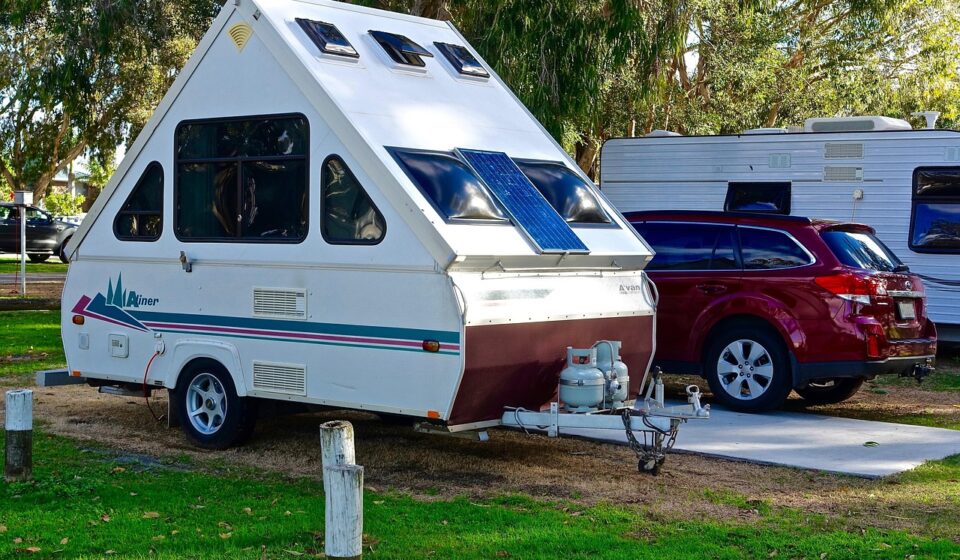
RV solar panels should not be chosen by wattage alone. A reliable setup starts with daily energy use, usable roof or portable panel space, battery capacity, charge controller limits, and the way the RV is actually camped. For most owners, rigid monocrystalline panels remain the most efficient and durable option for permanent rooftop installations. Flexible panels can solve weight and curved-roof problems, while portable panels help when the RV is parked in shade. Solar can extend off-grid use for lights, fans, refrigerators, electronics, pumps, and modest appliances, but air conditioning, electric heaters, and large cooking loads usually require a much larger battery and inverter system, often with generator backup. This guide explains how to build a balanced system and where to be cautious when comparing claims in the solar products market.
What RV solar panels are really expected to do
RV solar panels convert sunlight into DC electricity, but they are only one part of the charging system. A typical RV setup includes panels, mounting hardware, wiring, overcurrent protection, a solar charge controller, a battery bank, and, in many cases, an inverter for AC loads. The panels normally do not power appliances directly. They recharge the house battery, and the battery supplies loads when sunlight is weak, clouds pass over, or the system is operating at night.

This distinction matters because a 200 W or 400 W panel label refers to output under standardized test conditions. It is not a guaranteed output on a hot RV roof in real travel conditions. Production changes with sun angle, season, location, shade, dirt, roof temperature, wiring losses, and controller performance. NREL’s PVWatts model, widely used for solar production estimates, is based on long-term weather and irradiance data rather than a single perfect-sun assumption. RV solar planning should follow the same logic: design around the energy needed over a day, not around the best moment at noon.
The most dependable RV solar systems are balanced systems. Oversized panels paired with a small battery can leave available energy unused. A large battery with too little solar may take too long to recharge. A charge controller with the wrong voltage or current rating can become a bottleneck or a safety risk. The best choice is not simply the largest panel package; it is the package that fits the roof, battery, electrical design, and camping pattern.
Start with daily energy use before choosing wattage
A basic energy audit is more useful than estimating panel size from RV length. List the devices used each day, their watt draw, and the number of hours they run. Multiply watts by hours to estimate watt-hours per day. For cycling loads, such as a compressor refrigerator, use realistic daily consumption whenever possible rather than only the nameplate running wattage.
| Load category | Common examples | Solar planning note |
|---|---|---|
| Low daily load | LED lights, phone charging, water pump, small fans | Often manageable with a small panel and modest battery if weather is favorable. |
| Moderate daily load | 12 V refrigerator, laptop charging, vent fans, router, camera gear | Usually needs a larger battery bank and several hundred watts of solar for regular off-grid use. |
| High daily load | Microwave, induction cooking, coffee maker, hair dryer | Requires inverter capacity and battery surge capability; solar replenishment may lag behind heavy use. |
| Very high load | Air conditioner, electric space heater, electric water heater | Usually beyond small RV solar systems unless the battery, inverter, and solar array are intentionally designed for it. |
After estimating daily energy use, divide watt-hours by realistic peak sun hours for the places and seasons you travel. Peak sun hours describe the daily solar energy equivalent at 1,000 W per square meter. A sunny desert campsite may provide far more usable solar than a forested campground or a winter trip in northern latitudes. Add a margin for heat, dust, wiring losses, flat panel angle, and cloudy days. Many RV owners plan with a 20% to 30% buffer because flat-mounted roof panels rarely perform like optimally tilted residential arrays.
For example, a camper using about 1,200 Wh per day in a location with roughly 4 peak sun hours would need at least 300 W of panel capacity before losses. With a practical buffer, 400 W to 500 W may be a more realistic planning range. This remains an estimate, not a promise, because roof shading from vents, antennas, racks, and air conditioners can reduce output sharply.
Rigid, flexible, and portable panels serve different RV needs
The first decision is often panel format, not brand. Rigid, flexible, and portable panels can all work well when matched to the right installation and camping style.
| Panel type | Strengths | Limits | Best fit |
|---|---|---|---|
| Rigid monocrystalline panels | Good efficiency, strong frame, better airflow when mounted with a gap, easier long-term service | Heavier, taller profile, requires secure mechanical mounting | Most permanent rooftop RV installations |
| Flexible panels | Lightweight, low profile, can suit curved or weight-sensitive roofs | More heat exposure when mounted flush, harder to remove if bonded, durability varies by construction | Curved roofs, pop-up campers, weight-limited builds, stealth or low-profile needs |
| Portable folding panels | Can be aimed at the sun, can be placed away from shaded RV roofs, no permanent roof penetration | Must be stored, deployed, watched, and protected from theft or weather damage | Weekend camping, shaded campsites, supplemental charging |
Rigid panels usually have an advantage in long-term rooftop systems because the mounting gap allows air to move under the module. Solar module output falls as cell temperature rises, which is shown as a temperature coefficient on the panel data sheet. NREL technical materials explain that module output decreases as temperature rises above the test reference point. On an RV roof, airflow, roof surface color, and mounting method are therefore more than cosmetic details.
Flexible panels are useful, but they should not be treated as a direct replacement in every installation. A panel bonded flat to a roof may run hotter than a raised rigid panel. Heat can reduce daily production and may speed material aging. If flexible panels are selected, check for credible safety and performance documentation, a roof-compatible mounting method, and enough space for cable routing and future service. A lightweight panel is not automatically easier over the full life of the system, especially if strong adhesives make removal difficult.
Portable panels solve a different problem: shade. A roof covered by trees, roof accessories, or a cargo box may produce less power even when the rated wattage looks high. A portable suitcase panel can be moved into sun while the RV stays cooler in shade. The tradeoff is convenience. Portable equipment has to be carried, connected, angled, secured, and packed away.
Match panels with batteries, controllers, and inverter loads
The charge controller is the link between the solar array and the battery bank. It regulates charging so the battery receives the correct voltage and current profile. PWM controllers can work in small, simple systems, but MPPT controllers are generally preferred for larger arrays, higher-voltage panel strings, and systems where maximizing harvest matters. Under many conditions, MPPT controllers can convert higher panel voltage down to battery charging voltage more efficiently than a basic PWM design.
Controller sizing must account for both solar input limits and battery charging output. A rough current estimate is panel watts divided by battery voltage. A 400 W array on a 12 V battery system can imply more than 30 A of charging current under favorable conditions before safety margins. A 600 W array can push the requirement higher. The controller data sheet should specify maximum PV input voltage, maximum PV power for the battery voltage, rated charge current, supported battery chemistries, and required wire sizes or terminals.
Battery chemistry also changes the system design. Flooded lead-acid, AGM, and lithium iron phosphate batteries have different charging profiles, usable capacity, weight, and low-temperature limitations. Lithium batteries often provide more usable energy for the same nominal amp-hour rating, but they must be charged with compatible equipment and protected by an appropriate battery management system. In cold climates, charging lithium below the battery manufacturer’s permitted temperature can be a serious issue unless the battery includes low-temperature protection or heating.
Inverters need separate attention. A solar array may refill the battery gradually over the day, while an inverter can drain it quickly under large AC loads. A 1,500 W appliance used for ten minutes consumes about 250 Wh before inverter losses. Several short high-power uses can remove much of the day’s solar gain. For that reason, RV solar planning should separate daily energy capacity from momentary power demand. See also: efficiency guides.
Installation details affect both output and safety
Good installation starts with roof mapping. Measure open space, then account for vents, antennas, skylights, air conditioners, roof curves, walking paths, and shadows across the day. Even a small shadow across part of a panel or string can reduce production more than expected, depending on cell layout and bypass diode behavior. Leave room to inspect sealant, clean the roof, and service other rooftop equipment.
Wiring should be sized for current, voltage drop, insulation rating, routing conditions, and overcurrent protection. Cable entry points must be sealed for movement, vibration, UV exposure, and weather. Fuses or breakers should be placed according to the system design rather than added at random. Disconnects are useful for service because panels can produce voltage whenever they are illuminated. Labels also matter when another technician later works on the RV.
RV electrical work sits within a standards environment that should not be ignored. The RV Industry Association lists NFPA 1192, the National Electrical Code, and the ANSI/RVIA DC Standard among the standards used for RV construction and electrical systems. NFPA describes the 2026 edition of NFPA 1192 as covering fire and life safety criteria for recreational vehicles, while NEC Article 551 addresses recreational vehicles and RV parks. These standards do not make every DIY installation automatically compliant, but they show why wire protection, grounding, routing, battery placement, and equipment ratings are safety issues rather than optional details.
If the system involves roof penetration, high-current battery cables, inverter wiring, alternator charging integration, or changes to the 120 V AC system, a qualified RV technician or electrician should be involved. Solar is often marketed as plug-and-play, but permanent RV installations face vibration, heat, moisture, road shock, and tight spaces that stationary systems do not.
Practical RV solar panel size ranges
There is no single correct wattage for every RV, but common size ranges can help set expectations.
| Solar array range | Typical use case | Important limitation |
|---|---|---|
| 100 W to 200 W | Battery maintenance, lights, phones, light weekend use | Limited recovery after cloudy days or refrigerator use |
| 300 W to 500 W | Vent fans, electronics, water pump, efficient 12 V refrigerator, moderate boondocking | Needs enough battery capacity to bridge evening and cloudy periods |
| 600 W to 1,000 W | Extended off-grid stays with lithium storage, more electronics, heavier daily loads | Roof space, controller capacity, wiring, and battery size become critical |
| Above 1,000 W | Large motorhomes, full-time off-grid builds, selected high-load systems | Requires engineered integration with batteries, inverter, alternator charging, and safety protection |
These ranges are planning categories, not performance guarantees. A 400 W array in full desert sun can outperform a 700 W array under trees. A flat roof in winter may produce much less than the same panels tilted toward summer sun. Cleaning also matters because dust, pollen, leaves, and road grime reduce the light reaching the cells.
Buying checklist for RV solar panels
- Confirm panel dimensions, not just wattage. A high-watt panel is not useful if it blocks roof access or is shaded by nearby equipment.
- Read the temperature coefficient. Lower heat-related power loss is useful on hot roofs.
- Check safety and performance certifications. Look for recognized PV module standards such as IEC or UL 61730 where applicable, and match equipment to the intended mobile use.
- Verify controller compatibility. Confirm PV input voltage, charge current, battery chemistry settings, and expansion limits.
- Plan the battery bank at the same time. Solar panel wattage only makes sense when paired with adequate storage.
- Avoid unrealistic appliance expectations. Air conditioning and electric heat need a system designed specifically for high energy demand.
- Think about maintenance. A panel that cannot be cleaned, inspected, or removed easily may create long-term service problems.
Frequently asked questions
How many RV solar panels do I need?
Start with daily watt-hours, then divide by realistic peak sun hours and add a margin for losses. A light weekend setup may work with 100 W to 200 W, while regular boondocking with a refrigerator and electronics often falls closer to 300 W to 600 W or more. Battery capacity and camping location are just as important as panel count.
Are flexible RV solar panels worth it?
Flexible panels are worth considering when weight, roof curve, or low profile matters. They are not automatically the best choice for every roof. Because they may run hotter when mounted flush, buyers should pay close attention to installation method, warranty terms, serviceability, and long-term durability.
Can RV solar panels run an air conditioner?
Small RV solar systems usually cannot run air conditioning for long. An air conditioner needs high continuous power and large battery capacity, and solar must then replace that energy. It can be done in larger engineered systems, but it is not a realistic expectation for a basic rooftop kit.
Is a portable solar panel better than a roof panel?
A portable panel is better when the RV is often parked in shade or when the panel needs to be aimed toward the sun. A roof panel is better for automatic charging while parked or driving and requires less daily setup. Many RV owners use both: fixed roof panels for baseline charging and a portable panel for shaded campsites.
Do I need an MPPT charge controller for RV solar?
You do not always need MPPT for a very small system, but it is usually the better choice for larger RV solar arrays, lithium battery systems, and higher-voltage panel configurations. The controller should be selected based on actual array voltage, charging current, and battery chemistry rather than panel wattage alone.
Bottom line
The best RV solar panels are the ones that match how the RV is actually used. For most permanent installations, rigid monocrystalline panels with a well-sized MPPT controller and adequate battery storage offer the strongest balance of output, durability, and serviceability. Flexible panels and portable panels are valuable when their tradeoffs fit the camping style. Before buying, calculate daily energy use, map the roof, check controller and battery compatibility, and treat electrical protection as part of the system rather than an accessory. That approach supports quieter, longer, and more predictable off-grid travel without relying on exaggerated solar claims.