How to choose a solar generator for home backup without oversizing
Start with what a home solar generator can realistically do
A solar generator for home backup is usually a battery-powered portable power station that can be recharged from solar panels, wall power, or sometimes a vehicle. It is different from a fuel generator, and it is not automatically a whole-home solar system. The right choice depends on the loads you need to keep running, the outage duration you are planning for, the battery capacity in watt-hours, the inverter output in watts, and the solar input available to recharge the unit during daylight.
The best starting point is not the largest advertised battery. Start with critical loads: refrigeration, internet, lights, medical devices where appropriate, phone charging, and a few small appliances. U.S. Energy Information Administration data for 2024 put average residential electricity use at about 865 kWh per month, or roughly 29 kWh per day. That context is important. A compact portable power station can be very useful for essentials, but it is not realistic for running an average home as usual for multiple days.

For more solar product education and related updates, visit the solar products section.
What the term solar generator usually means
In consumer use, a solar generator normally combines four parts:
- Battery storage, usually stated in watt-hours (Wh) or kilowatt-hours (kWh).
- An inverter, which changes stored DC battery power into AC power for household devices.
- A charge controller, which manages input from solar panels.
- Output ports, such as AC outlets, USB ports, DC ports, or dedicated high-power connectors.
The phrase can be misleading because the box itself does not generate electricity. It stores energy and delivers it when needed. Solar panels generate electricity only when sunlight is available, and real charging performance depends on weather, season, panel angle, shading, and the unit’s maximum solar input.
There is also an important distinction between portable and installed systems. A portable unit may sit indoors and power devices through plug-in cords. A fixed home battery or solar-plus-storage system is permanently installed, connected through code-compliant electrical equipment, and may support a critical-load panel or selected whole-home circuits. The U.S. Department of Energy describes solar-plus-storage as a resilience option because batteries allow solar energy to be used after sunset or during grid outages when systems are designed to operate in islanded mode.
Size the battery around critical loads, not the whole house
The most common sizing mistake is comparing a power station’s battery capacity with a home’s total electricity use. A 2 kWh battery is useful, but it is not a miniature utility grid. If an average U.S. household uses close to 29 kWh per day, a 2 kWh unit represents only a fraction of normal daily use. That is why critical-load planning matters.
Use this basic formula:
Daily energy need in Wh = device watts × hours of use per day
Then add a margin for inverter losses, cold weather battery performance, aging, and devices that cycle on and off. For AC appliances, actual usable energy can be lower than the rated battery capacity because the inverter consumes some energy while converting DC to AC.
| Load | Typical planning range | Why it matters |
|---|---|---|
| Wi-Fi router and modem | 10-25 W continuous | Small load, but important during outages |
| LED lights | 6-10 W per bulb | Easy to support if usage is limited |
| Refrigerator | Often 1-2 kWh per day, varies widely | Has startup surge and cycling demand |
| Laptop | 45-100 W while charging | Flexible load that can be scheduled in daylight |
| CPAP device | Often 30-60 W without heated humidification | Medical-related loads require extra backup planning |
| Microwave, kettle, toaster | 1,000-1,500 W while running | Short use, but high inverter demand |
| Sump pump | Hundreds of watts running, higher surge | Needs careful surge and duty-cycle checks |
For many homes, a practical essentials-only target starts around 2-3 kWh of usable battery capacity for a short outage plan. A more comfortable setup may use 5-10 kWh, especially if refrigeration, networking, lighting, fans, and work devices must run through a full day or more. Larger fixed systems can go beyond that. Once the goal becomes multiple circuits or whole-home backup, however, the discussion usually moves from portable equipment to professionally installed storage.
Check inverter output and surge power before capacity
Battery capacity tells you how long the system may run loads. Inverter output tells you what it can run at all. These are different limits.
A power station with a large battery but a modest inverter may run lights and electronics for a long time, yet still fail to start a refrigerator, pump, or power tool. Motors and compressors often need short startup surge power above their normal running watts. The product label or manual should state continuous AC output and surge output separately. If it does not, treat the specification as incomplete.
For home backup, check these points before comparing prices:
- Continuous AC watts: The power it can deliver steadily.
- Surge or peak watts: Short burst power for starting motors and compressors.
- Number and type of outlets: Standard 120 V outlets may be enough for plug-in loads; higher-voltage or transfer connections require special equipment.
- Pure sine wave output: Preferred for sensitive electronics and many appliances.
- Pass-through or UPS behavior: Some units can power devices while charging, but not all are designed as uninterruptible power supplies.
For safety, do not connect a portable power station or generator to home wiring through a homemade cord. If a unit is intended to feed selected household circuits, it should be connected through a properly rated transfer switch, interlock, or manufacturer-approved home integration kit installed according to local electrical code. NFPA and consumer safety agencies consistently warn that improper generator connections can create shock, fire, and backfeed hazards.
Estimate solar recharging with real sunlight, not panel nameplate ratings
Solar input is where many buyers become disappointed. A 400 W solar array does not produce 400 W every hour of the day. Output rises and falls with sun angle, clouds, shading, temperature, and panel orientation. The practical estimate is:
Daily solar harvest = panel watts × peak sun hours × system efficiency See also: efficiency guides.
For example, a 400 W portable solar setup with four good peak-sun hours and 75% real-world efficiency may recover about 1.2 kWh in a day. That can be enough for phones, networking, lights, and part of a refrigerator load, but it will not refill a large home battery quickly if the outage lasts several cloudy days.
When comparing solar generators, look at the maximum solar input rating, not just the battery size. A 3 kWh battery paired with only 200 W of solar input may take a long time to recharge. A unit that accepts 800 W or more of solar input can recover faster, but only if you have enough compatible panels and space to deploy them safely.
Portable panels versus rooftop solar
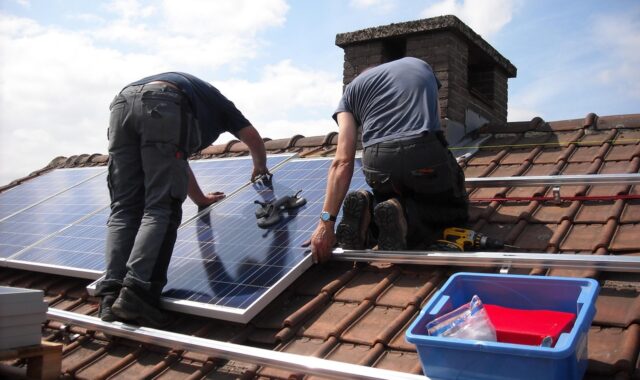
Portable folding panels are useful for renters, temporary backup, camping, and emergency kits. They are easy to store but require manual setup and can be limited by weather and security concerns during an outage. Rooftop solar is more productive and permanent, but standard grid-tied solar alone usually shuts down during an outage unless it is paired with compatible battery storage and islanding equipment. That is a system design issue, not a panel quality issue.
Compare portable, installed, and fuel-based backup options
A solar generator is one option among several. The right choice depends on outage duration, load size, budget, safety priorities, and whether the home can support permanent electrical work.
| Option | Strengths | Limits | Best fit |
|---|---|---|---|
| Portable solar generator | Indoor battery use, quiet operation, no exhaust at point of use, movable | Limited capacity and solar recharge speed | Essentials, renters, short outages, small appliances |
| Installed solar-plus-storage | Can support selected circuits automatically, integrates with rooftop PV | Higher cost, permitting, professional installation | Home resilience, critical-load panels, frequent outages |
| Fuel generator | High output and long runtime if fuel is available | Carbon monoxide, noise, fuel storage, maintenance | Heavy loads and long outages where outdoor operation is safe |
The U.S. Environmental Protection Agency and public safety agencies emphasize that fuel-burning portable generators create carbon monoxide risk and should never be used indoors, in garages, or near openings where exhaust can enter. Battery and solar power stations avoid engine exhaust during use, which is a major advantage for indoor plug-in loads. However, batteries still require safe charging, ventilation as specified by the manufacturer, temperature control, and protection from water and physical damage.
Safety and specification checks before buying
For a home backup device, safety marks and documentation are part of the product, not optional extras. The relevant standard depends on the product type. UL 2743 is a recognized standard for portable power packs. UL 9540 applies to energy storage systems and equipment, especially fixed or residential ESS installations. Local code officials, installers, and insurers may have additional requirements for stationary systems.
Before purchasing, review the manual and product label for:
- Applicable safety listing or certification for the product category.
- Battery chemistry, such as lithium iron phosphate or other lithium-ion types.
- Operating and storage temperature range.
- Maximum solar input voltage, current, and wattage.
- Battery cycle-life rating and warranty conditions.
- Clear instructions for grounding, transfer equipment, or home integration if supported.
- Replacement battery policy, service support, and firmware or app dependence.
Lithium iron phosphate batteries are common in newer home backup power stations because they are often associated with longer cycle life and improved thermal stability compared with some other lithium-ion chemistries. That does not remove the need for certification, safe charging, and manufacturer instructions. A well-designed battery management system should monitor voltage, current, temperature, and state of charge, but buyers should not assume all products implement protection equally.
A practical buying workflow
- Define the outage goal. Decide whether you need four hours, overnight backup, one day, or multi-day resilience.
- List critical loads only. Separate must-run loads from comfort loads.
- Calculate watt-hours. Multiply watts by hours and add a margin.
- Check surge power. Confirm the inverter can start refrigerators, pumps, or compressors if those loads are included.
- Match solar input. Make sure the unit can accept enough solar wattage to recover useful energy during daylight.
- Plan safe connection. Use extension cords only as allowed by the manufacturer, and use a qualified electrician for any connection to home wiring.
- Test before an outage. Run the actual devices, measure runtime, and practice solar recharging in normal conditions.
The practical conclusion is straightforward: a solar generator is most valuable when it is sized for a defined backup job. Buying far more capacity than needed can waste money, while buying too little creates false confidence. A balanced system has enough battery for the night, enough inverter power for startup loads, and enough solar input to recover meaningful energy the next day.
Frequently asked questions
Can a solar generator power an entire house?
A portable unit usually cannot power an entire house in the way a utility connection does. It may support selected plug-in appliances or, with approved equipment, selected circuits. Whole-home or partial-home backup generally requires a professionally installed battery system, transfer equipment, and a design based on the home’s electrical loads.
How many watts should a solar generator for home use have?
For light essentials, many households look for at least 1,000-2,000 W of continuous AC output. If the plan includes a refrigerator, pump, microwave, or other motorized and high-draw loads, check both continuous watts and surge watts. Capacity in kWh determines runtime; output in watts determines what the unit can run.
How much battery capacity is enough for a refrigerator?
It depends on the refrigerator model, room temperature, door openings, and compressor cycling. As a planning range, many full-size refrigerators may use around 1-2 kWh per day. A battery in the 2-3 kWh range may support a refrigerator plus a few small essentials for a limited period, but testing your actual appliance is the best method.
Can solar panels recharge the battery during a blackout?
Yes, if the power station supports solar charging and the panels are compatible with its input voltage and current limits. Recharge speed depends on panel wattage, sunlight, weather, and the unit’s solar input limit. A large battery with low solar input may still take more than a day to refill.
Is a solar generator safer than a gas generator?
For indoor plug-in use, a battery power station avoids carbon monoxide exhaust, fuel storage, and engine noise. That is a major safety advantage. It still carries electrical and battery risks, so it should be certified for its intended use, kept dry, operated within temperature limits, and connected only as the manufacturer and local codes allow.