Thermal energy storage systems for buildings, industry and grid flexibility

Why thermal energy storage systems matter now
Thermal energy storage systems store heat or cold in a material and release it later when that energy is more useful or more valuable. Instead of storing electricity directly, they store energy as a temperature difference, a phase change or a reversible chemical reaction. That makes them relevant for buildings, district heating and cooling, industrial process heat, and some long-duration power applications where the final demand is thermal energy or where heat may later be converted back into electricity.
Interest in thermal storage is rising because heat is a major part of the energy system, not a niche end use. The International Energy Agency has reported that heating and cooling account for more than half of global end-use energy consumption. The U.S. Department of Energy also describes thermal energy storage as a way to shift energy use from hours to weeks, support heat pumps, and reduce wasteful conversions between heat and electricity. For readers tracking broader storage topics, the energy storage category provides related context.
How thermal energy storage works
A thermal storage system has four basic functions: charging, storing, retaining and discharging energy. During charging, electricity, solar heat, industrial waste heat or another source raises or lowers the temperature of a storage medium. The system then holds that energy in insulated tanks, beds, vessels, building materials or underground structures. During discharge, the stored heat or cold is used directly or transferred through a heat exchanger to serve a load.
The key design question is not only how much energy can be stored. The stored temperature, duration, discharge rate and integration method must match the real load. A chilled-water tank in a commercial building, a hot-water tank connected to a heat pump, a molten-salt system at a concentrating solar plant and a high-temperature solid-particle system for industrial heat all sit within the same broad category, but they are built for different operating problems.
In practice, a useful thermal storage project normally starts with four questions:
- What temperature is needed at discharge?
- How long must the system hold useful heat or cold?
- Is the purpose cost shifting, resilience, emissions reduction, peak reduction or process continuity?
- Can the stored energy be used directly, or must it be converted back to electricity?
Direct use is often where thermal storage is strongest. If a building needs cooling in the afternoon, stored chilled water or ice can reduce chiller operation during peak power hours. If an industrial process needs heat, stored heat may reduce fuel use at the point of use. If electricity must be regenerated, the system needs a turbine, engine or other power block, which adds cost and conversion losses.
Main types of thermal energy storage systems
Most technologies fall into three categories: sensible heat, latent heat and thermochemical storage. The distinction matters because each category has different maturity, cost drivers, safety considerations and operating temperature ranges.
| Storage type | How it stores energy | Common media | Typical strengths | Key limitations |
|---|---|---|---|---|
| Sensible heat | Raises or lowers the temperature of a material without changing its phase | Water, rocks, concrete, sand, ceramic particles, molten salts | Technically mature, relatively simple, often scalable with material volume | Energy density depends on temperature range and material heat capacity |
| Latent heat | Stores energy during a phase change, usually melting and solidifying | Ice, paraffin waxes, salt hydrates, molten-salt phase change materials | Can store more energy within a narrower temperature band | Material stability, cycling behavior and heat-transfer design can be challenging |
| Thermochemical | Stores energy in reversible chemical reactions or sorption processes | Salt hydrates, metal oxides, hydroxides, sorption pairs | Potential for higher energy density and longer storage duration | Often less mature and more complex at system level |
Sensible heat storage
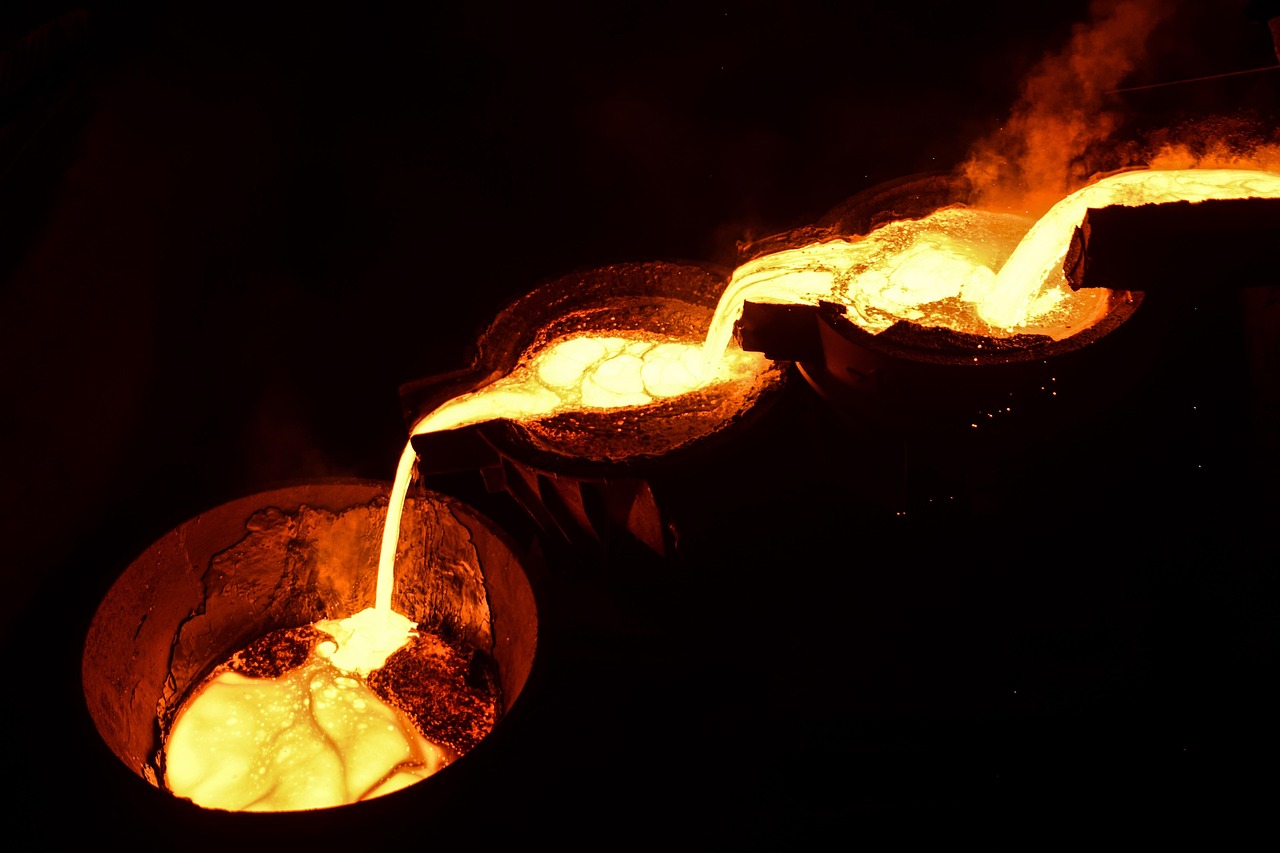
Sensible heat is the most familiar approach. Hot-water tanks, chilled-water tanks and underground thermal storage are common low-temperature examples. At higher temperatures, molten salts, rocks, sand, concrete and ceramic particles can store energy for industrial heat or power applications. The DOE’s Storage Innovations 2030 thermal storage assessment notes that commercial molten nitrate salt systems often use a solar-salt mixture of sodium nitrate and potassium nitrate and operate in a high-temperature range suitable for concentrating solar power.
The attraction of sensible heat is practical: the physics is straightforward, and many storage media are inexpensive. The drawback is that useful storage capacity depends on how much the material temperature can change while staying within the required operating window. If a process needs steam within a tight temperature range, a wide temperature swing may not be acceptable without additional heat-exchange design.
Latent heat storage
Latent heat systems use phase change materials, or PCMs. Ice storage is a well-known cooling example: energy is stored as water freezes and later released as ice melts. At higher temperatures, waxes, salts and metallic materials can be selected for specific melting points. Recent research reviews, including 2025 and 2026 work in energy storage journals, continue to examine molten-salt PCMs for medium- and high-temperature storage, with attention to corrosion, thermal stability, cost and long-term cycling behavior.
The value of latent heat storage is that the discharge temperature can remain relatively stable during the phase change. That is useful when a building system or industrial process needs a narrow temperature band. However, PCM systems are not automatically simpler than sensible systems. Encapsulation, conductivity enhancement, volume change, material compatibility and degradation over many cycles can determine whether a lab material becomes a bankable field system.
Thermochemical storage
Thermochemical storage uses reversible reactions or sorption processes to store and release heat. In theory, it can deliver higher energy density than sensible heat and can retain energy for longer periods with lower standing losses because energy is stored in chemical potential rather than only as temperature. That makes it attractive for seasonal storage, building heat and some industrial concepts.
The limitation is maturity. Reactor design, mass transfer, safety, material durability and cost remain central questions. For many commercial buyers, thermochemical systems are still better viewed as an emerging option to monitor rather than the default choice for near-term projects.
Where thermal storage fits best
Thermal storage is not a single market. It becomes valuable when a timing mismatch creates a cost, reliability or emissions problem. The strongest applications usually have a predictable thermal load, a useful temperature difference between charging and discharging, or a clear price signal for shifting electricity use.
Buildings and campuses
Buildings use thermal storage mainly for cooling, heating, water heating and grid flexibility. Ice or chilled-water storage can shift cooling demand away from peak hours. Hot-water storage can pair with electric heat pumps so the heat pump runs when electricity is cheaper, cleaner or less constrained. The DOE has emphasized that building thermal storage can help balance supply and demand during peak periods and extreme weather, especially when combined with heat pumps.
Campuses, hospitals, airports and large commercial buildings are often easier candidates than small single buildings because they have larger, more predictable loads and more space for tanks or central plant equipment. For residential buildings, compact storage and controls are critical because available space and installation cost can dominate the decision.
District heating and cooling
District energy networks are a strategic fit because they already distribute heat or cold through infrastructure. The IEA’s 2026 work on renewables in district energy states that district energy supplies around 10% of global final energy consumption for heat, while heating and cooling together represent more than half of global end-use energy consumption. The same analysis highlights the policy value of recognizing thermal storage and large-scale heat pumps as flexibility assets.
Large hot-water tanks, pit thermal energy storage and aquifer storage can help district systems integrate waste heat, solar thermal, geothermal, heat pumps and lower-cost electricity. They can also reduce reliance on fossil boilers during peaks. The technical challenge is local: network temperature, land availability, soil conditions, permitting and the age of existing infrastructure all shape the practical options.
Industrial heat
Industrial process heat is one of the most important areas for thermal storage because many factories need heat directly. Electrified boilers, resistive heaters, heat pumps, solar thermal collectors or recovered waste heat can charge storage, which then supplies steam, hot air or process heat when needed. The DOE’s industrial programs have funded projects related to electrification of industrial heat, reflecting policy interest in technologies that can reduce fuel use in manufacturing. See also: solar products.
High-temperature storage is also where materials become more demanding. Molten salts must be managed for freezing risk, corrosion and containment. Solid particles and rocks avoid some liquid-handling issues, but they require robust conveyors, heat exchangers and insulation. For processes above several hundred degrees Celsius, the storage medium cannot be selected only for cost; it must also withstand the operating atmosphere, cycling rate and maintenance environment.
Power and long-duration storage
Thermal storage can support the power sector in two main ways. First, it can store heat in power plants or solar thermal systems and later produce steam for electricity generation. Second, power-to-heat-to-power concepts can use surplus electricity to charge thermal storage and later convert heat back to electricity. This is sometimes discussed as a long-duration storage pathway because the storage medium can be relatively low cost compared with electrochemical cells.
The trade-off is efficiency. A battery stores and returns electricity directly, while a thermal-to-power system must convert electricity to heat and then heat back to electricity. That conversion chain can be justified where long duration, low storage-media cost, local heat use or grid resilience is more valuable than round-trip efficiency alone.
How thermal storage compares with batteries
Batteries and thermal storage should not be treated as direct substitutes in every case. Batteries are usually better when the output must be electricity, response must be very fast, and space is limited. Thermal storage is often more attractive when the final use is heating or cooling, the required duration is long, or low-cost storage media can be used at scale.
A simple rule is to avoid unnecessary conversions. If the end use is cooling, storing cold can be more logical than storing electricity and later running chillers during a peak. If the end use is industrial heat, storing heat can be more direct than storing electricity and then converting it to heat at discharge. If the end use is grid electricity, batteries, pumped hydro, hydrogen, compressed air and thermal-to-power systems need to be compared on duration, cost, location, response, efficiency and permitting.
Thermal storage also has a different supply-chain profile. Water, rock, sand, concrete and salts are not equivalent to lithium-ion cells in manufacturing, mineral intensity or recycling requirements. That does not mean every thermal system is automatically low-impact. Insulation materials, containment metals, salt handling, heat-transfer fluids, pumps, land use and civil works still matter. The environmental case depends on the full system design and the energy source used for charging.
Design questions buyers should ask before specifying a system
Because thermal storage is highly application-specific, early screening should be based on operating requirements rather than technology labels. A promising system for chilled-water peak shaving may be irrelevant for a kiln, and a high-temperature industrial store may be unnecessary for domestic hot water.
- Temperature match: What minimum discharge temperature is required, and how much decline is acceptable during discharge?
- Duration: Is the target daily shifting, multi-day resilience or seasonal storage?
- Power rating: How quickly must heat or cold be delivered?
- Charge source: Will the system use electricity, solar heat, waste heat, geothermal heat or fuel-fired backup?
- Integration: Can existing equipment use the stored heat or cold, or are new heat exchangers, controls and pumps required?
- Losses: How much energy is lost over the expected storage period?
- Safety and maintenance: Are there risks from high temperature, pressure, freezing, corrosion, chemical reactivity or confined spaces?
- Commercial maturity: Is the technology proven at the same temperature, scale and cycling pattern as the planned project?
The last question is especially important. Many storage concepts look attractive in material-level energy density charts, but project economics depend on tanks, insulation, structural support, controls, power electronics, heat exchangers, installation, operations and downtime risk. A credible proposal should make these balance-of-system assumptions visible.
What to watch through 2026
The most important trend is the widening role of thermal storage beyond conventional solar thermal plants and ice storage. Policy attention is moving toward industrial heat, grid-interactive buildings, district energy and long-duration flexibility. Recent IEA and DOE publications do not suggest that one thermal storage design will dominate every segment. Instead, they point to a portfolio: water and ice for buildings, large hot-water and pit storage for district networks, molten salts and particles for high-temperature uses, and emerging thermochemical systems where longer duration or compact storage is needed.
For buyers and developers, the practical opportunity is to match the storage mechanism to the thermal problem. The most bankable projects are likely to be those that reduce peak demand, use existing thermal loads, avoid unnecessary electricity conversion and have clear operating schedules. More experimental systems may create value later, but they need transparent performance data at relevant scale before broad deployment.
Frequently asked questions
Are thermal energy storage systems only for renewable energy?
No. They can store renewable heat, low-cost grid electricity, waste heat, geothermal heat or conventional heat. Their decarbonization value depends on what charges the system and what fuel or equipment operation it displaces.
Can thermal storage provide long-duration energy storage?
Yes, in some applications. Large water, underground, particle, rock or molten-salt systems can store useful energy for many hours, and some designs target multi-day or seasonal storage. However, duration must be evaluated together with thermal losses, discharge temperature and the value of the served load.
Is molten salt the same as a battery?
No. Molten-salt thermal storage stores energy as heat, while a battery stores electrochemical energy and returns electricity directly. Molten salt can support electricity generation when paired with a power cycle, but it is not an electrochemical battery.
What is the biggest barrier to adoption?
The main barrier is not one single issue. It is the need to match temperature, duration, controls, space, safety and economics to a specific site. For emerging materials, long-term cycling data and system-level cost are often more important than laboratory energy density.
When is thermal storage better than batteries?
Thermal storage is often better when the final demand is heat or cold and when energy can be stored in low-cost media for several hours or longer. Batteries are usually better when the required output is electricity, fast response and compactness are priorities.