How to choose EV charging station equipment for reliable sites
Start with the charging job, not the charger catalog
EV charging station equipment should be chosen around the job the site has to do: how long vehicles will be parked, how many drivers it must serve, what electrical capacity is available, and how faults will be handled. A workplace, apartment garage, highway stop and fleet depot can all use EVSE, but they rarely need the same combination of AC chargers, DC fast chargers, connectors, payment systems, networking and service contracts. Stronger projects define dwell time, expected daily sessions, vehicle types, uptime targets and expansion needs before comparing charger brands or nameplate kilowatt ratings.
For readers tracking hardware trends, policy changes and infrastructure planning, the charging equipment section offers related coverage.

What is included in EV charging station equipment?
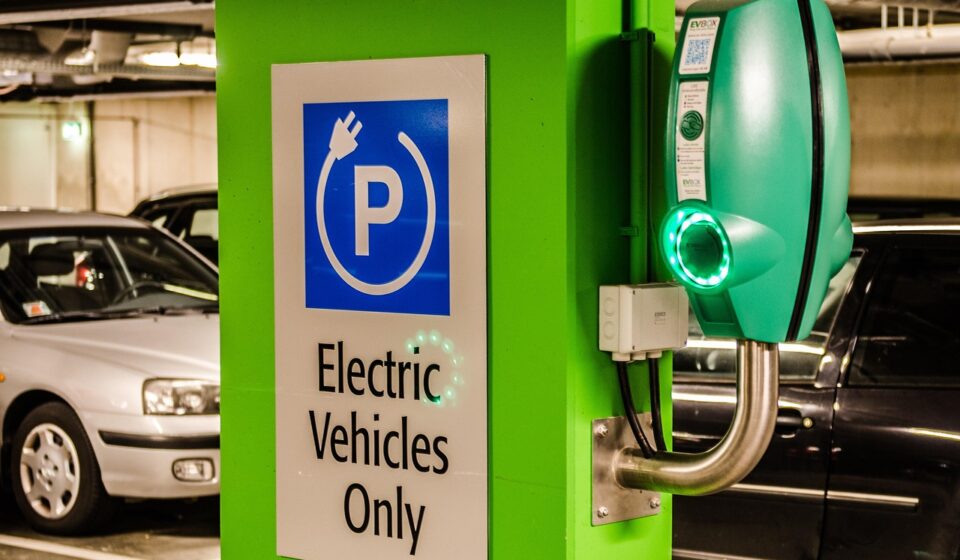
In project planning, “EV charging station equipment” means more than the visible pedestal or wall box. A complete site may include the EVSE unit, connector and cable assembly, power modules, switchgear, transformer upgrades, protective devices, metering, payment terminal, cellular or wired communications, charger management software, parking layout, lighting, bollards, cable retractors, signs and maintenance tools.
The equipment boundary matters because many site problems are not caused by the charger alone. A well-rated DC fast charger can still underperform if utility service is insufficient, the parking layout creates cable strain, the back-end network fails, or replacement parts are not available. For commercial projects, procurement should treat the station as an integrated electrical, digital and service system.
Match charger level to site use
The U.S. Department of Energy’s Alternative Fuels Data Center describes AC Level 2 charging as common for home, public and workplace use, with Level 2 units generally ranging from 2.9 kW to 19.2 kW and often suitable for overnight charging. The same DOE resource describes DC fast charging as corridor-oriented equipment that can operate at much higher power levels, with actual charging speed depending on the vehicle and battery state of charge. (afdc.energy.gov)
| Site type | Typical equipment fit | Planning priority |
|---|---|---|
| Workplace parking | Networked AC Level 2 | Long dwell time, fair access rules, load management |
| Multifamily property | AC Level 2, sometimes shared DC charging | Billing, assigned parking, panel capacity, tenant access |
| Retail or hospitality | AC Level 2 or moderate-power DC fast charging | Visit length, payment flow, visibility, maintenance response |
| Highway corridor | DC fast charging with multiple ports | Throughput, uptime, connector coverage, utility capacity |
| Fleet depot | AC Level 2, DC fast charging, or a mixed depot system | Route schedule, managed charging, energy cost control |
As a starting point, let dwell time determine the first equipment shortlist. If vehicles remain parked for six to ten hours, AC Level 2 can often meet the charging need with lower electrical demand. If drivers expect a short stop, DC fast charging becomes more relevant, but it also raises requirements for power delivery, cooling, site design, payment reliability and service response.
Standards and connector strategy affect long-term value
In North America, safety and compliance reviews commonly involve the National Electrical Code and product standards such as ANSI/UL 2594 for EV supply equipment and ANSI/UL 2202 for DC charging equipment. UL Solutions also identifies grounding, isolation monitoring, thermal management and user-interface safety as important areas for charging infrastructure design and operation. (ul.com)
Publicly funded U.S. charging projects may also need to consider National Electric Vehicle Infrastructure standards. The U.S. Department of Transportation’s final rule for NEVI-funded projects covers installation, operation, maintenance, interoperability, signage, data, network connectivity and public information such as pricing and availability. (transportation.gov) For corridor-serving DC fast chargers under 23 CFR 680.106, the rule requires at least 150 kW continuous power delivery from each applicable DC fast charging port, while AC Level 2 ports must provide at least 6 kW per port where the rule applies. (govinfo.gov)
Connector planning is changing quickly in North America. SAE J3400, the standardized version of the North American Charging System, was issued in December 2023 and revised as a Recommended Practice on September 30, 2024. The SAE scope covers physical, electrical, functional, safety and performance requirements for conductive AC single-phase or DC power transfer through the coupler. (saemobilus.sae.org) For federally funded sites, the Joint Office has stated that J3400 can be included when a CCS1 connector that meets the final rule’s minimum requirements is also present. (driveelectric.gov)
Compare hardware architecture, not just rated power
Two chargers with the same power rating can have very different maintenance and expansion profiles. An all-in-one DC fast charger places conversion equipment and the dispenser in one enclosure, which can simplify small sites but may require more space and heavier equipment at each stall. A distributed architecture separates power cabinets from dispensers, which can support larger sites and flexible power sharing but adds design complexity.
Key hardware questions include whether power modules are replaceable in the field, whether the cable is liquid-cooled or air-cooled, whether the enclosure is suitable for local weather exposure, and how easily technicians can access filters, contactors, screens, card readers and communication modules. Cable reach should be checked against the parking layout and vehicle inlet positions. A charger that looks adequate on a drawing may be frustrating in operation if drivers must park at awkward angles or if cables drag on the ground.
Electrical design should also account for future expansion. Conduit, switchgear and transformer planning can be more expensive to modify after paving and commissioning. Even if a site begins with lower utilization, leaving room for additional ports, power cabinets or energy management can reduce disruption later.
Software, payments and data are part of the equipment decision
Modern chargers are networked assets, so software capability should be evaluated with the same care as cables and power modules. The Open Charge Alliance describes OCPP as an open communication protocol between charging stations and charging management systems, intended to support interoperable and scalable infrastructure. OCPP 1.6 remains widely used, while OCPP 2.0.1 and OCPP 2.1 add stronger support for areas such as device management, security, smart charging and ISO 15118-related functionality. (openchargealliance.org)
For projects subject to 23 CFR 680.108, charger-to-network communication must conform to OCPP 1.6J or higher, and the regulation set February 28, 2024 as the date by which chargers must conform to OCPP 2.0.1. The same section addresses ISO 15118 capability and network-to-network communication through OCPI 2.2.1 for applicable charging networks. (law.cornell.edu) See also: solar products.
Outside regulated projects, these protocols still matter because they influence vendor flexibility. A site owner should ask whether chargers can securely switch network providers without hardware replacement, whether transaction records can be exported, how remote diagnostics are handled, and what happens if cellular coverage is weak. Payment hardware should also be matched to the site: a private fleet depot may not need public payment terminals, while a retail DC fast charging site usually needs clear pricing, receipts and reliable ad hoc access.
Reliability should drive the final shortlist
Reliability should be specified, not assumed. It depends on equipment design, installation quality, software stability, network connectivity, spare-parts logistics and maintenance response. Under the NEVI framework, each charging port must have average annual uptime greater than 97%, and a port is considered up only when hardware and software are online and the port can successfully dispense electricity according to the required minimum power level. (govinfo.gov)
Even for sites outside NEVI, that definition is a useful procurement benchmark because it focuses on the driver’s outcome rather than the charger’s theoretical availability. A station that appears online but cannot authorize a session, communicate price, unlock a connector or deliver expected power is not performing its job.
- Require a written service-level agreement with response times for critical faults.
- Confirm local technician coverage and commissioning experience.
- Ask which parts are stocked regionally, not only at the factory.
- Review remote diagnostics, firmware update controls and rollback procedures.
- Check cable management, screen durability, connector holsters and weather protection.
- Define who monitors alarms after business hours.
- Include preventive maintenance, cleaning and inspection tasks in the operating budget.
A practical procurement checklist
Before issuing a purchase order, site owners and project teams can reduce risk by documenting the operating assumptions behind the equipment choice. The checklist below is not a substitute for engineering review, permitting or code compliance, but it helps align commercial, technical and operational requirements.
| Decision area | Questions to answer before purchase |
|---|---|
| Charging demand | How many vehicles charge daily, what is their dwell time, and how much energy must be delivered per session? |
| Power capacity | Is existing service enough, or will the project need transformer, switchgear or utility upgrades? |
| Connector mix | Which vehicles will use the site now, and how will CCS, J1772 or J3400 needs change over the equipment life? |
| Compliance | Which local codes, product certifications, accessibility rules and funding requirements apply? |
| Networking | Does the charger support open protocols, secure updates, remote diagnostics and data export? |
| Payments | Is the site private, semi-public or fully public, and what payment methods are required? |
| Maintenance | Who owns uptime monitoring, parts replacement, firmware management and field service? |
| Expansion | Can conduit, power cabinets, parking layout and software licenses support more ports later? |
The strongest proposals are usually specific about assumptions. Instead of asking for “four fast chargers,” a site owner might specify the number of ports, simultaneous power requirement, connector configuration, OCPP version, payment requirements, warranty length, maintenance response time, spare-parts plan and commissioning tests. That level of detail makes bids easier to compare and reduces the chance of buying equipment that meets a nameplate target but fails the operating requirement.
Frequently asked questions
Is higher kW always better for EV charging station equipment?
No. Higher power can improve throughput at short-stop sites, but it may increase utility upgrade costs, heat management needs and maintenance complexity. For long-dwell sites such as workplaces or multifamily parking, more lower-power ports can sometimes serve drivers better than fewer high-power units.
What is the difference between EVSE and a charger?
EVSE generally refers to the supply equipment that safely delivers electricity to the vehicle and manages communication and protection functions. In everyday language, people often call the visible EVSE a charger, although AC charging still uses the vehicle’s onboard charger to convert AC power for the battery.
Should new sites include J3400 connectors?
In North America, J3400 planning is increasingly important, but the right connector mix depends on the vehicles served, funding rules and regional adoption. Sites that must comply with federal requirements should verify current CCS and J3400 rules before procurement rather than assuming one connector can serve every obligation.
Why is OCPP important in charging equipment selection?
OCPP can reduce dependence on a single proprietary network by defining communication between chargers and management systems. It does not automatically guarantee a perfect user experience, but it is an important part of interoperability, diagnostics, smart charging and future network flexibility.
What should be checked after installation?
Commissioning should confirm electrical safety, connector function, payment flow, network communication, pricing display, data reporting, emergency procedures, cable reach and successful charging sessions with representative vehicles. Ongoing inspection and maintenance should then be scheduled before the site opens to regular users.