How to choose an EVSE charging station for public and workplace charging
What an EVSE charging station actually does
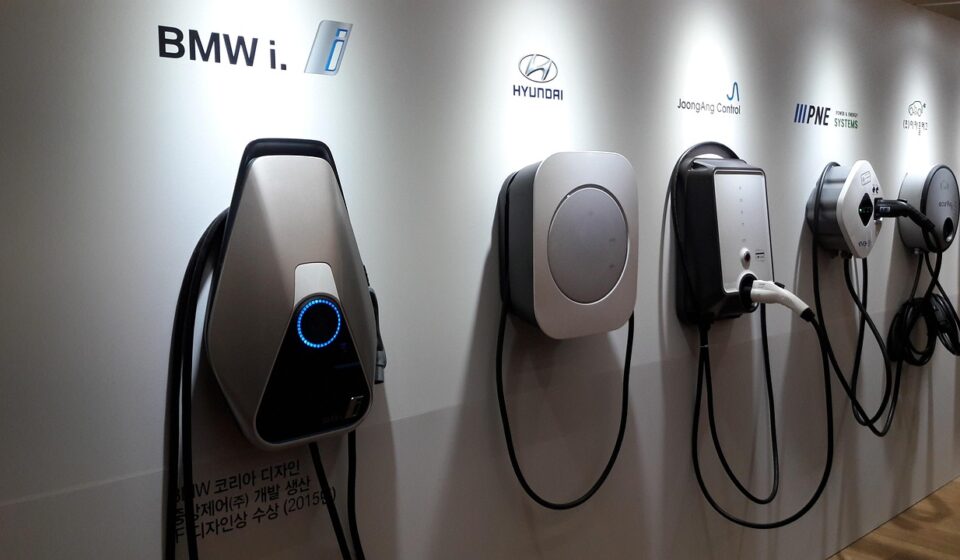
An EVSE charging station should be selected around the driver use case first, not the highest advertised kilowatt rating. EVSE means electric vehicle supply equipment. In AC charging, the station provides controlled power and safety communication, while the vehicle onboard charger converts AC to DC for the battery. In DC fast charging, the offboard charger performs that conversion before delivering DC power directly to the vehicle battery system. In practice, the decision comes down to dwell time, site electrical capacity, connector compatibility, software needs, payment requirements, safety certification and long-term maintenance.
Charging infrastructure is expanding quickly, but scale alone does not make planning easier. The International Energy Agency reported in its Global EV Outlook 2026 that public charging points worldwide reached more than 7 million at the end of 2025 after more than 1.8 million were added during the year. The same report estimated about 11 electric light-duty vehicles per public charging point globally, while the United States had a higher ratio of about 33 electric light-duty vehicles per public charging point. These figures show why station planning is no longer just a matter of adding plugs. Sites need the right power level, in the right location, with reliable operation.
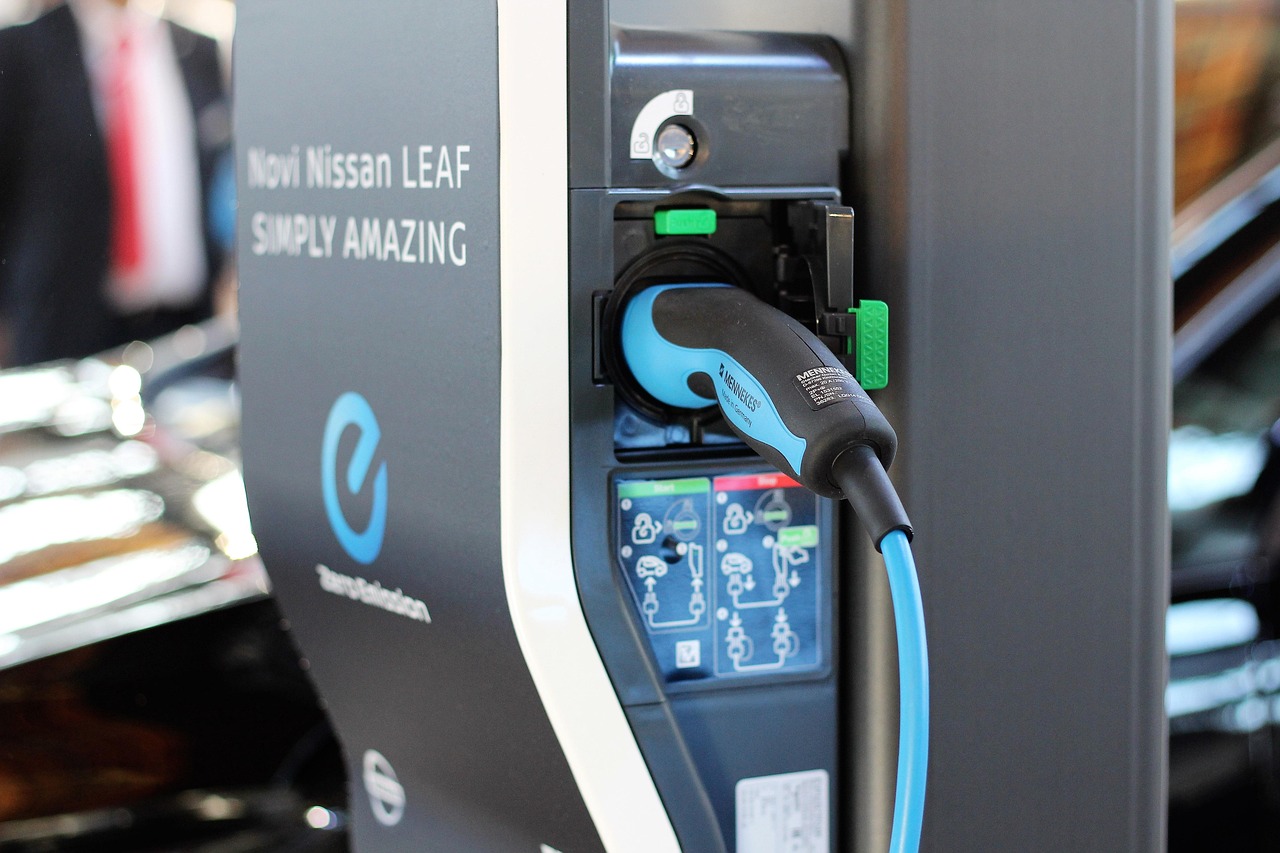
Match charging level to dwell time and site purpose
The U.S. Alternative Fuels Data Center groups light-duty EV charging into AC Level 1, AC Level 2 and DC fast charging. Each level can work when it matches how long vehicles normally remain parked. A workplace, apartment building or destination site often has several hours of dwell time, so Level 2 can meet many charging needs with lower electrical intensity. Highway corridors, taxi depots and high-turnover retail sites often require DC fast charging because drivers expect meaningful range in minutes, not hours.
| Charging type | Typical use | Common charging experience | Main limitation |
|---|---|---|---|
| AC Level 1 | Emergency, residential or very long dwell parking | About 5 miles of range per hour under AFDC assumptions | Too slow for most public commercial sites |
| AC Level 2 | Workplaces, hotels, apartments, retail, public parking | Often described around 25 miles of range per hour, with equipment commonly ranging from about 2.9 kW to 19.2 kW | Not ideal when drivers need a quick turnaround |
| DC fast charging | Highways, fleets, travel plazas, short-stop retail and high-utilization hubs | Often adds roughly 100 to 200-plus miles in about 30 minutes depending on vehicle and charger capability | Higher grid, installation, cooling, service and demand-charge exposure |
A common planning mistake is assuming DC fast charging is automatically the better choice. High-power equipment can be the right answer for corridor charging, but it may be uneconomic where vehicles remain parked for a workday or overnight. Conversely, Level 2 may frustrate drivers at a travel plaza because the site purpose implies speed. A better starting point is to map average parking duration, driver urgency, vehicle battery size, expected sessions per day and whether the site is mainly a convenience amenity or a revenue-generating charging service.
Connector strategy in 2026 is a transition issue
Connector choice is one of the most important practical questions for an EVSE charging station, especially in North America. J1772 has long been the common AC connector for non-Tesla vehicles, while CCS1 combines the J1772 AC layout with additional DC pins for fast charging. CHAdeMO remains relevant for some older vehicles, but new public DC fast-charging deployment has shifted heavily toward CCS and J3400 support.
The North American connector landscape changed after Tesla opened its connector design as NACS and SAE moved to standardize it as J3400. SAE published the J3400 technical information report in December 2023, and the J3400 recommended practice followed in 2024. The Joint Office of Energy and Transportation has described J3400 as a pathway for broad industry use of the former NACS connector across vehicles and charging stations. Many automakers announced plans to adopt J3400 beginning with 2025 model cycles or to provide adapters for existing CCS vehicles, but mixed fleets will remain on the road for years.
For a public North American site, that transition supports flexible connector planning. A corridor DC fast-charging site may need CCS1 support for the existing fleet while adding J3400 to serve newer vehicles and reduce adapter friction. For AC Level 2 sites, J1772 may still be needed for broad compatibility, while J3400 can improve native access for Tesla and future J3400-equipped vehicles. In Europe and many other markets, Type 2 and CCS2 planning rules differ, so the local vehicle mix and electrical codes should drive the final connector specification.
The standards layer matters as much as the hardware
EVSE selection is not only a cabinet, cable and connector decision. Standards influence safety, interoperability, maintenance and future software options. In North America, UL Solutions lists ANSI/UL 2594 for AC electric vehicle supply equipment, ANSI/UL 2202 for DC charging equipment, ANSI/UL 2251 for plugs, receptacles and couplers, and related personnel-protection standards such as UL 2231. International projects often evaluate IEC 61851 for conductive charging systems and the IEC 62196 connector series. The exact compliance path depends on market, voltage system, permitting authority and project type.
Software standards are equally important for networked stations. The Open Charge Alliance describes OCPP as the open protocol between charging stations and charging management systems. OCPP 1.6 remains widely deployed, while OCPP 2.0.1 and OCPP 2.1 add stronger support for device management, security, smart charging and ISO 15118 related functions. OCPP version choice affects whether an operator can change network providers, monitor faults consistently, manage tariffs, support load control or integrate with fleet and energy systems.
ISO 15118 covers communication between the EV and EV supply equipment, including functions related to identification, charge control, payment, load leveling, cybersecurity, privacy and bidirectional energy transfer. In practical terms, it is one of the standards behind more automated charging experiences such as Plug and Charge and future vehicle-to-grid use cases. A buyer does not need every advanced feature on day one, but equipment that cannot support modern communication requirements may become a constraint before the hardware cabinet reaches the end of its service life.
Site economics depend on utilization, power and grid limits
The visible charger is only part of the project cost. Civil works, trenching, transformer upgrades, switchgear, panel capacity, utility interconnection, software fees, payment systems, signage, lighting and maintenance can materially affect total cost. This is why two stations with the same nameplate power can have very different economics. A 150 kW DC port at a site with available utility capacity may be a very different project from the same port at a constrained site that needs major service upgrades.
Policy benchmarks also shape expectations. For U.S. federally funded public charging under 23 CFR Part 680 and the NEVI program, corridor DC fast-charging stations are generally built around at least four network-connected DC fast-charging ports capable of serving four vehicles at the same time, with each corridor port expected to support up to 150 kW when requested by the vehicle. The rules also helped make 97% annual port uptime a widely discussed reliability benchmark. Even when a private project is not federally funded, these requirements influence what drivers, municipalities and fleet customers consider acceptable.
Power sharing can reduce infrastructure oversizing, but it needs to be clear to users and operators. A site with four 200 kW labeled ports may not deliver 200 kW to four vehicles at once if the power cabinet is shared. That is not necessarily a problem if vehicles have different acceptance rates and the operator publishes clear expectations. It becomes a problem when nameplate claims create driver disappointment or fleet scheduling errors. For workplace and multifamily sites, dynamic load management can be more valuable than oversized circuits because vehicles can charge over several hours while the system avoids peak load spikes. See also: solar products.
Reliability is now part of equipment selection
Early charging discussions focused on how many plugs existed. The more useful question now is how many ports work when drivers arrive. Reliability includes hardware uptime, successful session starts, cable condition, connector temperature management, network connectivity, payment acceptance, accurate real-time status and fast repair response. A station may appear on a map and still fail the driver if the app status is stale, the card reader is offline or the connector cannot communicate with the vehicle.
Good procurement language should include performance and service terms, not just hardware specifications. Operators should ask about remote diagnostics, spare-parts availability, mean time to repair, field technician coverage, warranty exclusions, firmware update policy, cybersecurity patching, payment terminal support and data export. For high-power DC charging, cable cooling and connector durability deserve particular attention because thermal derating can reduce the practical power a driver receives even when the charger is technically operating.
- Measure at the port level. A site-level uptime number can hide a failed connector on a dual-port unit.
- Track charging success rate. A port that is online but repeatedly fails authorization or handshake is not delivering value.
- Plan for physical wear. Cable management, connector holsters, lighting and curb layout reduce damage and misuse.
- Check payment resilience. Public stations should not depend on a single app-only pathway if the target users include visitors or occasional drivers.
- Design for maintenance access. Technicians need safe working space, not just a charger squeezed into the last available corner of a parking lot.
Procurement checklist for an EVSE charging station
Before selecting a model or network provider, site owners should build a simple requirements document. The goal is not to overcomplicate the purchase, but to prevent an avoidable mismatch between the charger, the driver and the site. The following checklist can help compare proposals on a like-for-like basis.
- Use case: Define whether the station serves employees, tenants, shoppers, highway travelers, delivery vehicles, taxis or a dedicated fleet.
- Dwell time: Match Level 2 or DC fast charging to the amount of time vehicles normally remain parked.
- Electrical capacity: Confirm service voltage, spare panel capacity, transformer limits, utility upgrade timing and demand-charge exposure.
- Connector mix: Specify J1772, CCS1, J3400 or local-market alternatives based on the vehicles expected during the next several years.
- Simultaneous output: Ask what power each port can deliver when every port is occupied, not only the maximum power under ideal single-vehicle conditions.
- Standards and certification: Confirm applicable UL, IEC, OCPP, ISO 15118 and local code requirements before purchase.
- Software and data: Require remote monitoring, pricing control, session data, fault logs, uptime reporting and export options.
- Payment and access: Decide whether the station is free, paid, employee-only, public, roaming-enabled or fleet-card controlled.
- Operations plan: Define who monitors alerts, who repairs faults, response-time targets and how drivers receive support.
- Expansion path: Leave electrical, conduit and parking-layout options for future ports if utilization grows.
For additional coverage of EV charging hardware, infrastructure and related components, visit the charging equipment section.
Frequently asked questions
What is the difference between EVSE and an EV charger?
In everyday language, people often call all charging equipment a charger. Technically, AC EVSE supplies controlled AC power and safety communication while the vehicle onboard charger converts that power for the battery. A DC fast charger performs the AC-to-DC conversion outside the vehicle and sends DC power directly to the battery system through the vehicle charging interface.
Is Level 2 or DC fast charging better for most public sites?
Neither is automatically better. Level 2 is often suitable where vehicles are parked for hours, such as workplaces, hotels, apartments and public garages. DC fast charging is better for short dwell-time sites such as highway corridors, high-turnover retail, ride-hail locations and fleet operations that need rapid turnaround. The best choice depends on dwell time, utilization, grid capacity and driver expectations.
Should new North American sites install CCS1 or J3400?
Many new public sites should consider both during the transition period. CCS1 remains important for a large existing vehicle fleet, while J3400 is becoming increasingly important for newer vehicles and Tesla-compatible access. The right mix depends on the local vehicle population, funding rules, network strategy and whether adapters are acceptable for the intended users.
What does OCPP do at a charging station?
OCPP is a communication protocol between the charging station and the charging management system. It helps operators manage sessions, pricing, status, firmware, diagnostics and data. Support for an open protocol can reduce dependence on a single proprietary back-end provider, although buyers still need to confirm exactly which OCPP version and features are implemented.
How many ports should a public EVSE charging station plan for?
A small destination site may start with a few Level 2 ports, while a corridor fast-charging site often needs at least four DC fast-charging ports to meet driver expectations and, in some U.S. funded projects, regulatory requirements. The planning question should include not only the starting count, but also space, conduit and electrical design for future expansion.