Car charging equipment explained for homes, fleets and public sites
What car charging equipment actually means
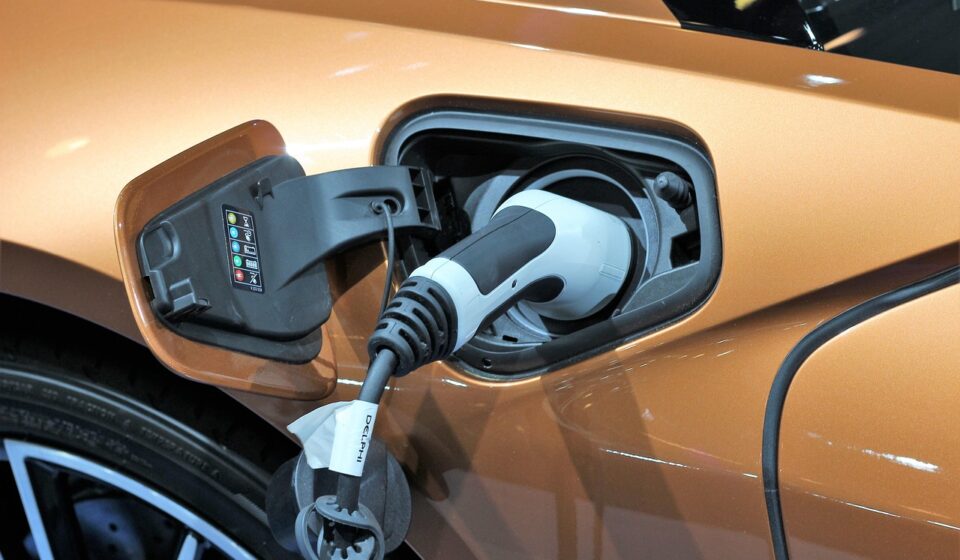
Car charging equipment is more than a cable between a vehicle and a power source. For homes, workplaces, fleets and public sites, it includes the electric vehicle supply equipment, connector, cable, enclosure, communications hardware, metering, safety systems, mounting, signage and the electrical infrastructure behind the unit. The right choice depends on where the vehicle parks, how long it can stay plugged in, how much power the site can supply and which connector the vehicle uses. For readers tracking the wider market, the charging equipment category is a useful place to follow related developments.
Charging speed is only one part of the decision. A well-matched Level 2 charger in the right parking location may be more useful than an oversized DC fast charger in the wrong setting. At the same time, the shift toward J3400/NACS connectors, stricter reliability expectations and smarter load management means buyers need to evaluate equipment as part of a complete charging system, not as a standalone device.
Charging levels and where each one fits
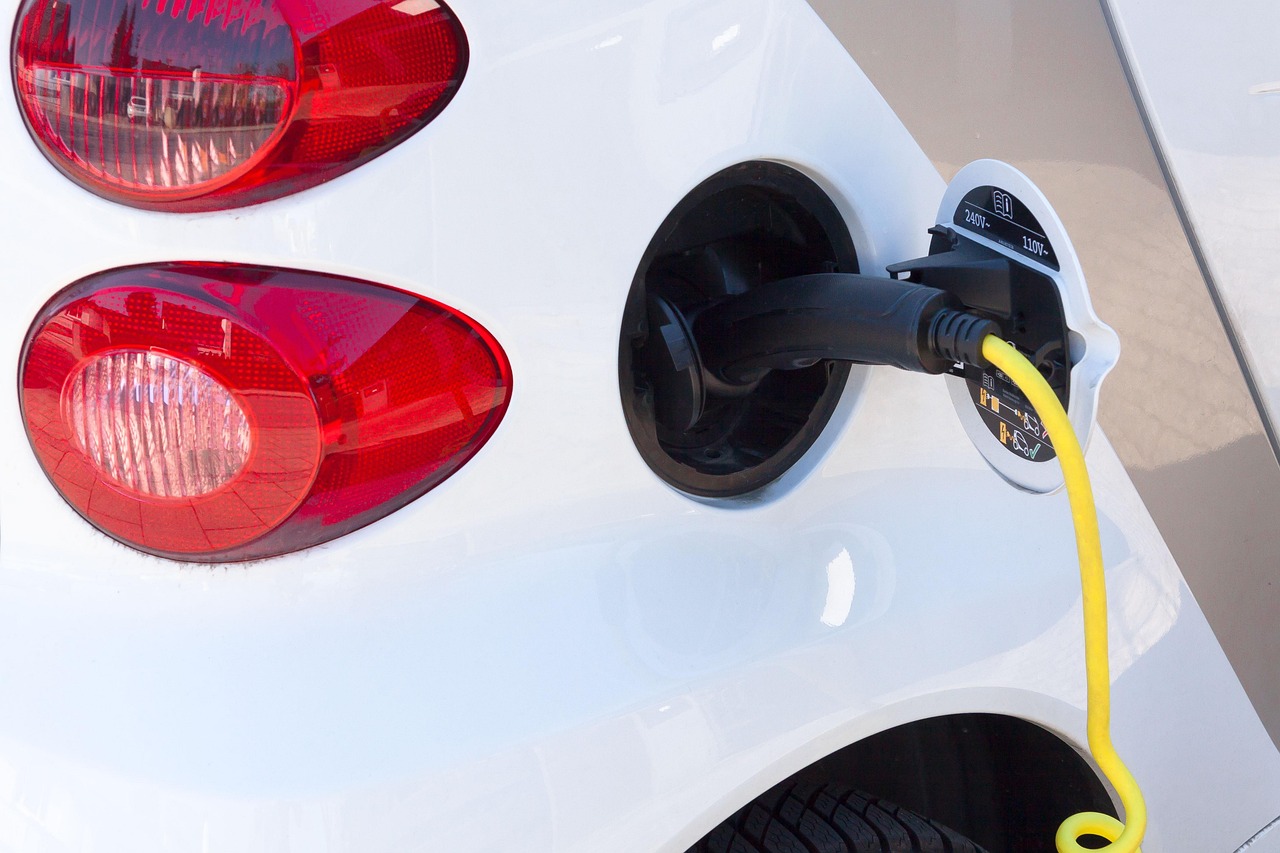
Public agencies such as the U.S. EPA and the U.S. Department of Energy commonly describe plug-in vehicle charging in three broad categories: Level 1, Level 2 and DC fast charging. These categories are useful because they connect electrical power, charging time and installation complexity.
| Equipment category | Typical power source | Common use | Practical planning point |
|---|---|---|---|
| Level 1 | 120 V AC outlet | Home charging, low-mileage drivers, emergency backup | Slow but simple. The EPA describes Level 1 as adding about 5 miles of range per hour under typical assumptions. |
| Level 2 | 208 V or 240 V AC service | Homes, apartments, workplaces, hotels, retail parking and fleet depots | The most flexible option for parked vehicles. DOE guidance describes Level 2 as commonly adding about 25 miles of range per hour, depending on vehicle and charger. |
| DC fast charging | High-power commercial electrical service | Highway corridors, urban fast-charging hubs, high-utilization fleets | Fast but complex. EPA guidance describes DC fast charging as adding roughly 100 to 300+ miles in 30 minutes under suitable conditions. |
Level 1 equipment is usually the lowest-cost path because many vehicles can use a portable cordset and an existing outlet. It can work well for short daily commutes, plug-in hybrids and drivers who park overnight. Its limitation is time. If a driver returns with a deeply depleted battery and needs the vehicle again soon, Level 1 may not recover enough range.
Level 2 equipment is the main workhorse for everyday car charging equipment. It uses AC power, and the vehicle’s onboard charger converts that power into DC for the battery. DOE’s Alternative Fuels Data Center notes that Level 2 equipment can range from 2.9 kW to 19.2 kW, while many residential units operate around 7.2 kW. In practice, delivered power depends on the vehicle’s onboard charger, the circuit rating and the charger setting.
DC fast charging works differently because the charger supplies DC power more directly to the battery and bypasses the vehicle’s onboard AC charger. That makes it suitable for travel corridors and high-turnover public sites, but it also raises the requirements for utility service, equipment cost, thermal management, payment systems and maintenance.
Connector compatibility is changing in North America
Connector choice is now one of the most important questions in car charging equipment planning. For AC Level 1 and Level 2 charging in North America, J1772 has long been the common connector for non-Tesla vehicles. The EPA notes that almost all vehicles use J1772 for Level 1 and Level 2 charging, while some newer vehicles beginning with model year 2025 started using J3400/NACS.
For DC fast charging, the main North American connector families are CCS1, CHAdeMO and J3400/NACS. CCS1 combines the J1772-style AC inlet with two additional DC pins. CHAdeMO has historically served some Japanese-brand EVs, but it is less central to new North American passenger-car planning than it once was. J3400/NACS, originally associated with Tesla vehicles, is moving through broader standardization and adoption.
The Joint Office of Energy and Transportation has explained that NACS can support AC Level 1, AC Level 2 and DC fast charging, and that J3400/NACS can be used through adapters in some cases. The same source also notes that federal highway requirements published in May 2023 allow J3400/NACS adapters on federally funded DC fast chargers as long as CCS1 capability remains present. In August 2024, the SAE EV Coupler Task Force voted to establish J3400 as a Recommended Practice, an important step toward wider industry confidence.
The practical result is a transition period, not an immediate replacement. A public charging site designed for broad access may need both CCS1 and J3400/NACS coverage. A workplace or apartment site may choose J1772, J3400/NACS or dual-cable equipment depending on the vehicles expected to park there. For private fleets, connector decisions should be based on the vehicles already ordered, not only on broad market headlines.
Reliability and rules are becoming part of the specification
In the early EV market, many equipment decisions focused mainly on power rating and connector type. That is no longer enough. As more drivers rely on charging infrastructure, reliability, payment access, real-time status and maintenance have become central equipment requirements.
For federally funded public charging projects in the United States, 23 CFR Part 680 sets minimum standards under the National Electric Vehicle Infrastructure program and related federal-aid highway funding. These rules include requirements covering installation, operation, maintenance, interoperability, network connectivity, public information, pricing and uptime. For applicable DC fast charging stations, the rules require at least four network-connected charging ports capable of serving multiple vehicles, CCS1 capability and an average annual charging-port uptime greater than 97%.
These federal requirements do not automatically apply to every private home, workplace or fleet charger. However, they are influencing expectations across the market. Site owners increasingly ask equipment suppliers about remote diagnostics, service response, spare parts, firmware updates, uptime reporting and network roaming. A charger that looks powerful on a brochure can still disappoint if the screen fails, the payment terminal is unreliable, the cable is too short or the unit cannot communicate with the network.
Reliability also depends on the whole site. Utility interruptions, cellular dead zones, poorly protected cables, water intrusion, vandalism, blocked spaces and insufficient maintenance can all reduce successful charging sessions. A useful equipment specification therefore covers hardware durability, software support, installation quality and an operations plan.
How site type changes the right equipment choice
The same charger can be a smart choice in one location and a poor fit in another. The best starting point is not the maximum kilowatt rating; it is the vehicle’s dwell time. See also: solar products.
- Single-family homes: Level 2 charging usually gives the best balance of convenience and cost when the driver has regular overnight parking. Key checks include panel capacity, circuit rating, cable length, indoor or outdoor rating and whether the charger is hardwired or plug-connected.
- Apartments and condominiums: Shared parking requires access control, billing, load management and a plan for future expansion. Level 2 equipment is usually more practical than DC fast charging because vehicles often sit parked for many hours.
- Workplaces: Level 2 charging can support employees who park through the day. Scheduling, user permissions and energy reporting matter more than ultra-fast speed.
- Retail and hospitality sites: Equipment should match visit length. Restaurants, hotels and shopping centers may benefit from Level 2 or moderate-power DC charging, depending on turnover and customer expectations.
- Fleet depots: The equipment plan should begin with route mileage, return-to-base schedules, vehicle battery size and peak demand charges. Managed charging can reduce the need for expensive utility upgrades.
- Highway corridors: DC fast charging is the logical fit, but the project must account for grid capacity, transformer lead times, queuing, payment access, restroom or lighting amenities and ongoing service obligations.
The International Energy Agency’s Global EV Outlook 2026 shows why this context matters. In 2025, the United States had far more electric light-duty vehicles per public charging point than some other major EV markets, but it also had greater access to home charging. That means public fast charging is important, especially for travel and urban drivers without private parking, while residential and workplace equipment still carry much of the daily charging load.
Specification checklist for car charging equipment
A practical specification should translate driver needs into electrical, mechanical and software requirements. Before selecting a unit, buyers and site planners should document the following items:
- Charging use case: Daily home charging, employee parking, public destination charging, highway fast charging or fleet depot charging.
- Power level: Level 1, Level 2 or DC fast charging, based on dwell time and required miles recovered per session.
- Electrical capacity: Existing panel capacity, service size, breaker requirements, conduit route, transformer availability and future expansion space.
- Connector strategy: J1772, CCS1, J3400/NACS or multi-connector equipment, based on the vehicles expected to use the site.
- Safety certification: ENERGY STAR guidance emphasizes choosing chargers listed by a Nationally Recognized Testing Laboratory. UL Solutions identifies standards such as UL 2594 for AC EV supply equipment and related personnel-protection standards as relevant to safe equipment design.
- Environmental rating: Indoor or outdoor installation, cable management, temperature range, water exposure, snow removal and impact protection.
- Network features: Remote monitoring, pricing control, user authentication, data export, firmware updates and the ability to keep charging if network communication is temporarily interrupted.
- Load management: Power sharing among chargers, scheduled charging and integration with building energy controls where appropriate.
- Maintenance plan: Warranty, parts availability, service-level expectations, inspection schedule and procedures for damaged cables or connectors.
There is no single specification that fits every project. A homeowner may prioritize simple operation and safety certification. A fleet operator may prioritize scheduled charging and demand management. A public charging operator may prioritize uptime reporting, payment reliability and connector coverage. The strongest projects define success in terms of completed charging sessions, not only installed ports.
What to watch as the equipment market evolves
Three trends are shaping the next phase of car charging equipment. First, the connector transition will continue. J1772 and CCS1 equipment will remain important during the installed-base transition, while J3400/NACS support becomes more common in new vehicles and stations.
Second, power ratings will keep rising, but not every vehicle can use ultra-fast speeds. The IEA reported that in 2025 only a limited share of battery electric car models could charge above 250 kW. Installing very high-power equipment can make sense on highway corridors and busy hubs, but a higher kW label does not automatically shorten every driver’s stop.
Third, software and reliability will matter more. Public charging networks, building owners and fleet managers are moving toward equipment that can be monitored, updated and managed as infrastructure. For many sites, the most valuable upgrade may be better load control, clearer pricing, stronger cable management or faster repair response rather than simply adding more peak power.
Frequently asked questions
Is Level 2 car charging equipment enough for most drivers?
For many drivers with regular overnight parking, yes. Level 2 equipment can usually replace daily driving energy while the vehicle is parked for several hours. Drivers with very long daily mileage, no dedicated parking or frequent road trips may rely more heavily on public DC fast charging.
Does a higher-kW charger always charge a car faster?
No. Charging speed is limited by the charger, the vehicle’s maximum acceptance rate, battery temperature, state of charge and software controls. A 350 kW charger will not deliver 350 kW to a vehicle that can only accept a lower rate.
Should a new site install J1772, CCS1 or J3400/NACS?
The answer depends on the vehicles expected at the site. J1772 remains widely relevant for AC Level 1 and Level 2 charging. CCS1 remains important for many DC fast-charging vehicles and federally funded fast-charging requirements. J3400/NACS is increasingly important for new North American vehicle planning, so many public sites should consider a dual-connector strategy during the transition.
Why does safety certification matter for EVSE?
EV charging involves continuous electrical loads, outdoor exposure in many installations and frequent user handling. Choosing equipment listed by a recognized testing laboratory helps reduce electrical and fire-safety risk and supports code-compliant installation.
What is the most common mistake in planning charging equipment?
The most common mistake is selecting hardware before understanding parking behavior, electrical capacity and operations. A successful site starts with dwell time, vehicle needs, utility constraints, connector mix and maintenance planning, then matches the equipment to those conditions.