New solar panels in 2026 what buyers should actually compare

The short answer for 2026 buyers
New solar panels in 2026 are not defined by one breakthrough technology. For most homeowners and small businesses, the main practical shift is the move toward higher-efficiency n-type monocrystalline modules, especially TOPCon, heterojunction and back-contact designs. These panels can produce more electricity from the same roof area, but they do not automatically make every system a better investment.
The right choice still depends on roof space, local electricity rates, shading, installer quality, warranty terms, inverter design and available incentives. For U.S. residential buyers, timing is also more complicated because the IRS states that the Residential Clean Energy Credit is not available for property placed in service after December 31, 2025. That makes careful system comparison more important than chasing the newest label.
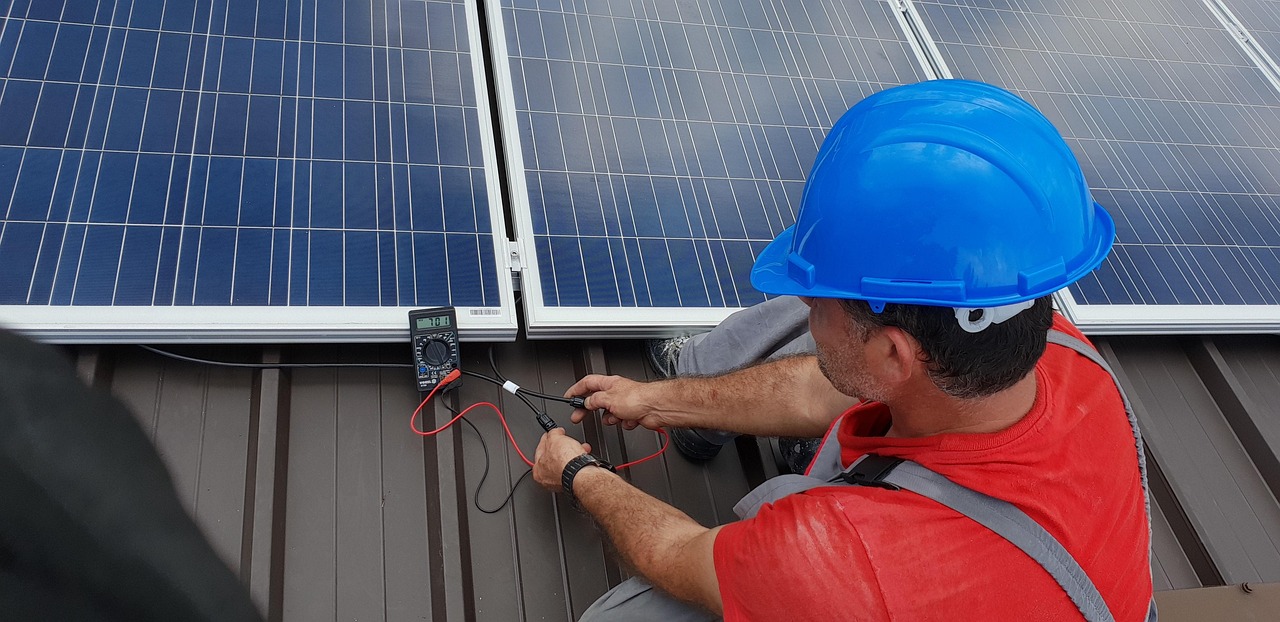
This guide focuses on what to compare before buying. For more practical solar and energy product articles, see our buying guides.
What is actually new about solar panels now
The phrase new solar panels can mean several different things: a newer cell technology, a higher wattage rating, a different module format, a longer warranty or a panel marketed as next-generation. Buyers should separate those claims because they affect value in different ways.
The largest market shift is the continued move away from older p-type PERC modules toward n-type cell technologies. Fraunhofer ISE’s Photovoltaics Report describes n-type TOPCon and heterojunction as replacing p-type technology in the market. In practical terms, many current high-output panels are not just larger versions of older products. They use cell structures designed to reduce recombination losses and improve energy yield.
Global demand also explains why advanced modules are easier to find. IEA PVPS reported in its 2025 snapshot that global photovoltaic capacity rose to more than 2.2 TW by the end of 2024, with more than 600 GW of new PV systems commissioned during 2024. At the same time, the IEA noted that oversupply pushed module prices sharply lower from early 2023 into 2024. Lower module prices help buyers, but they do not remove the need to check warranty strength, system design and installer workmanship.
TOPCon, HJT and back-contact panels
TOPCon, HJT and back-contact panels are the main high-efficiency crystalline silicon options buyers will see in current quotes. TOPCon has become common because it builds on established silicon manufacturing while improving efficiency. HJT can offer strong temperature behavior and bifacial potential, although the advantage depends on the manufacturer and system design. Back-contact panels move electrical contacts away from the front side of the cell, which can improve appearance and reduce front-side shading losses.
None of these names is a guarantee of quality. A well-made TOPCon panel from a bankable manufacturer can be a better purchase than a poorly supported panel with a more fashionable label. Buyers should compare the full datasheet, not only the cell acronym.
Bifacial and glass-glass modules
Bifacial panels can generate electricity from light reaching both sides of the module. This can be valuable on ground mounts, carports, reflective roofs or elevated commercial arrays. On a dark residential roof with panels mounted close to the surface, rear-side gain may be limited. Glass-glass construction can improve durability and is often paired with bifacial cells, but it can also affect module weight and mounting requirements.
The practical question is simple: will the installation expose the rear of the panel to useful reflected light? If not, a bifacial label may add little value to a typical flush-mounted roof system.
Perovskite tandem panels are emerging but not yet the default
Perovskite-silicon tandem modules are one of the most important technology stories in solar. Oxford PV announced commercial shipment of perovskite tandem panels in 2024, and several companies have continued pilot and demonstration work. NREL’s research-cell efficiency chart also shows why tandem designs attract attention: stacking materials can capture more of the solar spectrum than conventional single-junction silicon cells.
For a buyer in 2026, however, emerging does not mean widely available for every residential roof. Perovskite tandem panels should be evaluated with extra attention to product availability, certification, warranty terms, field history and installer experience. If a quote depends on a technology with limited long-term field data, treat it as a premium or early-adopter option rather than a default choice.
How to compare panel specifications without overpaying
Most solar quotes highlight wattage, but wattage alone can mislead buyers. A 450 W panel and a 500 W panel may use different physical sizes. The higher-wattage module may not produce more power per square foot if it is simply larger. For roof-constrained projects, efficiency and layout usually matter more than nameplate wattage. For ground-mounted projects with plenty of space, cost per watt and durability may matter more.
| Specification | What it tells you | What to check before buying |
|---|---|---|
| Module efficiency | How much sunlight the panel converts into electricity under standard test conditions | Useful when roof space is limited, but compare the price premium against expected extra production |
| Wattage rating | Maximum output under laboratory test conditions | Check panel dimensions so you know whether the higher wattage comes from better efficiency or larger size |
| Temperature coefficient | How output changes as the panel gets hot | More important in hot climates and on low-ventilation rooftops |
| Product warranty | Coverage for defects in materials and workmanship | Read exclusions, labor coverage and claim process, not just the number of years |
| Performance warranty | Guaranteed output level over time | Compare first-year degradation and annual degradation assumptions |
| Certifications | Whether the module has passed recognized qualification and safety testing | Look for IEC 61215 for design qualification and IEC or UL 61730 for module safety where applicable |
Performance over time deserves special attention. NREL has described typical PV module degradation as often around 0.5% to 1% per year, while field data can vary by technology, climate and system conditions. This is why two panels with similar first-year output can have different lifetime value if their degradation warranties differ.
When paying for higher-efficiency panels makes sense
Higher-efficiency panels are most valuable when space is scarce. If a roof can only fit a limited number of modules, a premium panel may help increase system size without using more area. This can be especially important for homes with high electricity use, heat pumps, electric vehicles or plans to add battery storage.
Premium modules can also make sense when roof geometry is complicated. Dormers, vents, chimneys and fire setbacks can reduce usable space. In those cases, gaining a few percentage points of efficiency may allow the installer to reach a target system size with fewer panels or fewer layout compromises. See also: solar products.
In hot climates, do not look only at laboratory efficiency. Compare temperature coefficients because panels lose output as operating temperature rises. A panel with slightly lower rated efficiency but better heat behavior may perform competitively in real conditions. This is one reason the cheapest panel on a quote is not always the lowest-cost electricity over the life of the system.
Aesthetics can also matter. All-black back-contact or premium n-type modules may look cleaner on visible roofs. That is a valid buyer preference, but it should be priced as an aesthetic and space-efficiency decision, not as a guaranteed financial win.
When newer panels may not be worth the premium
The newest panel is not always the best upgrade. If a roof has abundant space and minimal shading, a reliable mid-range n-type panel may deliver a better payback than the highest-efficiency option. Once the system reaches the size needed to offset realistic electricity use, additional efficiency has diminishing returns.
Replacing working older panels can also be uneconomic unless there is a second reason to do it, such as roof replacement, inverter failure, severe underperformance, storm damage or a major change in energy use. A new 430 W or 500 W module may look attractive, but removal, rewiring, permitting and disposal costs can reduce the benefit of a retrofit.
Buyers should also be careful with unusually low quotes. Lower module prices are real, but a very cheap installed price can reflect weaker equipment, rushed design, unclear warranty support or exclusions for electrical upgrades. A solar system is a long-life electrical asset, not a simple appliance purchase.
Incentives and cost considerations in 2026
In the United States, incentive timing is a major difference between buying solar in 2026 and buying before the end of 2025. The IRS states that the Residential Clean Energy Credit equals 30% of qualified costs for eligible property installed from 2022 through December 31, 2025, and that the credit is not available for property placed in service after December 31, 2025. Buyers should confirm their own tax situation with a qualified tax professional, but they should not assume the former federal residential credit still applies to a new 2026 installation.
That does not mean solar stopped making sense. The economics now depend more heavily on local electricity prices, state and utility incentives, net billing rules, export rates, battery value and installed cost. Two similar homes in different utility territories can have very different payback periods.
DOE and national laboratory cost benchmark work also shows why the panel price is only one part of the installed system cost. Labor, permitting, interconnection, mounting hardware, inverters, customer acquisition, overhead and installer margin all affect the final price. A quote with excellent panels can still be poor value if the system design is oversized, the financing cost is high or the production estimate is unrealistic.
A practical checklist before choosing new panels
- Ask for the full module datasheet. Confirm efficiency, dimensions, weight, temperature coefficient, degradation warranty and certifications.
- Compare annual production, not only system size. A larger DC rating does not always mean better usable output if shading, orientation or inverter clipping are poorly modeled.
- Check the inverter match. High-current modern modules may require compatible string inverters, optimizers or microinverters.
- Review roof condition first. If the roof may need replacement within the next decade, solve that before installing panels.
- Separate cash price from financing price. Low monthly payments can hide dealer fees or interest costs.
- Confirm permitting and interconnection assumptions. Utility approval timelines and export rules can affect when the system starts producing value.
- Read warranty labor terms. A long product warranty is less useful if the owner must pay significant labor or shipping costs for a claim.
- Look for proven installation quality. Flashing, wire management, conduit routing and electrical workmanship matter as much as the panel brand.
Frequently asked questions
Are new solar panels much more efficient than older panels?
They can be, especially compared with panels installed a decade or more ago. Current premium silicon modules often use n-type designs such as TOPCon, HJT or back-contact cells. The real benefit depends on roof space, installed cost and system design. If space is not limited, the highest-efficiency panel may not deliver the best financial return.
Should I wait for perovskite solar panels?
Most buyers should not delay a strong project only because perovskite tandem technology is developing. It is promising and early commercial activity has begun, but availability, long-term field data and warranty depth still need careful evaluation. Waiting makes more sense if you are an early adopter with flexible timing, not if a conventional n-type system already meets your production and cost goals.
Is TOPCon better than HJT?
Not automatically. TOPCon is widely available and cost-competitive, while HJT can offer strong temperature and bifacial characteristics. The better option depends on the specific panel model, price, warranty, climate and installation type. Compare tested specifications rather than assuming one acronym always wins.
Do higher-wattage panels always save money?
No. A higher-wattage panel may simply be physically larger. It saves money only if it reduces the number of panels, mounting complexity, labor, balance-of-system costs or roof-space limitations enough to justify the price. Always compare cost per installed watt and expected annual kilowatt-hours.
What is the most important buying rule for 2026?
Do not buy only on panel wattage or technology name. In 2026, the best solar purchase is the system that combines suitable panels, accurate production modeling, reliable installation, clear warranty support and realistic economics under current incentive rules.