New solar panel technology in 2026 and what it means for buyers
What counts as new solar panel technology in 2026?
New solar panel technology in 2026 is not a single replacement for conventional PV modules. For buyers, the practical change is a steady shift from older p-type PERC products toward n-type cell designs, especially TOPCon. Heterojunction and back-contact modules are competing in higher-efficiency segments, while bifacial construction, better passivation, larger wafers, improved interconnection and smarter module layouts are lifting output across mainstream product lines.
Perovskite-silicon tandem cells remain the most discussed breakthrough because they point beyond the limits of single-junction silicon. Even so, most buyers should treat them as an emerging option, not a default specification for projects being procured in 2026.
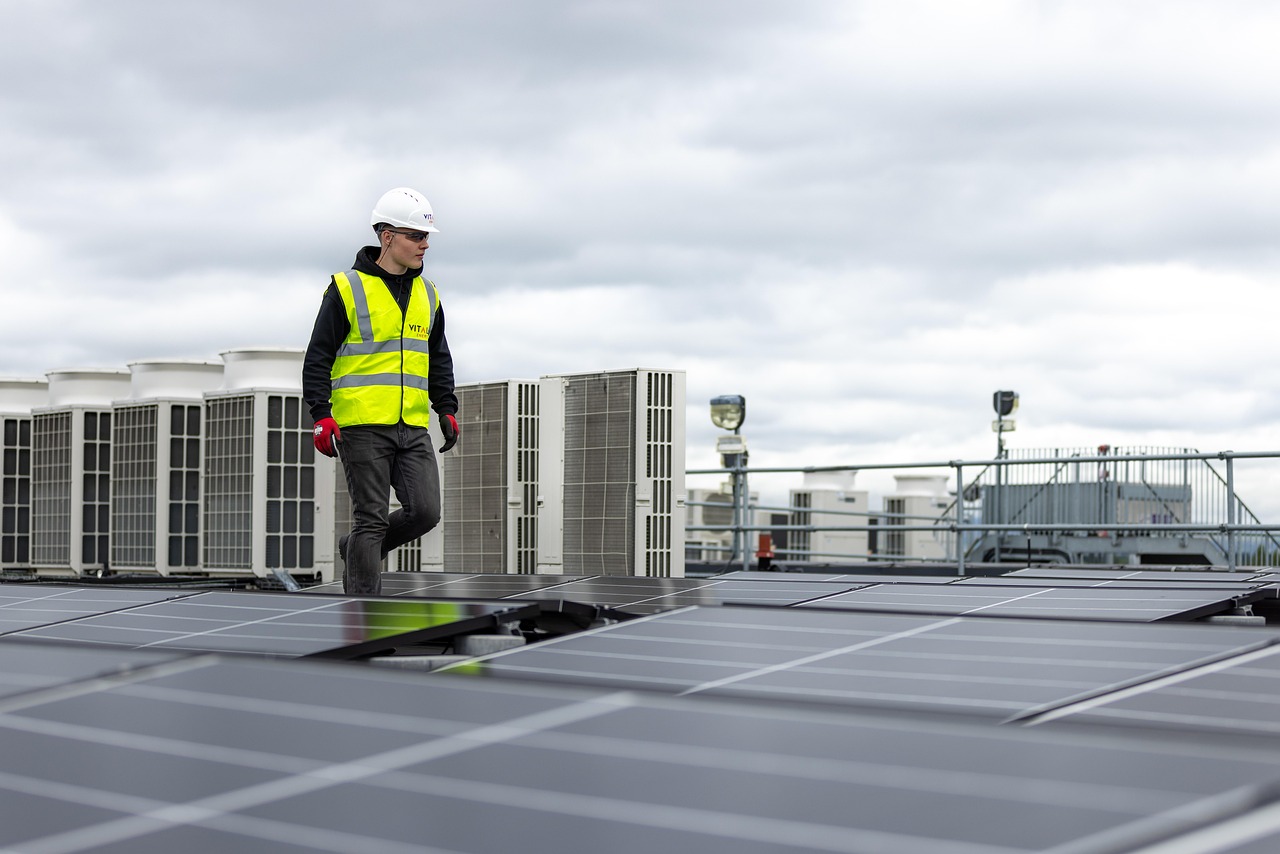
For commercial, residential and off-grid projects, the useful question is not which panel carries the newest technology label. It is whether the module is bankable, certified, available at the required volume, compatible with the system design and backed by a credible warranty. For more procurement context, see the bt1977.com buying guides.
The market shift from PERC to n-type solar cells
For much of the last decade, p-type PERC modules were the mainstream choice because they delivered acceptable performance at low manufacturing cost. That position has changed quickly. Industry sources including IEA PVPS, Fraunhofer ISE and the International Technology Roadmap for Photovoltaics describe a rapid move toward n-type silicon technologies, led by TOPCon. VDMA’s 2025 ITRPV release reported that crystalline silicon represented about 98% of the PV market in 2024, while n-type wafers had moved ahead of p-type materials among surveyed GW-scale manufacturers.
The shift matters because n-type cells can reduce some degradation mechanisms associated with p-type silicon and can support higher conversion efficiency. In practical terms, higher module efficiency can deliver the same rated capacity in less area, or more rated capacity within the same roof or rack footprint. That advantage is most valuable where space, racking, land, shipping or installation labor is a major part of project cost.
TOPCon has become the volume technology to watch
TOPCon stands for tunnel oxide passivated contact. The design uses passivated contacts to reduce recombination losses, helping the cell convert more sunlight into electricity. Its commercial advantage is that many manufacturers could build on parts of their existing PERC production knowledge and supply chains, which made scaling faster than for some alternative cell architectures.
IEA PVPS Trends in Photovoltaic Applications 2025 reported a sharp rise in TOPCon market share, showing how quickly the technology moved from premium positioning into mainstream production. For buyers, TOPCon modules are no longer experimental. They are widely offered across utility-scale, commercial and residential product lines.
Heterojunction remains a high-performance alternative
Heterojunction technology, often shortened to HJT or SHJ, combines crystalline silicon with thin amorphous silicon layers for strong surface passivation. HJT modules are often promoted for good temperature behavior and high bifaciality, both of which can improve energy yield when site conditions support those advantages. The trade-off is manufacturing complexity and material cost, particularly around metallization.
Fraunhofer ISE reported in 2025 that research cells had demonstrated major reductions in silver consumption for silicon heterojunction designs, including work using silver-coated copper paste. That progress matters because silver use can affect cost and supply risk as PV manufacturing scales into terawatt volumes. Buyers do not need to evaluate metallization chemistry directly, but they should understand that HJT’s competitiveness depends on both module performance and manufacturing cost control.
Back-contact modules improve output and appearance
Back-contact solar cells move all or most electrical contacts to the rear side of the cell. This reduces front-side shading and can create an all-black appearance that many residential and architectural projects prefer. Back-contact technology is not new in principle, but recent manufacturing improvements have made it more visible in premium module lines.
The buyer trade-off is straightforward: back-contact modules may offer higher efficiency and better aesthetics, but they can also carry a price premium and may have fewer supplier options than mainstream TOPCon. They are most compelling when roof area is limited, appearance has commercial value or balance-of-system costs make every additional watt per square meter important.
Perovskite-silicon tandem panels are promising but not yet ordinary products
Perovskite-silicon tandem technology attracts attention because it addresses a fundamental limit of single-junction silicon. A tandem cell places a perovskite absorber over a silicon cell so different layers capture different parts of the solar spectrum. Laboratory efficiencies have moved above the best single-junction silicon records. Solar Cell Efficiency Tables version 68 reported a 35.2% small-area perovskite-silicon tandem cell confirmed by ESTI, and LONGi announced in July 2026 a 35.5% crystalline silicon-perovskite tandem cell efficiency certified by ESTI.
Those numbers are important for PV research, but they should not be read as ordinary module performance. A small laboratory cell is not the same as a full-size commercial panel expected to operate outdoors for 25 to 30 years. Scaling the material, controlling defects, proving long-term stability, managing moisture sensitivity, achieving high manufacturing yield and passing bankability requirements remain central challenges.
That does not make tandem technology hype. It means the timeline is staged: certified small cells and pilot modules first, limited commercial deployment next, and broader adoption only if reliability, cost and supply chain performance are proven. Buyers planning systems in 2026 should monitor tandem progress, but most projects will still be built around silicon modules.
Other panel improvements buyers should understand
Cell architecture is only one part of the technology story. Many real-world gains come from module-level engineering that is less dramatic than a record efficiency announcement but more relevant to current purchasing decisions.
- Bifacial modules generate electricity from both the front and rear sides. They can improve yield on light-colored roofs, elevated structures, carports and utility projects with reflective ground cover. The benefit is smaller on dark, flush-mounted rooftops with little rear exposure.
- Half-cut and multi-busbar cells reduce resistive losses and can improve shade tolerance compared with older full-cell layouts. They are now common rather than exotic.
- Glass-glass modules can improve mechanical durability and moisture resistance in some applications, but they may be heavier and require compatible mounting.
- Large-format wafers and modules can reduce cost per watt in utility-scale systems, but very large panels may be harder to handle on small roofs and can increase design constraints.
- Lower degradation products can improve lifetime energy yield. Buyers should compare warranted annual degradation, not only year-one output.
These features often interact. A bifacial TOPCon glass-glass module may suit a ground-mount project, while a compact back-contact module may be more attractive on a constrained residential roof. The right choice depends on the site and system design, not just the technology name. See also: solar products.
How to compare new solar panels before buying
The safest buying process starts with the data sheet, not the marketing headline. A high-wattage module is not automatically better if it is physically larger. A high-efficiency module is useful when space is limited, but a lower-cost module can still be more economical where space is abundant. Compare panels on system value, not isolated specifications.
Specifications that matter most
- Module efficiency: Shows how much sunlight is converted into electricity per unit area. It is most important for space-constrained projects.
- Power output and tolerance: Indicates rated wattage under standard test conditions. Positive tolerance can reduce the risk of under-delivery.
- Temperature coefficient: Shows how much power output falls as module temperature rises. This matters in hot climates and on low-ventilation roofs.
- First-year and annual degradation: Determines how much output is warranted over time. Lifetime energy production can matter more than a small year-one wattage difference.
- Product and performance warranties: Product warranties cover defects, while performance warranties cover output decline. Read both carefully.
- Certifications: Look for recognized design and safety testing such as IEC 61215 and IEC 61730, along with local electrical approvals where required.
- Mechanical ratings: Snow load, wind load and hail testing should match the installation environment.
Questions to ask suppliers
Ask whether the quoted module is in regular production, which factory makes it, what certification documents apply to the exact model number and whether the warranty is backed by an entity likely to remain solvent. For bifacial panels, request an energy-yield estimate based on the actual mounting height, tilt, ground reflectivity and row spacing. For newer cell architectures, ask for field performance data rather than relying only on laboratory efficiency.
A practical technology timeline for 2024 to 2026
| Period | What changed | Buyer takeaway |
|---|---|---|
| 2024 | ITRPV and Fraunhofer ISE data showed crystalline silicon still dominating global PV, while n-type wafers gained strong momentum. | Silicon remains the bankable base technology, but older p-type PERC is no longer the only mainstream option. |
| 2025 | IEA PVPS reported rapid TOPCon growth, and Solar Cell Efficiency Tables version 66 recorded a 34.85% perovskite-silicon tandem research cell. | TOPCon became a practical mainstream choice; tandem cells remained mainly a research and early commercialization signal. |
| 2026 | IEA PVPS updated life-cycle inventory work to include TOPCon datasets, while Solar Cell Efficiency Tables version 68 and company announcements pushed tandem research-cell records above 35%. | Buyers should expect better silicon modules now and watch tandem products carefully, but should not treat lab records as field guarantees. |
What this means for different buyers
Residential buyers should prioritize efficient modules when roof space is limited or when aesthetics matter. Back-contact and high-efficiency TOPCon products may justify a premium on small roofs. On larger roofs, a standard n-type TOPCon module from a reputable supplier may offer better value.
Commercial building owners should focus on lifetime energy yield, fire and electrical compliance, roof loading and installation logistics. Higher efficiency can reduce racking and labor per watt, but module dimensions and weight can affect handling costs.
Utility-scale developers should evaluate module price, degradation, bifacial yield, tracker compatibility, supply certainty and bankability. For ground-mount projects, bifacial n-type modules can be attractive when site design supports rear-side gain.
Off-grid and hybrid system buyers should pay close attention to voltage, current and charge-controller compatibility. A newer high-current module may not match older equipment without redesign. Durability and replacement availability can matter more than having the newest cell architecture.
Frequently asked questions
Is TOPCon better than PERC?
In many current product lines, TOPCon offers higher efficiency and better long-term performance potential than older p-type PERC. However, the best choice still depends on price, warranty, supplier reliability and system design. A well-priced certified PERC module may still work for some budget projects, but TOPCon is increasingly the mainstream direction.
Are perovskite solar panels available for normal buyers?
Perovskite-silicon tandem technology is progressing quickly, but ordinary buyers should be cautious. Record-setting tandem cells are usually small laboratory devices or early-stage modules. Before using them in a standard project, buyers should look for full certification, warranty terms, production availability and independent field data.
Do higher-efficiency panels always save money?
No. Higher efficiency saves space and can reduce some installation-related costs, but it does not automatically lower total project cost. If space is plentiful, a lower-cost module with solid warranty coverage may deliver a lower cost per kilowatt-hour.
Are bifacial panels worth it on a rooftop?
Sometimes. Bifacial panels need useful reflected light reaching the rear side. They can work well on elevated racks or reflective surfaces, but the gain may be limited on dark, low-clearance residential roofs. The mounting design should be evaluated before paying extra for bifacial performance.
What is the safest choice for a buyer in 2026?
For most projects, the safest choice is a certified n-type silicon module from a financially credible manufacturer, matched to the site and inverter design. TOPCon is the most common new-generation choice, while HJT and back-contact modules may be attractive where their performance or appearance advantages justify the cost.
The bottom line for 2026 panel selection
The most useful new solar panel technology for buyers in 2026 is already visible in commercial silicon modules: n-type TOPCon, improved HJT, back-contact designs, bifacial formats and better module packaging. Perovskite-silicon tandem cells are the breakthrough to watch, but they need more proof before they become the default choice for everyday installations.
A good purchase decision should balance efficiency, cost, warranty, certification, temperature behavior, degradation and supplier credibility. The newest technology name can be helpful, but only when it improves lifetime energy value under the conditions where the panels will actually operate.