New gen solar panels explained for buyers comparing TOPCon, HJT and tandem modules
What new gen solar panels mean for buyers
New gen solar panels are not a single product category. In current product catalogs, the term usually points to higher-efficiency n-type silicon modules such as TOPCon, heterojunction and back-contact panels, along with emerging perovskite-silicon tandem designs moving from laboratory records toward early commercial formats.
For buyers, the practical question is not which technology name sounds newest. It is whether the module can deliver better lifetime energy output, credible warranties, suitable dimensions, safe certification and an installed price that fits the project. Public industry data through 2025 confirms a clear shift away from older p-type PERC cells, but it also shows that not every next-generation technology is at the same stage of maturity.

If you are comparing solar products for a home, business roof or small project, treat technology labels as a starting point, not as proof of quality. A well-made TOPCon module from a reliable supplier may outperform a poorly supported premium product in real conditions. For more practical renewable energy equipment explainers, browse our buying guides.
Why solar panel technology is changing now
Solar manufacturers are trying to increase output from the same roof or land area while lowering lifetime cost per kilowatt-hour. Older mainstream modules were often based on p-type PERC cells. PERC improved earlier crystalline silicon designs by adding rear-side passivation, but its efficiency gains have become more limited as the technology has matured.
Newer modules increasingly use n-type wafers and advanced contact structures. The IEA PVPS Trends in Photovoltaic Applications 2025 report described a major solar cell technology shift during 2024, with TOPCon-type crystalline silicon cells rising from about 30% market share in 2023 to about 70% in 2024. The same report indicated that heterojunction and back-contact cells remained much smaller by market share, each below 5% in that period. That distinction matters: TOPCon is already a mainstream manufacturing platform, while HJT and back-contact technologies are still more often positioned for higher-efficiency or more specialized modules.
Demand has also grown sharply. SolarPower Europe reported that the world installed about 597 GW of solar in 2024, while IEA PVPS placed 2024 additions in the 553 GW to 601 GW range and cumulative PV capacity above 2,260 GW by the end of that year. Large deployment does not guarantee every module is strong, but it does mean buyers now face a faster-moving market with more cell types, power ratings and marketing claims to compare.
Key technologies behind new gen solar panels
The most useful way to compare new gen solar panels is to separate mature commercial upgrades from technologies that are still scaling. The table below summarizes the main options buyers are likely to see in quotations and product literature.
| Technology | What it changes | Buyer relevance | Main caution |
|---|---|---|---|
| PERC | Improves rear-side passivation on older p-type crystalline silicon cells | Often available at lower prices and still usable where roof space is not tight | Less competitive where maximum output per square meter is important |
| TOPCon | Adds tunnel oxide passivated contacts, usually on n-type silicon | Strong mainstream choice for efficiency, cost and availability | Quality still varies by manufacturer, bill of materials and warranty support |
| Heterojunction | Combines crystalline silicon with thin amorphous silicon layers | Attractive for high efficiency and temperature performance in some designs | Can cost more and may have fewer supplier options in some markets |
| Back-contact | Moves front-side contacts to the rear to reduce shading on the cell face | Useful when high module efficiency and clean appearance matter | Premium pricing and product-specific reliability should be checked carefully |
| Perovskite-silicon tandem | Stacks a perovskite top cell with silicon to capture more of the light spectrum | Promising route to higher future efficiencies | Commercial maturity, long-term durability and bankable warranties remain key questions |
| Thin-film | Uses semiconductor layers rather than standard crystalline silicon wafers | Relevant in some utility, lightweight or specialty applications | Less common for typical residential rooftop comparisons |
TOPCon is the technology most buyers are now likely to see in standard product quotes. HJT and back-contact modules can be excellent choices, but they should be judged by the full datasheet and warranty terms, not assumed to be better in every project. Perovskite-silicon tandem technology deserves close attention, but buyers should not treat it as a direct replacement for proven crystalline silicon modules unless the specific product has clear certification, warranty terms and a credible supply history.
What changed compared with older panels
Higher efficiency from similar module area
The most visible improvement is higher rated output from a panel of similar size. Higher efficiency matters most when roof area is limited, when installation labor is expensive, or when balance-of-system costs make it valuable to reduce the number of modules, clamps and wiring points. A higher-wattage module is not automatically better if it is physically larger, so buyers should compare module efficiency, not only the watt rating printed on a spec sheet.
Better use of rear-side light
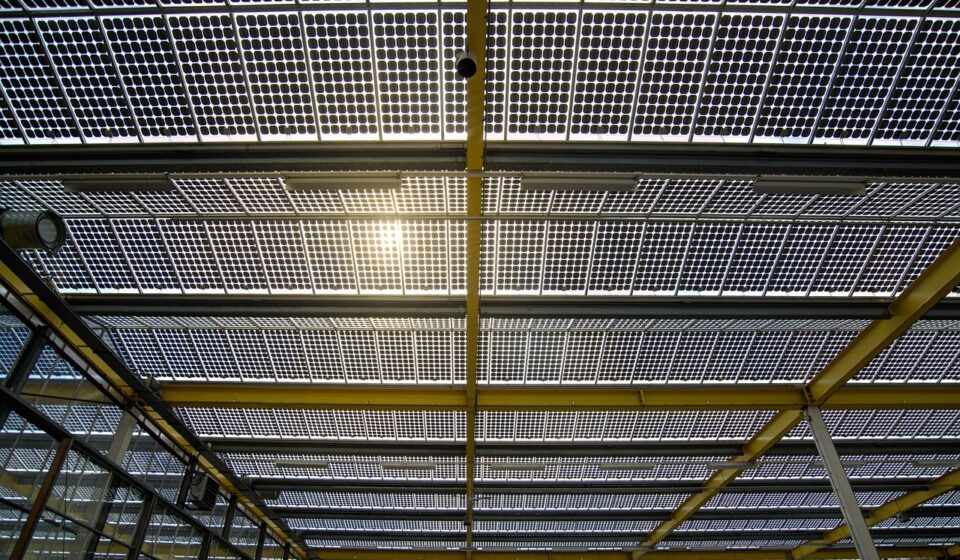
Many new gen solar panels are bifacial, meaning they can generate additional energy from light reaching the rear side. This can help on white commercial roofs, elevated ground mounts, carports, reflective surfaces or snowy sites. On a dark residential roof with panels mounted close to the surface, rear-side gain may be much smaller. Bifacial capability adds value when the installation design allows it to work.
Improved degradation claims
Premium n-type modules often advertise lower annual degradation than older products. This affects lifetime energy yield, not just first-year production. However, degradation figures should be checked in the warranty document, not only in sales material. Buyers should look for the first-year degradation allowance, the annual degradation rate after year one, and the warranted output at year 25 or year 30.
More focus on temperature behavior
Solar panels lose some output as cell temperature rises. The temperature coefficient on the datasheet indicates how much output changes per degree Celsius above standard test conditions. In hot climates, a slightly better temperature coefficient can improve annual energy yield, especially on roofs with limited airflow. It is rarely the only deciding factor, but it is worth comparing when two panels are close in price and efficiency.
How to compare new gen solar panels before buying
Buyers should judge panels by system value, not by technology label alone. A practical comparison should include the following points.
- Module efficiency: Compare the percentage efficiency on the datasheet. This shows how much sunlight the panel converts into electricity per unit area.
- Power rating and physical size: A 440 W panel and a 460 W panel may not be directly comparable if one is larger. Check dimensions and roof layout.
- Temperature coefficient: This is especially important in hot regions, on low-ventilation roofs or where summer output matters most.
- Product warranty: Review the length of coverage and what defects are included. Do not rely only on headline years.
- Performance warranty: Check the promised remaining output after 25 or 30 years and the annual degradation rate.
- Mechanical ratings: Wind and snow load ratings should match the installation environment.
- Certification: Buyers should ask installers to confirm relevant safety and performance certification, such as IEC 61215 and IEC 61730 or applicable local equivalents.
- Installer experience: A high-quality panel can still underperform if system design, wiring, racking, inverter selection or commissioning is poor.
The U.S. Department of Energy’s consumer guidance emphasizes that solar economics are connected with the building itself, including energy efficiency upgrades and site suitability. That point applies broadly: the best panel choice depends on the roof, shading, local electricity rates, financing, incentives, installation quality and maintenance expectations.
Should buyers wait for perovskite-silicon tandem panels
Perovskite-silicon tandem technology is one of the most important research directions in solar. By stacking materials that absorb different parts of the solar spectrum, tandem cells can move beyond the practical limits of conventional single-junction silicon designs. NREL’s research-cell efficiency chart and Fraunhofer ISE publications show why researchers and manufacturers are investing heavily in this route.
Buyers should still separate laboratory cell records from commercial module decisions. A record cell is usually small, tested under controlled conditions and not the same as a mass-produced panel installed outdoors for decades. Fraunhofer ISE has described perovskite-silicon tandem modules as a path to higher efficiency, while also noting the manufacturing demands involved in scaling the technology. That is the central buying issue: the promise is real, but long-term field reliability, stable supply, warranty backing and cost must be proven at product level. See also: solar products.
For a buyer who needs solar now and has a suitable roof or project, waiting only for tandem modules may not be rational. Electricity savings, tax incentives, energy resilience goals or project deadlines can make available n-type modules the better decision. Waiting may make sense if a project is not urgent, roof space is extremely constrained, or a buyer specifically wants to evaluate first-generation tandem products after they have stronger market history.
Which panel type fits different buying situations
Homes with limited roof area
High-efficiency TOPCon, HJT or back-contact modules are usually worth comparing when roof space is limited. The goal is to increase annual output without expanding the array footprint. Back-contact panels may also appeal where appearance matters, but buyers should calculate whether the premium price is justified by added production or design value.
Hot climates
Look closely at the temperature coefficient, ventilation under the modules and inverter sizing. HJT modules often compete strongly on temperature behavior, but some TOPCon and back-contact products also perform well. The datasheet and local production model matter more than the technology name alone.
Commercial rooftops
For flat commercial roofs, bifacial glass-glass modules can be attractive if the roof surface is reflective and the mounting height allows rear-side light collection. Weight, fire classification, wind design and maintenance access should be checked against the engineering plan.
Ground mounts and carports
Bifacial n-type modules can be valuable where the rear side is exposed to reflected light. In these projects, row spacing, ground cover, tilt and mounting height can change energy yield. A yield simulation is more useful than a generic bifacial gain claim.
Budget-sensitive projects
Older PERC or lower-cost TOPCon modules may still be reasonable if the project has enough space and the supplier is credible. The cheapest panel is not always the lowest-cost system, but buyers should avoid paying for premium technology when the expected energy gain is small.
Common buying mistakes to avoid
- Buying only by watt rating: Wattage without size, efficiency and system design can mislead buyers.
- Assuming every n-type panel is premium: Cell type matters, but encapsulation, glass, connectors, quality control and warranty support also matter.
- Ignoring shading: Even advanced panels cannot fully overcome poor placement, heavy shading or bad string design.
- Overvaluing laboratory records: Research efficiency records show technology direction, not guaranteed field performance.
- Skipping warranty details: Read exclusions, claim process, labor coverage and whether the manufacturer has local support.
- Forgetting the inverter and mounting system: A solar array is a system. Panel selection should match the inverter, roof structure and electrical design.
Frequently asked questions
Are new gen solar panels always better than older panels?
Not always. Newer TOPCon, HJT and back-contact modules can offer higher efficiency and better long-term output claims, but buyers should still compare price, warranty, certifications and installer quality. A proven, well-installed module can be a better investment than a newer product with weak support.
Is TOPCon better than PERC?
TOPCon is generally the stronger current mainstream technology because it can deliver higher efficiency and improved performance characteristics. The IEA PVPS 2025 report shows that TOPCon rapidly became the dominant crystalline silicon cell technology in 2024. Even so, project economics depend on installed cost, layout and product quality.
Are HJT panels worth the higher price?
They can be worth it where high efficiency, strong temperature behavior or specific project requirements justify the premium. For a typical roof with enough space, a good TOPCon module may provide better value. Buyers should compare modeled annual energy, not just panel price.
When will perovskite tandem panels become common?
Perovskite-silicon tandem panels are progressing, but broad adoption depends on manufacturing scale, durability, certification, warranty confidence and cost. Buyers should treat them as a promising emerging option rather than the default choice for near-term projects.
What is the most important specification on a solar panel datasheet?
No single number is enough. Start with module efficiency, power rating, dimensions, temperature coefficient, product warranty and performance warranty. Then ask the installer to model annual production for the actual site, because shading, tilt, orientation and system design can outweigh small differences between panel types.
Bottom line for buyers
New gen solar panels are worth understanding because the market has genuinely moved beyond older PERC-dominated designs. TOPCon has become the mainstream next-generation choice, HJT and back-contact modules offer premium options for specific needs, and perovskite-silicon tandem technology points toward the next efficiency frontier. The best purchase is still the panel and system combination that produces reliable lifetime energy at a sensible installed cost. Buyers should compare verified datasheets, warranties, certifications and site-specific production models before paying extra for any technology label.