Compressed air energy storage and the long-duration storage gap
The short answer for energy storage planners
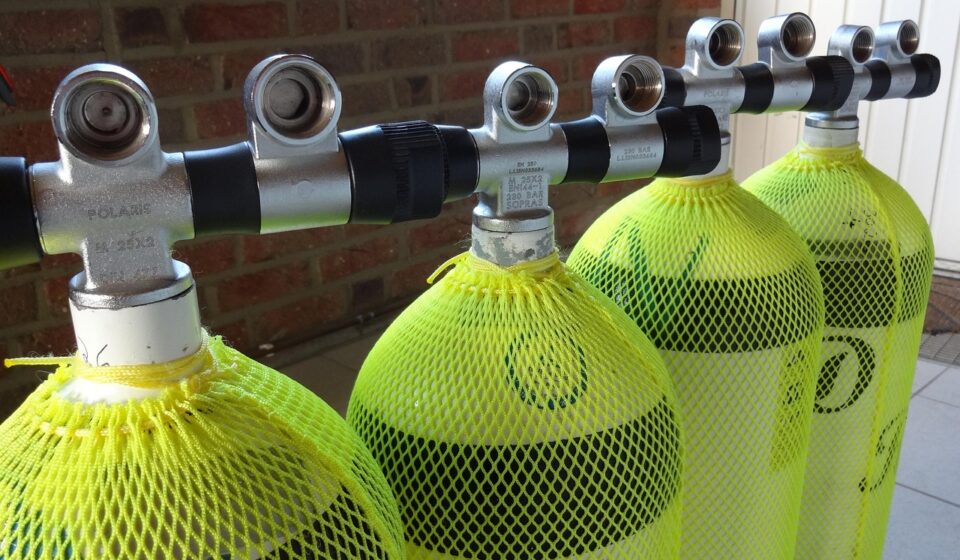
Compressed air energy storage, often shortened to CAES, stores electricity by using low-cost or surplus power to compress air and keep it under pressure, typically in an underground cavern or an engineered pressure system. When the grid needs power, the pressurized air is released through expansion equipment to generate electricity.
Its main value is not in replacing every battery project. CAES is better understood as a candidate for long-duration, utility-scale storage where many hours of discharge, long asset life and grid reliability matter more than a compact footprint or very high round-trip efficiency.
For readers tracking the broader energy storage market, CAES occupies an important middle ground. It is more geographically constrained than containerized lithium-ion systems, but it may be useful for large grid applications that need eight-hour, ten-hour or longer discharge windows.
How compressed air energy storage works
A CAES plant converts electrical energy into mechanical potential energy. During charging, electric motors drive compressors that push air to high pressure. The air is then stored until it is needed. During discharge, the stored air expands through turbines or expanders connected to a generator.
Heat management is central to the design. Compressing air creates heat, while expanding air causes cooling. How a project captures, rejects or reuses that heat has a direct effect on efficiency, equipment selection and emissions.
Older CAES plants are generally described as diabatic systems. They vent much of the heat created during compression and use external heat, historically natural gas combustion, during discharge to warm the air before expansion. This makes them different from a battery, because part of the output comes from the stored-air process and part depends on fuel input.
The well-known Huntorf plant in Germany, commissioned in 1978, and the McIntosh plant in Alabama, commissioned in 1991, are the classic commercial references for this design. Public technical summaries have commonly listed Huntorf at about 290 MW and McIntosh at about 110 MW, with McIntosh offering a much longer discharge duration.
Newer designs try to reduce or eliminate the fuel requirement. Advanced or adiabatic CAES concepts capture compression heat and reuse it during discharge. Other designs use water compensation, purpose-built caverns, thermal storage media or above-ground pressure vessels. These changes are intended to improve efficiency, reduce emissions and widen siting options, but they also add engineering complexity.
Why CAES is being reconsidered now
The renewed interest is tied to a practical grid problem. Solar and wind generation are expanding, while many battery projects are optimized for short-duration services such as frequency response, evening peak shifting and four-hour capacity needs. As renewable penetration rises, grid operators increasingly need resources that can cover longer gaps: cloudy evenings, wind lulls, multi-hour ramping periods and reliability events that are not solved by a single short battery cycle.
The U.S. Department of Energy has treated long-duration energy storage as a priority area, generally focusing on systems capable of discharging for ten hours or more. Its Long Duration Storage Shot and related technology assessments have placed compressed air alongside pumped storage hydropower, flow batteries, thermal storage, hydrogen and other options. That does not mean CAES is the leading answer in every market. It means the technology is part of the short list being evaluated for deep renewable integration and grid resilience.
The market signal is also visible in project development. In California, the Willow Rock Energy Storage Center proposed by Hydrostor has been described in California Energy Commission records as a 500 MW net, 4,000 MWh net advanced compressed air energy storage facility. The CEC certified the project on December 19, 2025, and federal underground injection authorization activity followed in September 2026. These dates matter because CAES projects are not software-like deployments; they move through siting, geology, environmental review, grid interconnection and specialized construction steps.
China has also accelerated large CAES demonstrations. In April 2024, China Energy Engineering Corporation reported the grid connection of a 300 MW compressed air energy storage station in Yingcheng, Hubei. The Chinese Academy of Sciences also reported a 300 MW and 1,800 MWh advanced compressed air project in Feicheng, Shandong, reaching first grid connection in 2024. These projects do not prove universal economics, but they show that CAES has moved beyond small laboratory-scale discussion in several markets.
Where CAES fits compared with batteries and pumped hydro
The most useful way to compare CAES is by application, not by asking whether it is simply better or worse than lithium-ion batteries. Batteries are modular, fast to install relative to large civil works, highly responsive and increasingly standardized. They are strong for short-duration balancing and repeated daily cycling. However, as discharge duration increases, adding more hours means adding more battery cells, which can become expensive or space-intensive depending on the project.
Pumped storage hydropower remains the largest established form of grid-scale energy storage globally, but it needs suitable elevation differences, water management and long permitting timelines. CAES also has siting constraints, especially when using underground caverns, but it can be attractive in regions with salt formations, hard-rock caverns, depleted reservoirs or other suitable subsurface conditions. In some concepts, purpose-built caverns may widen the opportunity, although they also increase construction requirements.
| Storage option | Typical strength | Main constraint | Best-fit use case |
|---|---|---|---|
| Lithium-ion batteries | Fast response, modular deployment and high round-trip efficiency | Cost and material intensity can rise with longer duration | Short-duration grid services, peak shifting and solar pairing |
| Compressed air energy storage | Large power capacity and multi-hour to long-duration discharge potential | Geology, permitting, thermal management and project scale | Utility-scale long-duration storage where siting is favorable |
| Pumped storage hydropower | Proven large-scale storage and long asset life | Topography, water, permitting and construction lead time | Bulk storage where suitable sites are available |
| Hydrogen storage | Potential for very long duration and seasonal storage | Low round-trip efficiency and infrastructure requirements | Multi-day, seasonal or sector-coupled energy systems |
CAES is therefore not a universal substitute. Its strongest argument appears where a grid needs a large stationary resource, where land and subsurface conditions are suitable, and where the value of long-duration capacity is recognized in market rules or procurement programs.
The key performance questions
Round-trip efficiency
Round-trip efficiency is the share of input electricity that returns as output electricity. CAES efficiency varies widely by design. Historic diabatic plants are often cited at lower efficiencies than modern batteries because they lose compression heat and require fuel during discharge. Advanced designs aim to improve this by storing and reusing heat or by using alternative thermal strategies. See also: solar products.
For buyers, the important point is to compare complete system performance under realistic duty cycles, including auxiliary loads, thermal losses and expected operating patterns.
Duration and power rating
Storage duration is not fixed by the CAES concept itself. It depends on cavern size, pressure range, turbomachinery, thermal system design and grid requirements. A project can be designed for several hours or much longer. This is why CAES should be evaluated with both power capacity, measured in MW, and energy capacity, measured in MWh. A 500 MW plant with 4,000 MWh of usable storage is an eight-hour resource; changing the storage volume or equipment rating changes that profile.
Emissions profile
Not all CAES is equally low-carbon. A diabatic plant that burns natural gas during discharge has a different emissions profile from an advanced design that stores compression heat and does not rely on fuel combustion. Claims about clean storage should therefore be tied to the specific system design, the charging electricity mix and any fuel or heat source used during operation.
Response time and grid services
CAES plants can provide dispatchable capacity, ramping support and energy shifting, but they are not identical to batteries. Battery systems can respond extremely quickly and are well suited to power electronics-based services. CAES may be more valuable for bulk energy discharge and capacity during longer events. In a high-renewables grid, the two technologies can be complementary rather than mutually exclusive.
What still limits deployment
The main barrier is not whether compressed air can store energy. That has already been demonstrated. The harder question is whether projects can be developed, financed, permitted and operated at costs that compete with alternatives in each specific market.
- Siting risk: Underground storage requires geologic suitability, pressure integrity and environmental review. Even purpose-built cavern approaches must address subsurface engineering and local permitting.
- Long lead times: CAES projects resemble infrastructure projects more than factory-assembled battery installations. Development schedules can run across several years.
- Market design: If a power market pays mainly for short-duration response or daily arbitrage, the value of long-duration capacity may not be fully compensated.
- Technology bankability: Lenders and utilities often prefer technologies with large operating fleets. CAES has historic operating references, but advanced designs still need more commercial-scale proof.
- Efficiency trade-offs: A lower round-trip efficiency can be acceptable for long-duration storage if capital cost, storage capacity cost and reliability value are favorable. It becomes a problem if lost energy is expensive or emissions-intensive.
These limits help explain why CAES has had a long history but relatively few commercial plants. They also explain why current projects are being watched closely: the next wave is less about proving the physics and more about proving repeatable economics and workable permitting pathways.
What to watch through 2026 and beyond
Several signals will show whether compressed air energy storage is becoming a bankable long-duration option rather than a niche engineering solution. The first is whether large projects that have received approvals move into construction on schedule. The second is whether procurement programs explicitly value eight-hour, ten-hour and longer discharge resources rather than treating all storage as equivalent. The third is whether advanced CAES developers can publish credible operating data from commercial-scale plants, including efficiency, availability, maintenance needs and real dispatch patterns.
Another important signal is standardization. Batteries scaled quickly because modules, inverters, controls and project formats became repeatable. CAES will not standardize in exactly the same way because subsurface conditions differ, but equipment packages, cavern design methods, thermal management systems and permitting templates can still improve. If these elements become more predictable, development risk could fall.
For now, the balanced conclusion is clear. Compressed air energy storage is neither a forgotten technology nor a guaranteed winner. It is a serious long-duration storage pathway with proven historical roots, active large-scale projects and real constraints. Its role will depend on geology, market rules, renewable penetration, competing storage costs and the ability of advanced designs to demonstrate reliable commercial operation.
Frequently asked questions
Is compressed air energy storage the same as a battery?
No. A battery stores energy electrochemically, while CAES stores energy mechanically as pressurized air. Both can return electricity to the grid, but they have different equipment, siting needs, response characteristics and cost drivers.
Can CAES store renewable energy?
Yes. CAES can use electricity from wind, solar or other sources to compress air. The emissions impact depends on the electricity used for charging and whether the discharge process uses external fuel or stored thermal energy.
Why are there so few CAES plants?
Commercial CAES requires suitable storage volume, specialized equipment, permitting and a market that values long-duration capacity. Those conditions have historically been difficult to combine, especially while shorter-duration batteries have become cheaper and easier to deploy.
What is the strongest use case for CAES?
The strongest use case is large-scale, stationary, long-duration storage in regions with suitable geology and a grid need for many hours of dispatchable capacity. It is most compelling when the alternative would be overbuilding short-duration batteries or keeping fossil peaking capacity online.