How to choose an off grid solar inverter for battery-based solar systems

What an off grid solar inverter actually does
An off grid solar inverter converts direct current from a solar array or battery bank into alternating current for appliances, tools, pumps, and small commercial equipment where utility power is unavailable or not used. Conversion is only part of the job. In a battery-based solar system, the inverter also influences system stability, backup runtime, battery life, and the quality of power delivered to sensitive loads.
A practical selection process starts with load demand, battery voltage, surge power, solar charge limits, and safety certification. Brand claims and headline wattage are not enough. Public guidance from the U.S. Department of Energy describes inverters as essential power electronics that convert PV-generated DC electricity into AC electricity and, in many modern systems, provide monitoring and communication functions.
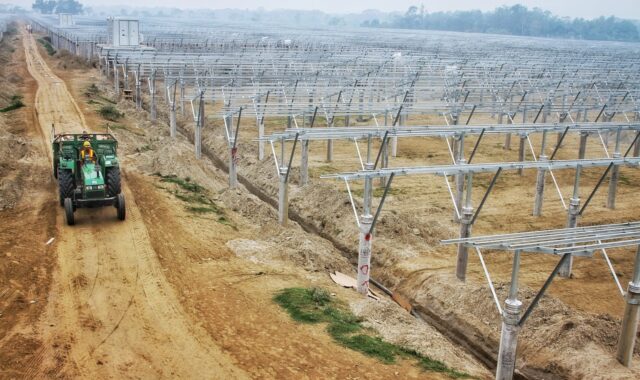
Off-grid applications include cabins, mobile homes, telecom sites, water pumping systems, rural clinics, farms, and small workshops. IRENA’s Off-grid Renewable Energy Statistics 2024 also notes that off-grid renewable power is used for households, street lighting, charging stations, schools, clinics, and remote commercial or industrial facilities. That range of uses is why there is no single inverter size or topology that fits every project.
For more related product and technology articles, visit the solar products section.
Off-grid inverter, hybrid inverter, and grid-tie inverter are not the same
Many buying errors start with unclear terminology. A grid-tie inverter is designed to synchronize with the utility grid. It normally shuts down during a grid outage unless it is paired with approved backup equipment, because exporting power into a failed grid can create a safety hazard. An off-grid inverter is designed to create an independent AC supply from a battery bank. A hybrid inverter may combine solar charging, battery charging, backup operation, and sometimes grid interaction, but the exact functions depend on the model and certification.
For a remote system with no utility connection, the key requirement is straightforward: the inverter must be able to form and maintain its own stable AC output. In larger systems, multiple inverters may operate in parallel or three-phase configurations, but only if the equipment is designed for synchronized operation. For small homes or cabins, an all-in-one inverter with a built-in MPPT solar charge controller is common. For higher-reliability sites, separate charge controllers, battery inverters, and monitoring devices may be preferred because they can be easier to service, replace, and expand.
The important question is whether the inverter is designed and permitted to operate with every power source on site. If the system will ever connect to the grid, a generator, or another AC source, the inverter must be selected and installed according to local rules and the manufacturer’s instructions.
Key specifications to compare before buying
Spec sheets can look similar, but a few numbers determine whether an off-grid solar inverter will work reliably in the field. The table below summarizes the specifications that deserve close review.
| Specification | Why it matters | What to check |
|---|---|---|
| Continuous AC output | Shows how much load the inverter can support during normal operation. | Compare it with the total running watts of essential loads, not the total wattage of every appliance on site. |
| Surge power | Motors, compressors, pumps, and power tools may need a short starting current far above their running wattage. | Check both the surge rating and the allowed surge duration. |
| Battery voltage | Common off-grid systems use 12 V, 24 V, or 48 V battery banks. Higher voltage can reduce current for the same power level. | Match the inverter to the battery bank and cable design. |
| PV input range | All-in-one units have MPPT voltage and current limits. Exceeding them can damage equipment. | Confirm open-circuit voltage under cold conditions and maximum array current. |
| Waveform | Pure sine wave output is generally preferred for refrigerators, pumps, electronics, and variable-speed equipment. | Avoid modified sine wave units for sensitive or inductive loads unless the load manufacturer allows them. |
| Battery compatibility | Lithium iron phosphate, lead-acid, AGM, and gel batteries have different charging profiles. | Check charging voltage, current limits, low-temperature rules, and BMS communication. |
| Protection and certification | Electrical safety depends on insulation, grounding, overcurrent protection, thermal protection, and fault handling. | Verify compliance with standards and market requirements for the installation location. |
Efficiency is useful, but it should not be evaluated on its own. A highly efficient inverter can still be the wrong choice if it is undersized for surge loads, incompatible with the battery, or not certified for the destination market.
A practical sizing workflow for off-grid systems
Inverter sizing should begin with the loads, not with the solar panel wattage. A large solar array cannot compensate for an inverter that cannot start a pump or a battery bank that cannot deliver enough current.
List essential loads first
Create a load list with running watts and daily operating hours. Separate essential loads from optional loads. Lighting, refrigeration, communication equipment, water pumping, and medical or security devices may be essential. High-power heating or discretionary workshop tools may need to be limited, sequenced, or used only when solar production is strong.
Calculate daily energy demand
Daily energy demand is estimated by multiplying watts by operating hours for each load, then adding the results. A 60 W load running for five hours uses about 300 Wh. This is not the final system size because real systems also have inverter losses, battery charging losses, temperature effects, and reserve requirements. It is still the starting point for battery capacity and solar array sizing.
Size continuous output and surge separately
The inverter’s continuous power rating should cover the realistic combination of loads that may run at the same time. The surge rating should cover the highest starting event, especially from motors and compressors. A refrigerator, well pump, or air compressor may start for only a moment, but if the inverter cannot supply that surge, the system can trip even when average power use looks low.
Choose the battery voltage deliberately
For small lighting or mobile systems, 12 V may be acceptable. For medium residential or cabin systems, 24 V or 48 V often makes more sense because current is lower at the same power level. Lower current can reduce cable size, voltage drop, and heat, although the final design still requires correct cable selection, fuses, breakers, and installation by qualified personnel.
Check PV input limits under real conditions
When the inverter includes an MPPT solar charger, the solar array must remain within the permitted voltage and current window. Cold temperatures can raise panel open-circuit voltage, while array configuration determines current. This is one of the most common areas where a design appears correct on paper but violates the inverter’s actual input limits.
Battery compatibility is now a central buying factor
The inverter and battery must operate as a coordinated system. Lead-acid batteries usually tolerate simpler charging logic, but they require careful depth-of-discharge management and, depending on type, ventilation considerations. Lithium iron phosphate batteries can offer high cycle life and stable voltage, but they rely on a battery management system to control charging, discharging, temperature limits, and fault protection. See also: efficiency guides.
For lithium systems, confirm whether the inverter can communicate with the battery BMS through the required protocol. If communication is not supported, the inverter may still operate in a voltage-based mode on some systems, but protection behavior and state-of-charge accuracy may be less precise. Treat this as a design decision, not an afterthought.
Storage also changes the role of solar power. The U.S. Department of Energy explains that batteries allow solar energy to be stored for use at night or when weather reduces sunlight. For off-grid users, that is not just a convenience; it is the difference between daytime-only generation and an energy system that can support loads across a full daily cycle.
Safety, standards, and installation quality
Inverters handle high current, stored battery energy, and, in many systems, high DC voltage from solar strings. Safety therefore depends on more than the inverter box. It also depends on correct grounding, suitable overcurrent protection, disconnects, cable sizing, ventilation, environmental protection, and clear labeling.
The IEC 62109 series is widely used as a reference for safety requirements for power conversion equipment in photovoltaic systems. IEC material for the 2026 inverter safety cycle describes requirements related to protection against electric shock, energy, fire, mechanical, and other hazards for PV inverters and related power conversion equipment. For buyers, the practical step is to request documentation that matches the actual model, voltage class, and destination market, rather than relying on a generic certificate image.
Installation environment also matters. An inverter used in a dusty workshop, coastal site, agricultural shed, or hot battery room faces different risks from one installed indoors in a clean utility space. Check the enclosure rating, operating temperature range, humidity limits, cooling clearance, and derating rules. If the inverter will be installed near batteries, follow the battery manufacturer’s spacing and ventilation requirements as well.
Common mistakes that shorten system life
- Choosing inverter capacity from panel wattage instead of load demand. The inverter powers loads from the battery and solar input; it is not sized simply by adding up the solar modules.
- Ignoring surge power. Pumps, refrigerators, and workshop motors can cause nuisance trips when surge capacity is too low.
- Mixing incompatible batteries and inverter settings. Incorrect charging voltage or current can reduce battery life or trigger protective shutdowns.
- Exceeding MPPT input limits. PV string voltage must be checked against the inverter’s maximum input voltage, especially in cold weather.
- Using undersized cables. High DC current can create voltage drop and heat. Cable and protection devices should be designed as part of the system.
- Overlooking standby consumption. Some inverters draw noticeable power even when loads are small, which matters for seasonal cabins and small battery banks.
- Assuming every hybrid inverter is suitable for off-grid use. Some products are mainly grid-interactive, while others are designed for standalone operation.
How to match inverter type to the application
For a small cabin or weekend house, a pure sine wave inverter-charger with moderate surge capacity, a 24 V or 48 V battery bank, and simple monitoring may be enough. For a farm pump or workshop, surge rating and motor compatibility may matter more than headline efficiency. For telecom or security equipment, low standby losses, remote monitoring, and stable output may carry more weight. For a rural clinic or critical facility, redundancy, service access, protective devices, and documented installation standards are essential.
For mini-grid and community energy projects, the inverter may need functions beyond a single household system, such as parallel operation, load management, generator coordination, and data logging. IRENA’s 2024 statistics reported growth in people connected to solar mini-grids over the 2014 to 2023 period, showing that off-grid solar is no longer limited to very small systems. As systems become larger, engineering review and long-term maintenance planning become more important.
The most reliable buying decision is a requirements match: loads, surge, battery, PV array, environment, certification, and serviceability. Price matters, but the cheapest inverter can become expensive if it causes battery damage, downtime, or repeated redesign.
Frequently asked questions
Can an off-grid solar inverter work without batteries?
Most traditional off-grid systems need batteries because the inverter requires a stable DC source when solar output changes. Some specialized solar pump inverters can run directly from PV during sunlight, but they are designed for specific loads and should not be treated as general household inverters.
What size off-grid inverter do I need for a house?
There is no universal size. Start by listing essential loads, running watts, simultaneous use, and surge requirements. A small efficient cabin may need far less inverter capacity than a house with electric heating, pumps, air conditioning, or heavy workshop tools.
Is a 48 V inverter better than a 12 V inverter?
For higher-power systems, 48 V often has advantages because current is lower for the same AC output, which can reduce cable losses and make system design more manageable. For very small systems, 12 V may still be practical. The right choice depends on power level, battery availability, cable distance, and installation requirements.
Do I need a pure sine wave inverter?
For most modern off-grid systems, pure sine wave output is the safer choice. It is better suited to refrigerators, pumps, electronics, chargers, and appliances with motors or power electronics. Modified sine wave units may be cheaper, but compatibility risks are higher.
What should I verify before placing an order?
Verify continuous power, surge rating, battery voltage, supported battery chemistry, MPPT input range, AC output voltage and frequency, protection features, certification documents, warranty terms, installation manual, and after-sales support. If the system powers critical loads, have the design reviewed by a qualified solar or electrical professional.