500 watt solar panel guide for sizing, output, and system fit
A 500 watt solar panel is a single PV module with a rated maximum output of 500 W under standard test conditions. It does not mean the module will deliver 500 W continuously in the field. For buyers, EPC teams, and system designers, the key question is whether the module size, electrical characteristics, handling requirements, and mounting method fit the project.
Compared with using more lower-wattage modules, a 500 W panel may reduce panel count and some balance-of-system components. It can also be less convenient on small or irregular roofs. This guide explains how to read the rating, estimate useful energy, and review specifications before comparing modules in the solar products category.

What the 500 watt rating really means
The wattage shown on a solar panel datasheet is usually the maximum power rating, often listed as Pmax or Wp. For a 500 W module, it means the panel produced 500 watts in a controlled laboratory test. The National Renewable Energy Laboratory describes standard test conditions as 1,000 W/m² irradiance, 25°C cell temperature, and an AM1.5 solar spectrum. These conditions give buyers and engineers a common basis for comparing different panels.
Outdoor operating conditions are less controlled. Cell temperature can rise well above 25°C on a roof. Clouds reduce irradiance, shading affects string behavior, and dirt can limit the light reaching the cells. For that reason, the 500 W rating is best treated as a comparison value and a sizing input. It is not the same as expected energy production over a day, month, or year.
Power and energy should also be kept separate. Power is momentary output, measured in watts or kilowatts. Energy is power over time, measured in watt-hours or kilowatt-hours. A 500 W panel running at full rated output for one hour would produce 0.5 kWh before losses. In a real PV system, that estimate must be adjusted for sunlight hours, temperature, inverter efficiency, wiring, mismatch, soiling, and shading.
How much energy can one 500 W panel produce
A practical estimate starts with peak sun hours. If a site receives the equivalent of four peak sun hours in a day, a 0.5 kW panel has a rough DC energy estimate of 2.0 kWh before system losses. At five peak sun hours, the same panel has a rough DC estimate of 2.5 kWh before losses. These figures are planning numbers, not production guarantees.
For a more realistic forecast, designers usually apply system losses or use modeling tools such as NREL PVWatts. Losses vary by project. Common causes include module temperature, inverter conversion, DC wiring, AC wiring, soiling, shading, snow, and module mismatch. A clean, well-ventilated ground-mounted array may perform differently from a hot, partially shaded roof, even if both use the same module wattage.
| Planning input | Simple estimate for one 500 W panel | What can change it |
|---|---|---|
| 4 peak sun hours | About 2.0 kWh DC before losses | Temperature, shading, inverter clipping, soiling |
| 5 peak sun hours | About 2.5 kWh DC before losses | Season, tilt, azimuth, weather, mounting airflow |
| 10-panel array | 5.0 kW DC nameplate capacity | String design, inverter size, roof layout, local code |
The wattage gives the starting capacity. Site quality, system design, and installation details determine how much of that capacity becomes useful AC energy.
Size, weight, and layout matter as much as wattage
Many 500 W class modules are larger than common residential modules in the 400 W range. Manufacturer datasheets for 500 W modules often show lengths around two meters or more, widths a little over one meter, and weights commonly in the mid-20 kg range or higher. Exact dimensions vary by brand, glass construction, cell format, and frame design, so the specific datasheet should be checked before layout work begins.
The larger format can be useful on open roofs, commercial buildings, carports, and ground-mounted systems because fewer modules may be needed for the same DC capacity. Fewer modules can mean fewer clamps, fewer module-level connections, and less repeated handling. On the other hand, larger panels can be awkward on narrow roof planes, around vents, next to dormers, or where wind and fire setbacks reduce the usable area.
Layouts should be tested with actual module dimensions, not wattage alone. A roof might fit twelve 420 W panels more cleanly than ten 500 W panels, or the reverse may be true. The better choice is the layout that provides strong usable array capacity while preserving safe access, structural limits, wind loading requirements, and maintainability.
Electrical compatibility should be checked before purchase
A 500 watt solar panel is not automatically compatible with every inverter, microinverter, charge controller, or portable power station. The main electrical values to check are open-circuit voltage, short-circuit current, maximum power voltage, maximum power current, maximum system voltage, fuse rating, and temperature coefficients. These values can differ significantly between models with the same wattage rating.
Cold-weather voltage is especially important in string design. Module voltage rises as temperature falls, so a string that looks acceptable at moderate temperature may exceed equipment limits in cold conditions if it is not calculated correctly. Current also matters, particularly with modern high-current modules and module-level electronics. The inverter or charge controller input must accept the voltage and current range of the planned array.
For grid-connected systems in the United States, PV installations are generally designed under the National Electrical Code and local authority requirements. Module certifications also matter. IEC 61215 is widely associated with design qualification and type approval for terrestrial PV modules, while IEC 61730 and UL 61730 address PV module safety qualification. Buyers do not need to memorize every standard, but the module datasheet and certification documents should match the market where the system will be installed.
Technologies commonly used in 500 W modules
High wattage comes from a combination of cell efficiency, module area, and electrical architecture. Many 500 W class modules use monocrystalline cells, half-cut or multi-cut cell layouts, multi-busbar designs, and high-density interconnection. Some use PERC technology, while many newer product lines use n-type TOPCon or other high-efficiency cell structures. Bifacial versions can collect light from the rear side when the mounting surface and site conditions support it. See also: efficiency guides.
These technologies do not make the wattage rating less important, but they do affect how panels should be compared. A bifacial 500 W panel may gain additional rear-side output in a suitable ground-mount or white-roof environment. That gain depends on albedo, height, row spacing, and shading from the racking. A TOPCon module may offer better efficiency or temperature behavior than an older design, but the practical value still depends on price, warranty terms, degradation rate, availability, and inverter compatibility.
Efficiency is useful when space is limited because it shows how much power the module produces per unit area. Wattage alone can be misleading. A physically larger 500 W panel with moderate efficiency may not be a better choice for a tight roof than a slightly lower-wattage panel that fits the layout more efficiently. Good module selection compares power, efficiency, size, weight, electrical limits, warranty, and installation constraints together.
When a 500 W module is a strong fit
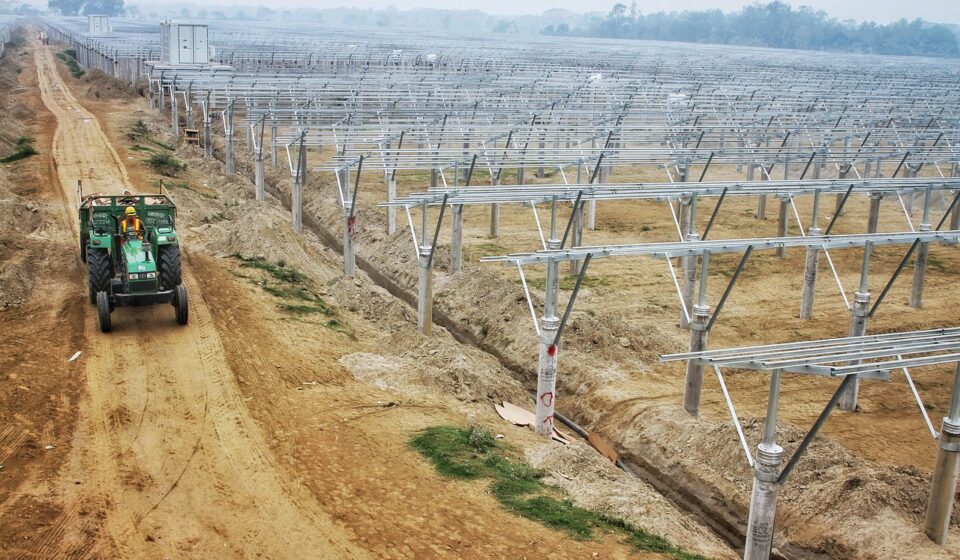
A 500 W module is often attractive where there is enough mounting area and where reducing panel count has real value. Commercial rooftops, agricultural buildings, industrial sites, carports, and ground-mounted arrays are common examples. In these settings, larger modules can simplify capacity planning and may reduce repetitive installation work.
Residential use depends more heavily on roof geometry. A simple, open roof plane can work well with 500 W panels if the racking, structural load, setbacks, and inverter system are compatible. A fragmented roof with many obstructions may not. Homeowners should not assume that the highest-wattage panel automatically creates the highest-energy system. The strongest design is often the layout that uses available area efficiently while avoiding shading and code conflicts.
Off-grid and hybrid systems need another layer of checking. The panel must match the charge controller input voltage and current, and the array size must fit the battery charging plan. A few 500 W panels can quickly exceed the input limit of small portable systems or low-voltage charge controllers if strings are configured without careful calculation.
Buying checklist for comparing 500 W solar panels
Before choosing a 500 W panel, compare the datasheet line by line rather than relying on the headline wattage. This checklist helps avoid common specification and design mistakes:
- Confirm the exact model number. Similar product names may cover several wattage bins, glass types, frame colors, and electrical configurations.
- Check dimensions and weight. Use actual measurements in the roof or ground-mount layout, and confirm handling requirements.
- Review electrical values. Match Voc, Isc, Vmp, Imp, fuse rating, and temperature coefficients with the inverter or charge controller.
- Verify certification for the installation market. Look for relevant IEC, UL, or local certification documents where required.
- Compare efficiency, not just watts. Higher power from a larger panel is different from higher power density.
- Read warranty and degradation terms carefully. Product warranty and performance warranty are not the same thing.
- Plan for installation conditions. Wind zones, roof access, racking compatibility, rapid shutdown rules, and local inspections can affect the final design.
The most reliable decision combines datasheet review, site-specific design, and code-compliant installation planning. A 500 W panel can be an excellent component, but it is still only one part of a complete PV system.
Frequently asked questions
Is a 500 watt solar panel better than a 400 watt panel?
Not automatically. A 500 W panel produces more rated power per module, but it is usually larger and may be heavier. If it fits the layout and matches the electrical design, it can reduce panel count. If it does not fit the roof well, several smaller panels may produce more total system capacity.
Can one 500 W solar panel run a home?
No. One panel can contribute useful energy, but a home typically requires a complete PV system with multiple panels, an inverter, wiring, mounting equipment, protection devices, and sometimes batteries. The number of panels depends on electricity use, local sunlight, roof space, and system goals.
Will a 500 W panel always output 500 watts?
No. The 500 W rating is measured under standard test conditions. Real output changes with sunlight, temperature, shading, orientation, dirt, and system losses. At some moments, output can approach the rating, but daily energy production should be estimated with site conditions included.
Are 500 W solar panels suitable for residential roofs?
They can be, especially on large and simple roof planes. The main checks are physical fit, roof structure, wind and fire setbacks, safe handling, and inverter compatibility. On complex roofs, a lower-wattage module may create a better layout.
What should I look for first in a 500 W panel datasheet?
Start with dimensions, weight, Pmax, Voc, Isc, Vmp, Imp, temperature coefficients, maximum system voltage, warranty terms, and certifications. These values determine whether the module can be used safely and efficiently in the intended system.