Tesla charging equipment not ready meaning, causes, and practical fixes
What the alert means
The Tesla charging equipment not ready message means the vehicle detects a connected charge handle, but the external charging equipment is not permitting a charging session to start. Tesla owner documentation describes this condition under charging alerts such as CP_a066, where the station may be delaying charging, waiting for authorization, or signaling through the control pilot circuit that charging is not permitted yet.
In many cases, the likely cause is on the EVSE, power source, payment, access-control, schedule, cable-seating, or adapter side rather than a failed vehicle. The safest first response is simple: do not force the connector or open electrical equipment. Confirm the station status, follow any screen or app instructions, and then test the car with another known-working charger if available.
Why this message appears
The wording can feel vague because the vehicle does not always know why the charger is refusing to start. It receives a signal from the external equipment and reports the state it sees. That state may be intentional, such as a public station waiting for a payment card, or unintentional, such as a dead circuit, failed relay, poor adapter connection, or interrupted pilot signal.
For AC charging, the wall unit or portable connector is more accurately described as electric vehicle supply equipment. It provides controlled AC power and safety signaling, while the vehicle’s onboard charger converts AC power into DC for the battery. For DC fast charging, more of the power conversion happens inside the station, but the session still depends on successful communication and authorization before high power is delivered.
That is why the same message can appear at home with a Wall Connector, at a workplace charger, at a public Level 2 station, or when using an adapter. The common issue is that the car has not received permission to begin drawing energy.
Quick checks to make before assuming a vehicle fault
Start with visible, low-risk checks. These steps do not require opening a charger, removing covers, or touching wiring.
- Check the station display or lights. Look for instructions, payment prompts, access-card requests, fault lights, offline messages, or a scheduled-start notice.
- Confirm the connector is fully seated. Remove the plug, inspect the handle and charge port for debris or moisture, then insert it firmly and straight.
- Look at the Tesla charge port light. Tesla service information explains that blinking blue indicates active communication, solid blue can indicate a scheduled session, blinking green means charging is in progress, amber points to a seating or latch issue, and red indicates a fault.
- Disable vehicle-side scheduled charging if immediate charging is needed. A scheduled session can make the car appear ready without drawing power yet.
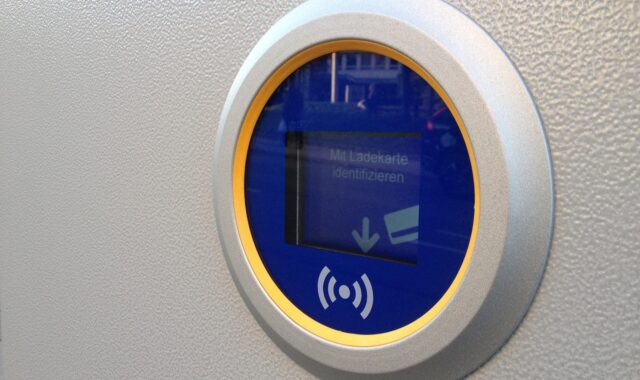
- Complete the charger-side activation step. Public and shared chargers may require an app, RFID card, credit card, screen confirmation, or site access permission.
- Try another charger. If the car charges normally elsewhere, the original equipment, site power, or authorization process is the likely problem.
These checks resolve many cases because the alert is often a start-permission issue rather than a battery problem.
Common causes by charging setup
The practical meaning of the alert depends on where the vehicle is plugged in. The table below compares common scenarios and the most useful first check.
| Charging setup | Likely reason for the alert | What to check first |
|---|---|---|
| Home Tesla Wall Connector | The unit is not powered, is waiting for the vehicle, has an access-control setting active, or has detected a fault. | Check the light bar, app settings, breaker status, and whether another vehicle or charger works. |
| Tesla Mobile Connector | The outlet, adapter, plug temperature, grounding, voltage, or pilot signal may be outside the expected range. | Check the green and red status lights, confirm the adapter is fully attached, and try another suitable outlet if safe. |
| Public Level 2 charger | The station may need payment, app activation, RFID authorization, or operator reset. | Read the station screen, start the session in the network app, and verify the port is listed as available. |
| Workplace or apartment charger | Site access rules, load management, restricted hours, or a backend network issue may delay charging. | Confirm access with the site manager and check whether other drivers are charging successfully. |
| Adapter-based charging | The adapter may not be fully seated, may not support the session type, or may add a communication fault point. | Remove and re-seat the adapter and test with a known-compatible charger. |
For more background on charging hardware categories and EVSE planning, see the site’s charging equipment section.
Home charging troubleshooting without unsafe electrical work
At home, the goal is to separate three possible areas: the vehicle, the charging unit, and the building circuit. A simple sequence helps avoid unnecessary service visits while keeping troubleshooting within a safe scope.
For a Tesla Wall Connector
First, check whether the Wall Connector has lights. Tesla’s Wall Connector documentation treats no lights as a power-supply issue, while red blink patterns point to specific faults such as ground fault, ground assurance, high temperature, or internal conditions. A normal ready state should be clearly different from a disabled or faulted state.
If the Wall Connector appears powered but will not start, check whether access control, scheduled charging, or power-sharing settings are involved. In shared-circuit installations, an incorrect configuration can leave a connector waiting instead of delivering current. If the unit shows a persistent fault, follow the manual’s reset guidance.
If the problem remains, have a qualified electrician inspect wiring connections, grounding, conductor sizing, and terminal torque. Do not remove the unit from the wall or inspect live terminals unless you are qualified to do so.
For a Tesla Mobile Connector
The Mobile Connector provides useful information through its status lights. Tesla’s Gen 2 Mobile Connector guide identifies normal charging as streaming green lights with the red light off. Red flash codes can indicate temperature reduction, adapter fault, ground fault, ground loss, over- or under-voltage, pilot fault, software mismatch, or power loss.
If the Mobile Connector reports an adapter or plug issue, unplug it from the vehicle and the wall, confirm the adapter is fully inserted, then reconnect in the order described in the product instructions. If the outlet is hot, loose, damaged, ungrounded, or repeatedly trips protection, stop using it and contact an electrician. Portable charging from household outlets is convenient, but it depends heavily on outlet condition and circuit quality. See also: solar products.
Public charging and authorization problems
Public chargers add a layer that home charging usually does not have: session authorization. The charger may be physically connected and still not ready because the network has not approved the session. This can happen when the driver has not tapped an RFID card, selected the correct stall in the app, accepted pricing, entered a credit card, or responded to a screen prompt.
Some stations also delay the start because of load management, site rules, maintenance status, or network communication. In those cases, the vehicle can only report that the station is not ready. The most useful evidence is on the charger itself: a screen message, LED color, app status, or station operator notice.
If a public charger stays in this state, end the session in the app if possible, disconnect, wait briefly, and try again. If the station has multiple plugs, try another port. If several vehicles are failing at the same unit, the operator needs to resolve the equipment issue. If only your vehicle fails at several independent chargers, the diagnostic focus should move toward the vehicle inlet, adapter, or vehicle-side charging electronics.
How to tell whether the charger or vehicle is the problem
A reliable diagnosis comes from controlled comparison. One failed session at one charger does not prove a vehicle fault. A repeated failure across known-good chargers is more meaningful.
- Test the same charger with a different vehicle if available. If another EV starts normally, your connector seating, adapter, vehicle settings, or vehicle hardware need closer attention.
- Test your Tesla on a different charger. If it charges normally, the original equipment or site authorization is the likely issue.
- Compare AC and DC charging. If AC charging fails at several Wall Connectors or Mobile Connectors but Supercharging works, the issue may be limited to the AC charging path or pilot communication. If both AC and DC fail across multiple sites, vehicle service becomes more likely.
- Check recent vehicle alerts. Tesla’s notification screen may show related messages, such as charge port latch, station not powered, communication lost, equipment reports error, or charge port service required.
- Record the evidence. Note the date, location, equipment type, connector type, light pattern, app message, and whether another charger worked. This makes it easier for an electrician, site operator, or Tesla service team to act.
The important distinction is probability. A single Tesla charging equipment not ready alert is usually an equipment-side or authorization-side event. A pattern across several working chargers is a stronger reason to investigate the vehicle.
Prevention tips for charging equipment owners and site managers
For homeowners and charging-site operators, this alert is also a reminder that users judge reliability at the moment charging starts. Clear status indicators, accessible instructions, and well-maintained electrical connections reduce confusion and support calls.
- Keep charger firmware current where the product supports updates. Tesla’s Wall Connector materials emphasize connectivity and firmware updates for proper function and monitoring.
- Label access steps clearly. If an app, card, payment terminal, or building permission is required, make that obvious near the connector.
- Avoid cable strain. A heavy cable hanging at an angle can prevent the connector from seating cleanly, especially when adapters are used.
- Inspect for heat, water, and physical damage. Do not continue using equipment that shows melted plastic, persistent red faults, damaged pins, corrosion, or repeated breaker trips.
- Use qualified installation and maintenance. Loose terminals, improper grounding, undersized conductors, or unsuitable outlets can produce intermittent faults and safety risks.
For drivers, the prevention habit is straightforward: check the charger lights before walking away, confirm the Tesla app shows charging in progress, and treat a repeated failure as useful diagnostic information rather than a random inconvenience.
Frequently asked questions
Does this alert mean my Tesla battery is damaged?
Usually no. Tesla documentation frames this alert as a condition where external charging equipment is not ready or not authorizing the session. A battery fault is not the first assumption. If the vehicle fails on several known-working chargers, schedule service and provide the alert history.
Can scheduled charging cause the message?
Yes, it can contribute to a not-starting condition. A vehicle-side schedule may show a solid blue charge port light, while a charger-side schedule or load-management setting can tell the car that the station is not ready yet. Check both the Tesla charging screen and the charger app or display.
Should I reset the breaker every time this happens?
No. A breaker reset may be part of product-specific troubleshooting, but repeated resets are not a fix. If a Wall Connector or circuit repeatedly needs resetting, the equipment and wiring should be inspected by a qualified person.
Why does the error appear with an adapter?
An adapter adds another mechanical and signaling interface. If it is not fully seated, is damaged, or is not appropriate for the charger type, the station may not complete the readiness or authorization sequence. Re-seat the adapter and compare with a known-compatible charger.
When should I call Tesla service instead of an electrician or station operator?
Call the station operator when a public charger will not authorize or shows a station fault. Call an electrician when home wiring, grounding, outlet condition, overheating, or breaker behavior is suspect. Contact Tesla service when the vehicle fails on multiple working chargers, shows charge-port service alerts, or cannot communicate with known-good equipment.