Solar powered air conditioner explained for homes and small buildings
What a solar powered air conditioner actually means
A solar powered air conditioner is not a single product category. The term can refer to a standard air conditioner supplied by a rooftop photovoltaic system, a hybrid AC/DC mini-split that accepts solar input directly, or an off-grid cooling setup with batteries. The basic concept is simple: use solar energy to cover part or all of the electricity needed for cooling. In practice, the design is more demanding because air conditioning is a large, variable load. It has to be matched with available solar production, building heat gain, humidity, runtime and backup power. For related background on panels, inverters and solar equipment trends, see our solar products coverage.
The reason this topic matters is clear. The International Energy Agency has repeatedly identified space cooling as a fast-growing source of building electricity demand, especially during hot afternoons when power grids are under stress. Solar generation often peaks during daylight hours, which can overlap with cooling demand. That overlap makes solar air conditioning technically attractive, but it does not remove the need for proper sizing, efficient equipment and realistic performance expectations.
The main types of solar air conditioning systems
Before comparing costs or components, it helps to separate the main system architectures. Buyer guides often use the same phrase for very different designs, which can lead to unrealistic assumptions about performance.
| System type | How it works | Where it fits best | Main limitation |
|---|---|---|---|
| Grid-tied solar with standard AC | Solar panels feed an inverter and building electrical panel; the AC runs like any other appliance. | Homes and small buildings that already use grid power. | Without battery backup, cooling still depends on the grid when solar output is low. |
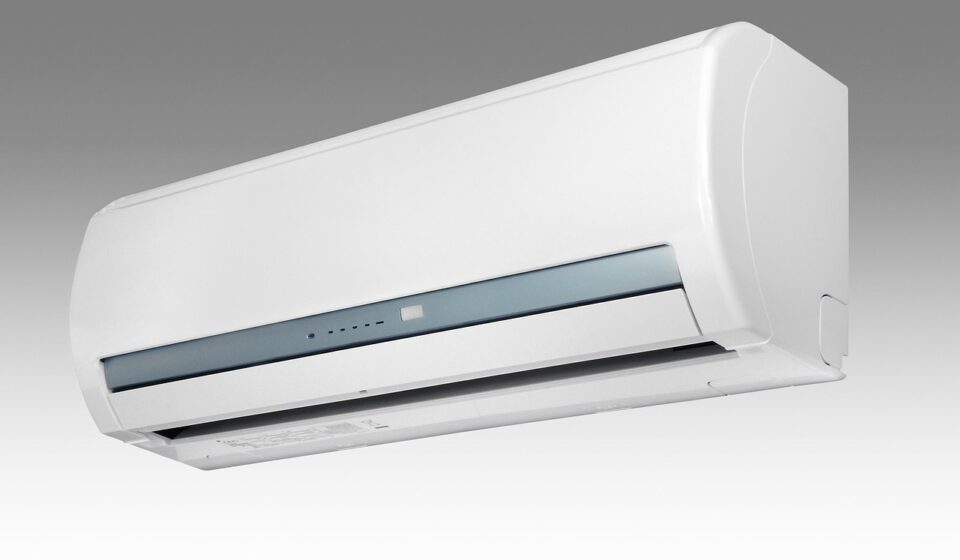
| Hybrid AC/DC solar mini-split | The unit can use DC power from panels and AC power from the grid or another source. | Single rooms, offices, cabins and daytime cooling loads. | Panel voltage range, wiring and service support are product-specific. |
| Off-grid DC air conditioner | Panels, charge controller, battery bank and DC-compatible cooling equipment operate without grid power. | Remote buildings, telecom rooms, mobile uses and backup applications. | Battery capacity and cloudy-weather performance drive system cost. |
| Solar thermal or desiccant cooling | Solar heat or stored thermal energy supports cooling or dehumidification. | Specialized commercial or research-led applications. | Less common for ordinary residential retrofits. |
For most homes, the most flexible route is still a high-efficiency heat pump or air conditioner combined with a properly designed grid-tied solar PV system. Dedicated hybrid solar air conditioners can make sense when the goal is to cool a defined zone during sunny hours. Buyers should not assume, however, that such a unit can replace a whole-house central system without careful load calculations.
How the system works from sunlight to cool air
Solar photovoltaic panels generate direct current electricity. Public guidance from the U.S. Department of Energy explains that inverters convert that DC power into alternating current, which is the form used by the grid and most household equipment. A conventional air conditioner therefore needs either a building inverter system or an internal electronics package that can accept the correct power input.
In a grid-tied setup, the air conditioner usually does not know whether the electricity came directly from the roof or from the grid. The building electrical system balances generation and consumption. If solar production is higher than building load, excess electricity may flow to the grid or to a battery, depending on the system design and local interconnection rules. If the air conditioner needs more power than the solar array is producing, the grid or battery fills the gap.
In a hybrid AC/DC unit, solar input may offset grid consumption in real time. Some designs can operate during the day without a battery, then use grid power when clouds pass or sunlight falls. This can reduce battery cost, but it also means cooling capacity may vary with available solar power unless the AC side provides steady backup.
How to size the solar side without overpromising
The first sizing step is not the panel count. It is the cooling load. A room air conditioner, mini-split or central heat pump should be sized for the space, insulation level, window exposure, air leakage, humidity and climate. DOE purchasing guidance for room air conditioners warns that oversizing can increase purchase cost, energy use and poor humidity removal because the unit cycles on and off too often.
A practical estimate starts with three numbers:
- Cooling capacity in Btu per hour, such as 9,000, 12,000 or 18,000 Btu/h for many small split systems.
- Efficiency rating, such as CEER for many room units or SEER2 for central air conditioners and heat pumps in the U.S. market.
- Expected runtime during the cooling season, especially the number of hours when the compressor actually runs.
For a rough illustration, a 12,000 Btu/h unit operating around 1,000 watts while the compressor is running would use about 1 kWh per hour of active operation. If it runs for six compressor-hours on a hot day, that is about 6 kWh before considering fan-only operation, cycling behavior or inverter losses. A solar array must then be sized for local peak sun hours, shading, panel orientation, temperature losses and the need for backup power.
This is why small portable panels cannot reliably run a central air conditioner. Central systems can draw several kilowatts while operating and may have high starting requirements unless they use inverter-driven compressors or soft-start equipment. Even when a solar powered air conditioner is technically feasible, the design must account for both energy over the day and power at the moment the compressor starts or ramps up.
Efficiency details that matter more than the label
The phrase solar powered can distract from the most important cost-control measure: reducing the cooling energy required in the first place. A more efficient air conditioner needs fewer panels and less storage for the same comfort level. ENERGY STAR states that certified room air conditioners are at least 19% to 36% more energy efficient than minimum federal standards, depending on product category. DOE FEMP examples also show meaningful annual kWh differences between less efficient, ENERGY STAR and best-available room air conditioners under the same operating assumptions.
For central residential systems in the United States, SEER2 is a key seasonal cooling metric. DOE rulemaking materials also reference updated test procedures for central air conditioners and heat pumps, including AHRI 210/240-2024 for current SEER2 and HSPF2 measurements and future SCORE and SHORE metrics. For buyers, the practical point is simpler: compare current certified ratings rather than older marketing claims, and make sure the rating applies to the exact outdoor and indoor unit combination being installed.
Several design choices can lower the solar requirement:
- Choose an inverter-driven compressor that can modulate instead of cycling aggressively.
- Improve insulation, shading and air sealing before increasing equipment size.
- Use zoning so solar-assisted cooling targets occupied rooms first.
- Clean filters and coils so the system does not waste power moving air through restrictions.
- Set realistic thermostat schedules rather than forcing deep daytime temperature drops.
Where solar air conditioning makes the most sense
Solar air conditioning is most compelling where cooling demand is strongest during sunny hours. Typical applications include home offices, small shops, guard rooms, agricultural buildings, telecom shelters and well-insulated rooms that need daytime comfort. In these cases, solar production and cooling demand can overlap enough to reduce grid draw without a very large battery. See also: efficiency guides.
It is also attractive where electricity tariffs are high during afternoon peaks or where demand charges affect commercial bills. NREL reported in 2025 that advanced commercial cooling concepts with built-in energy storage can shift electricity use away from peak periods; one modeled 20-ton system in Miami reduced cooling-related electricity use, peak demand and annual cooling cost in the simulation. That is not the same as a standard residential solar AC, but it shows why the industry is moving toward storage, load shifting and humidity-aware cooling rather than panels alone.
The limits are just as important. Night cooling requires grid power, batteries or stored thermal energy. Cloudy weather reduces PV output. Humid climates need enough runtime for moisture removal. A cabin that needs occasional afternoon cooling may be served by a compact off-grid system, while a large house in a hot climate may require a full solar-plus-storage design if the goal is backup cooling during outages.
What to check before choosing equipment
A useful specification sheet should answer more than the headline wattage claim. Buyers, installers and project planners should verify:
- Rated cooling capacity at relevant indoor and outdoor temperatures.
- Input power range for solar DC operation, including voltage and current limits.
- Accepted backup source, such as grid AC, generator, inverter or battery system.
- Compressor type, because variable-speed equipment is usually easier to pair with solar than fixed-speed equipment.
- Battery compatibility if night operation or outage cooling is required.
- Certification and code compliance for the target market.
- Installer availability, warranty terms and replacement parts support.
It is also worth asking what happens when solar power drops suddenly. A robust hybrid system should transition smoothly to backup power or reduce output in a controlled way. If the product simply shuts off under passing clouds, it may still be useful for some applications, but it should not be sold as a comfort-critical cooling solution.
Installation and maintenance considerations
Air conditioning and solar electrical work both require careful installation. Refrigerant lines, condensate drainage, airflow, panel mounting, wire sizing, overcurrent protection and local permitting all affect safety and performance. For grid-tied systems, interconnection requirements and export rules vary by utility. For off-grid systems, battery placement, ventilation, temperature limits and protection devices are central to reliability.
Maintenance is straightforward but important. Keep solar panels free of heavy dirt and shading. Clean or replace air filters as recommended. Inspect condensate drains before the cooling season. Keep outdoor coils clear of leaves and debris. Watch for unexplained increases in energy use, which can indicate dirty coils, low refrigerant, duct leakage or control problems. A solar powered air conditioner is still an air conditioner; poor HVAC maintenance can erase much of the benefit of adding solar input.
Frequently asked questions
Can solar panels run an air conditioner directly?
Sometimes, but only with equipment designed for the correct DC input or with an inverter system between the panels and the air conditioner. Most standard AC units require stable AC electricity, so panels alone are not enough.
Do I need batteries for a solar powered air conditioner?
Not always. A grid-tied or hybrid daytime system may operate without batteries if grid power is available as backup. Batteries become important when cooling is needed at night, during outages or through long cloudy periods.
Is a hybrid solar air conditioner better than a normal AC with rooftop solar?
Neither option is automatically better. Hybrid units can be efficient for targeted daytime cooling, while a normal high-efficiency heat pump connected to a whole-building solar system is often more flexible for homes. The better choice depends on the load, budget, backup needs and service availability.
Will a solar powered air conditioner eliminate my electric bill?
It should not be assumed. Savings depend on local electricity rates, solar production, runtime, system cost, net metering rules, battery use and the efficiency of the building. Claims of guaranteed bill elimination should be treated cautiously.
What is the most important buying factor?
Right sizing comes first, followed by verified efficiency ratings and a realistic power design. An efficient, correctly sized unit generally needs fewer panels and less storage than an oversized or low-efficiency system.