Solar energy products explained for homes, businesses and off-grid systems
A practical way to think about solar energy products
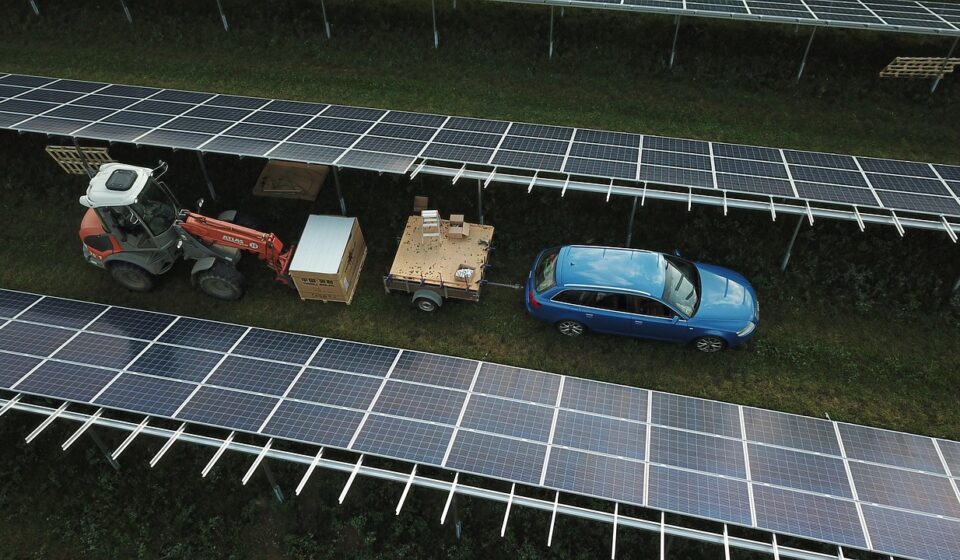
Solar energy products are much broader than solar panels. A working system usually combines photovoltaic modules, inverters, mounting hardware, electrical protection, monitoring equipment and, increasingly, battery storage. The right combination depends on the application: a grid-tied home system, a commercial rooftop, a utility-scale plant, an RV kit, a farm pump or a small off-grid lighting setup all have different requirements. The practical question is not which single product is best, but which set of components can safely convert sunlight into usable power for a specific load, site and budget. For more product-focused updates, browse our solar products section.
Market data helps explain why buyers are looking beyond individual components. The International Energy Agency’s Global Energy Review 2026 reported that global renewable capacity additions reached about 800 GW in 2025, with solar PV representing more than three-quarters of new renewable capacity. In the United States, the SEIA and Wood Mackenzie Solar Market Insight Q2 2026 report said solar and storage together accounted for 91% of new power capacity added in Q1 2026. Those figures do not make every product suitable for every project, but they do show why solar hardware, storage compatibility and grid integration are now central buying considerations.
Main categories of solar energy products
Solar panels and PV modules
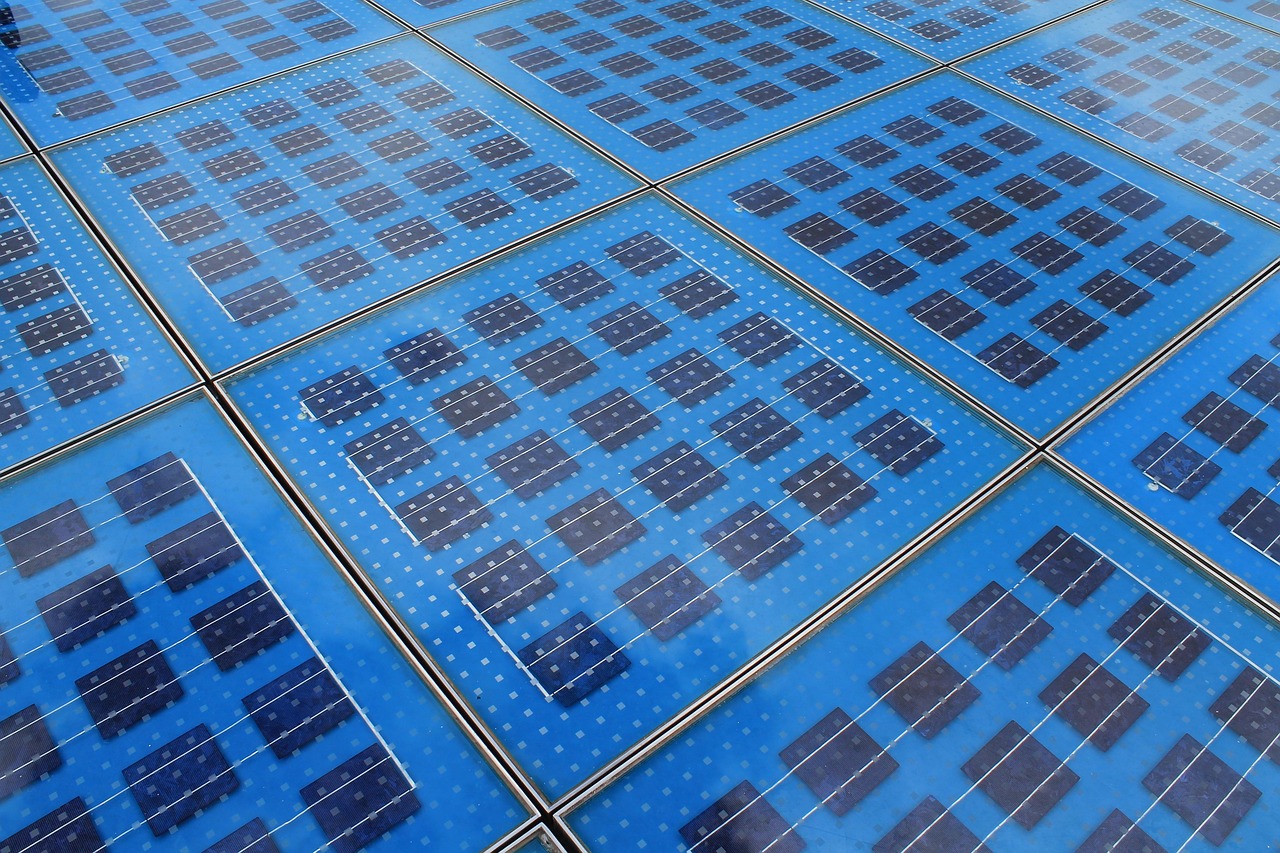
Solar panels, more accurately called photovoltaic modules, are the most visible solar energy products. They convert sunlight into direct current electricity. For most homes and commercial rooftops, crystalline silicon modules remain the mainstream choice. Thin-film modules and specialized flexible panels serve narrower applications, such as lightweight structures, portable kits or particular utility-scale designs.
Rated wattage is only the starting point when comparing modules. Buyers should also check module efficiency, temperature coefficient, physical dimensions, weight, connector type, frame design, degradation warranty, product warranty and certification. Higher wattage can reduce the number of modules needed, but it may not help if the module is too large for the available roof layout or does not match the selected inverter string design.
Inverters and power electronics
Inverters convert the direct current produced by PV modules into alternating current used by buildings and the electric grid. The U.S. Department of Energy describes the inverter as one of the most important pieces of equipment in a solar energy system because it handles this DC-to-AC conversion and can also support monitoring and grid functions.
There are three common approaches. String inverters connect groups of panels to one inverter and are often cost-effective for simple roof planes with limited shading. Microinverters sit behind individual modules, which can help when shading, multiple orientations or panel-level monitoring are important. Power optimizers sit at module level but work with a central inverter. None of these options is universally superior. The better choice depends on roof complexity, serviceability, budget, local code and whether battery storage may be added later.
Battery storage and hybrid systems
Battery systems store electricity for later use. Storage is becoming more relevant because solar generation depends on sunlight, while household and business demand often peaks outside the strongest production hours. The Department of Energy notes that storage helps balance generation and demand by releasing solar energy when it is needed.
A battery does not automatically give a building backup power. To operate during an outage, the system must be designed with the right inverter, transfer equipment, protected load panel and safety controls. Buyers should confirm whether a product supports backup operation, time-of-use bill management, self-consumption, demand charge reduction or a combination of these functions. Battery capacity, continuous power output, surge rating, chemistry, enclosure rating, thermal management and warranty cycles are more useful comparison points than brand name alone.
Mounting, racking and balance of system components
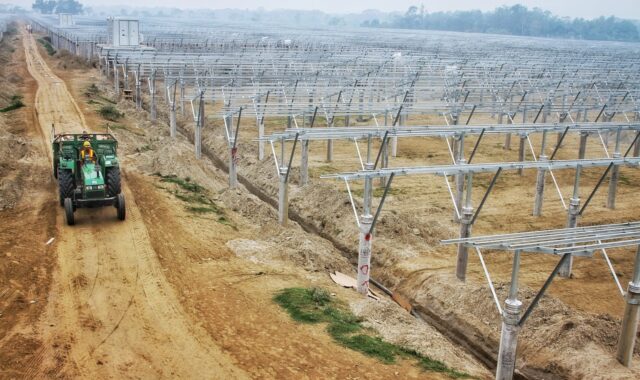
Mounting and racking products hold modules in place and set the array angle. Roof attachments, rails, clamps, flashing, ballast systems and ground-mount structures must be selected for wind load, roof type, corrosion exposure and local building rules. A low-cost mounting package can become expensive if it creates leaks, complicates inspections or cannot withstand the site’s environmental conditions.
Balance of system components include wiring, connectors, combiner boxes, disconnects, fuses, breakers, meters and monitoring equipment. These parts are less visible than panels, but they directly affect safety, uptime and maintenance. In commercial and utility projects, balance of system costs can move independently from module prices because labor, racking, electrical gear, tariffs and project risk all influence installed cost.
Specialized solar products
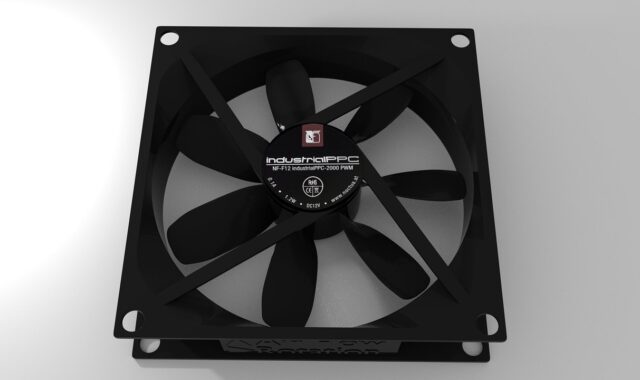
Not every solar product is part of a roof-mounted power plant. Solar lighting, portable panels, charge controllers, solar water pumps, solar ventilation fans, solar security cameras, solar generators and RV kits serve smaller or more specialized needs. These products can be useful when grid access is limited or when the load is modest and predictable. However, small integrated devices often have limited battery capacity and may perform poorly if the advertised output assumes ideal sunlight. Buyers should match these products to actual daily energy demand, not just the peak wattage printed on the package.
How 2026 market trends are changing product choices
Solar product selection in 2026 is shaped by three linked trends: larger PV deployment, wider use of storage and more attention to grid integration. The IEA reported that solar PV capacity additions surpassed 600 GW globally in 2025 for the first time, bringing cumulative solar PV capacity to around 2,800 GW. That scale encourages more product variety, but it also makes quality control and compatibility more important.
In the U.S. market, SEIA and Wood Mackenzie reported that the country added 7.8 GW of new solar capacity in Q1 2026 and surpassed 6 million cumulative solar installations. The same report said 45% of residential solar installations in Q1 2026 were paired with battery storage. For product buyers, this does not mean every system needs a battery. It does mean that storage-ready inverter design, electrical panel planning and backup-load decisions should be considered early, even if the battery is added later.
Another trend is that lower module prices do not always translate into lower total project costs. SEIA’s Q4 2025 market reporting noted that commercial and utility-scale system pricing was affected by balance of electrical system costs, racking costs, labor and project risk, even when module prices declined. This is why serious comparisons should focus on installed performance, reliability and project fit rather than only dollars per panel.
Matching solar products to the use case
The same module or inverter can be a strong choice in one project and a poor fit in another. A shaded residential roof, a warehouse with a large flat roof, a remote water pump and a grid-scale plant each have different design priorities. The table below summarizes the practical matching logic.
| Use case | Products that usually matter most | Key buying questions |
|---|---|---|
| Grid-tied home system | PV modules, inverter, racking, monitoring, optional battery | Is the roof suitable, is there shading, and can the inverter support future storage? |
| Commercial rooftop | High-output modules, racking, string inverters, monitoring, electrical protection | Does the design meet structural limits, demand profile and maintenance requirements? |
| Backup-focused home system | Hybrid inverter, battery, transfer equipment, protected loads panel | Which circuits must run during an outage, and for how many hours? |
| Off-grid cabin or telecom site | Modules, charge controller, battery bank, inverter, generator interface | What is the daily energy load in the worst sunlight season? |
| Solar pump or outdoor device | Dedicated PV module, controller, motor or device battery | Does the product match the duty cycle, water demand or nighttime operation need? |
For homes and businesses connected to the grid, product compatibility with interconnection rules can be as important as hardware specifications. For off-grid systems, the critical question is energy balance: daily production must exceed daily consumption with enough reserve for cloudy periods. For portable products, weight, connector safety, charge controller quality and realistic battery capacity often matter more than the advertised maximum solar input. See also: efficiency guides.
What to check before comparing brands or prices
Before comparing brands, confirm the technical and compliance requirements. For PV modules, IEC 61215 is commonly associated with design qualification and type approval for terrestrial photovoltaic modules, while IEC 61730 addresses PV module safety qualification. IEC summaries also make an important limitation clear: certification tests help evaluate design and safety, but they are not a numeric guarantee of lifetime under every climate and installation condition.
A practical product checklist should include the following:
- Electrical compatibility: Confirm voltage, current, inverter input range, battery voltage and connector compatibility.
- Environmental rating: Check operating temperature, enclosure rating, corrosion resistance and wind or snow load requirements.
- System purpose: Decide whether the system is for bill reduction, backup power, self-consumption, off-grid operation or device charging.
- Monitoring and service: Review whether the system offers panel-level monitoring, inverter-level monitoring or only basic production data.
- Warranty terms: Separate product warranty, performance warranty, battery cycle warranty and workmanship coverage.
- Code and permitting: Confirm local electrical codes, rapid shutdown rules, interconnection limits and utility requirements before purchase.
Price should be judged after these basics are clear. A low-cost module may be reasonable for a small noncritical project, but not for a roof where replacement labor is expensive. A battery with attractive capacity may be unsuitable if its power output cannot start the intended loads. An inverter may be efficient but still wrong if it limits future battery options.
Common mistakes to avoid
The first mistake is treating panel wattage as the whole system. In reality, energy production depends on sunlight, orientation, tilt, shading, temperature, inverter sizing and losses. A higher-wattage module installed in a poor location can underperform a smaller module installed in a better location.
The second mistake is buying battery storage without defining backup loads. Running a refrigerator, lights and internet equipment is very different from running central air conditioning, electric heating or large motors. Battery sizing should begin with a load list and expected outage duration, not with a generic capacity number.
The third mistake is ignoring the balance of system. Mounting hardware, wiring, disconnects and monitoring may not look exciting, but they determine whether the system is safe, inspectable and maintainable. This is especially important in coastal areas, high-wind zones, snow regions and hot climates.
The fourth mistake is assuming that a product certified for one market automatically satisfies all local requirements. Standards, utility rules and incentive requirements vary by country, state and municipality. Buyers should treat product certification as a necessary screening tool, not a substitute for local engineering and permitting review.
Frequently asked questions
Are solar panels the same as solar energy products?
No. Solar panels are one category of solar energy products. A complete system may also need an inverter, mounting equipment, wiring, safety disconnects, monitoring and battery storage. Smaller solar products may combine several of these functions in one device, such as a solar light or portable solar generator.
Do I need a battery with every solar system?
No. A grid-tied system can operate without a battery if the goal is mainly to offset electricity use during sunny hours. A battery becomes more relevant when the project needs backup power, higher self-consumption, time-of-use savings or off-grid operation. The system must be designed for those functions from the start.
What is the most important product in a solar system?
The answer depends on the failure risk and project goal. Panels produce electricity, but inverters control conversion and grid interaction, while batteries determine backup capability. Mounting and electrical protection are essential for safety. It is more accurate to evaluate the system as a set of compatible components.
How should buyers compare solar product warranties?
Compare warranty type, length, exclusions and responsible party. A module performance warranty is different from a product materials warranty. Battery warranties often depend on cycles, throughput or years of use. Inverter warranties may be shorter than module warranties, so replacement planning should be part of the cost comparison.
Are portable solar products suitable for home backup?
Some portable solar generators can support small loads, but they should not be confused with a permanently installed backup system. Check battery capacity, output power, solar input limit, charging time, safety certification and whether the device can power the specific appliances you plan to use.