Solar devices explained for practical power, storage, and off-grid applications
What solar devices include now
Solar devices are no longer limited to small calculators, garden lights, or stand-alone panels. In current industry use, the term can cover photovoltaic modules, inverters, charge controllers, batteries, solar lights, solar pumps, portable chargers, monitoring sensors, and integrated systems that turn sunlight into usable electricity. For buyers, installers, and specifiers, the practical question is not only what types exist, but where each type fits and how to judge quality without relying on wattage alone. Market growth makes that question more important. The IEA Photovoltaic Power Systems Programme reported in its Snapshot 2026 material that global cumulative PV capacity approached 3 TW by the end of 2025, with roughly 698 GW of new PV systems installed in 2025. As solar spreads, the useful test is not whether a device is solar powered, but whether the whole device architecture fits the load, location, storage need, safety requirements, and expected service life.
For readers comparing different solar products, a good starting point is to separate energy generation devices from power conversion, storage, control, and application-specific devices. A compact solar lamp and a grid-tied rooftop system both use sunlight, but they solve different problems and should be evaluated with different criteria.
Why solar devices are expanding beyond panels
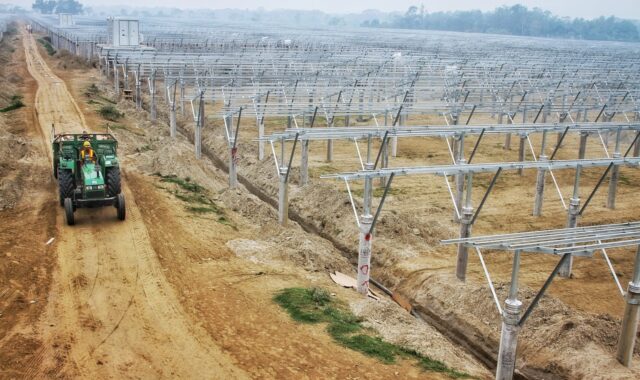
The solar product market is broadening because PV modules are now one part of a larger energy system. A modern installation often needs electronics to manage voltage, software to monitor performance, batteries to shift energy into evening hours, and protection devices to keep the system safe under real outdoor conditions. That is why solar devices now appear in homes, farms, telecom sites, recreational vehicles, street lighting, water pumping, emergency backup, and commercial energy management.
| Market signal | What the source reported | Why it matters for solar devices |
|---|---|---|
| Global PV deployment | IEA PVPS Snapshot 2026 estimated that cumulative installed PV capacity approached 3 TW by the end of 2025. | More installed PV creates demand for inverters, controllers, meters, storage, monitoring, and replacement parts. |
| Renewable capacity growth | IRENA Renewable Capacity Statistics 2026 reported total renewable power capacity of 5,149 GW after 692 GW of additions in 2025. | Solar devices sit inside a wider renewable energy supply chain, not a niche gadget market. |
| U.S. utility-scale pipeline | The U.S. Energy Information Administration said in February 2026 that solar represented 51% of planned U.S. utility-scale capacity additions for 2026, with battery storage at 28%. | Solar and storage are increasingly planned together, which raises the value of hybrid inverters, batteries, and energy management devices. |
| Standards attention | IEC standards cover PV module safety, PV array design, and power conversion equipment. | As systems become more complex, certification and installation quality matter as much as headline output. |
These figures should not be read as a guarantee for any individual device, country, or project. They do show a clear direction: solar products are becoming system products. Buyers and specifiers need to think about compatibility, safety, and lifecycle cost instead of treating each component as an isolated item.
Main categories of solar devices
PV modules and integrated panels
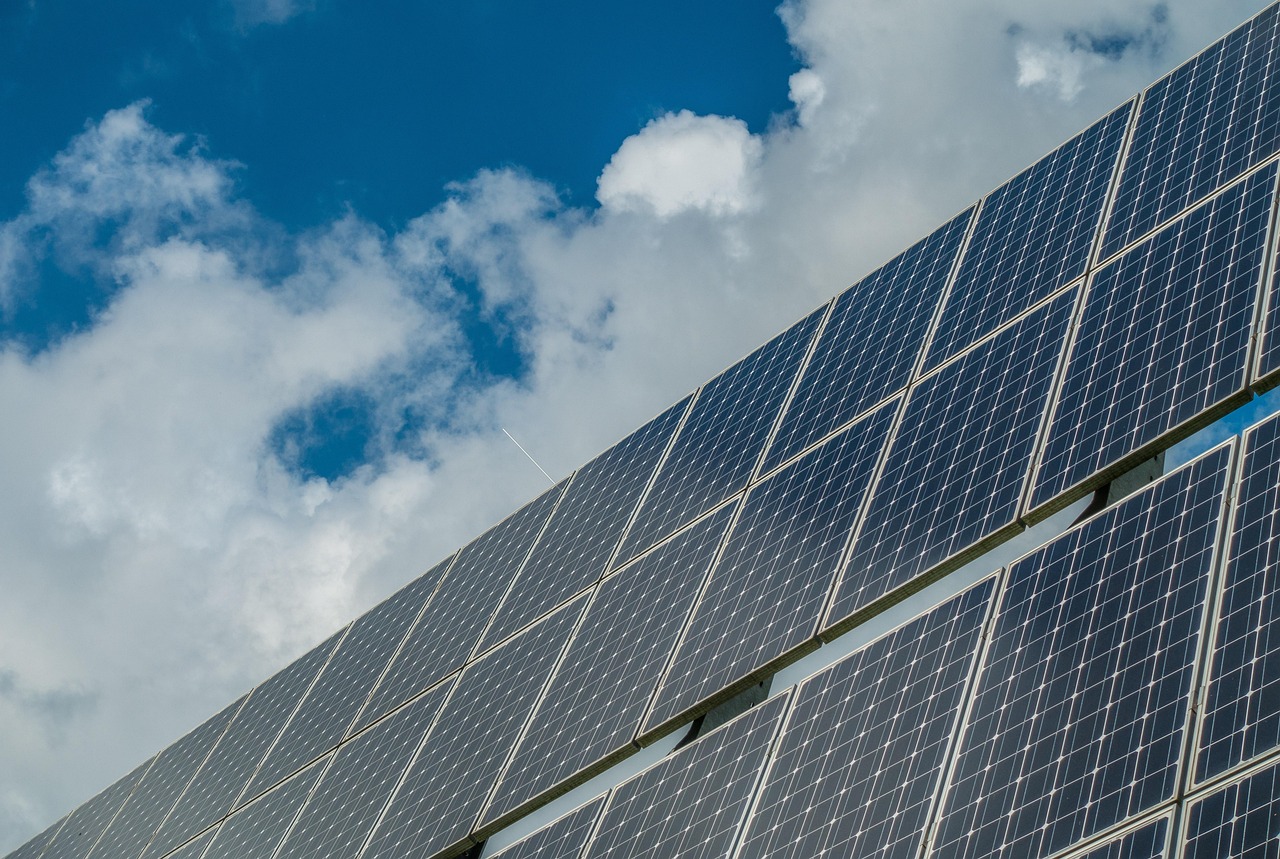
Photovoltaic modules are the visible part of most solar systems. The U.S. Department of Energy explains that PV materials and devices convert sunlight into electrical energy, and that individual cells are connected into modules and arrays to increase output. A single cell produces only a small amount of power, so modules are engineered packages designed to protect cells from weather while delivering useful current and voltage.
For product selection, the important details include rated power, module efficiency, temperature behavior, mechanical load rating, connector type, dimensions, and certification. Rigid glass modules are common for rooftops and ground mounts. Flexible panels may suit vehicles or curved surfaces, but they often involve trade-offs in heat management, mounting method, and durability. Building-integrated PV can replace conventional building materials in some cases, but it should be treated as a construction product as well as an energy product.
Inverters, charge controllers, and power electronics
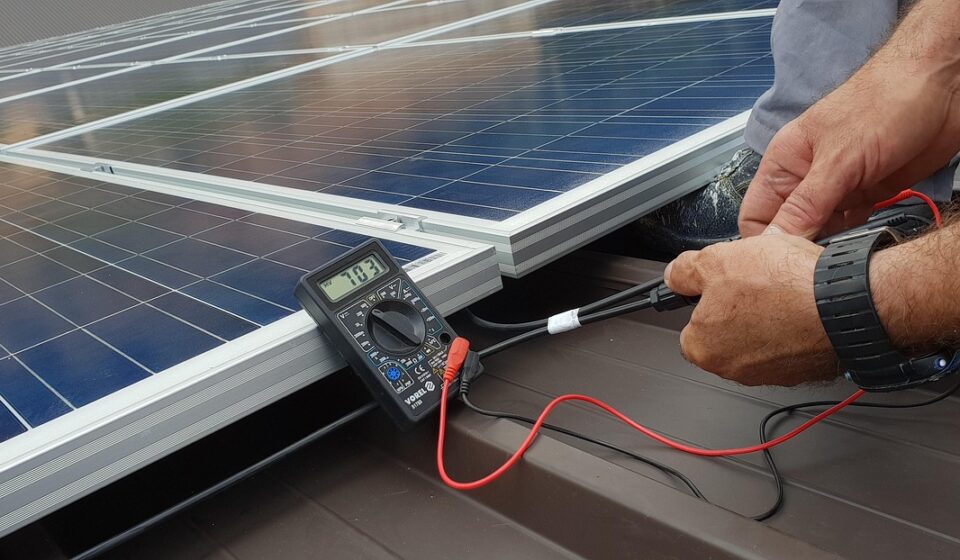
Most PV modules generate direct current, while buildings and grids usually use alternating current. Inverters convert DC electricity into AC electricity and may also monitor system output, communicate with a network, support grid functions, and coordinate with batteries. In smaller off-grid systems, a charge controller manages how energy flows from panels to batteries. Maximum power point tracking controllers are widely used because they help match panel output to battery and load conditions.
This category is often where low-quality solar devices fail first. Heat, poor enclosure design, weak connectors, undersized wiring, and unclear firmware support can reduce reliability. A solar panel can be technically sound, but the system may still underperform if the controller or inverter is mismatched.
Batteries and solar-plus-storage devices
Batteries allow solar electricity to be used after sunset, during cloudy intervals, or during outages when the system is designed for backup operation. Storage can be built into a portable power station, connected to a household hybrid inverter, or deployed as part of a commercial or utility-scale battery energy storage system. The key measures are usable capacity, charge and discharge power, cycle life, operating temperature, battery management system quality, and whether the system can safely isolate from the grid during an outage.
Storage does not make every solar product better. If the load runs only during daylight, a direct solar device may be simpler. If reliability is the goal, storage sizing should be based on actual energy use, expected days of autonomy, battery chemistry, and acceptable depth of discharge.
Solar lighting, pumps, sensors, and portable devices
Application-specific solar devices combine generation, control, and the final load in one product. Examples include solar street lights, garden lights, security lights, water pumps, livestock water systems, weather stations, remote sensors, portable USB chargers, and power-station chargers. Their advantage is convenience: they can often work where wiring is expensive or unavailable.
The main risk is oversimplified marketing. A solar light may list panel wattage but hide battery capacity. A solar pump may advertise peak flow but not specify sunlight conditions, head height, or daily water volume. A portable charger may perform well in full sun but slowly under haze, shade, or poor panel angle. The more specific the application, the more important the load profile becomes.
How to evaluate a solar device before purchase
A useful evaluation starts with the job the device must perform. Wattage matters, but it is not the whole specification. A 100 W panel, a 100 W inverter, and a 100 W load describe three different things. Good solar device selection converts the use case into an energy budget, then checks whether each component can operate safely under real conditions.
- Define the load. List the device or appliance, its watt draw, operating hours, starting surge, and whether it runs on DC or AC power.
- Estimate daily energy demand. Multiply watts by hours to calculate watt-hours per day, then add a margin for losses and weather.
- Check the solar resource. A product that works well in full summer sun may perform differently in winter, shade, dust, fog, or high temperatures.
- Match voltage and current. Panels, controllers, batteries, inverters, fuses, and cables must be compatible, not merely close in rating.
- Confirm storage needs. If the device must run at night or during outages, battery capacity and inverter behavior become central.
- Review environmental protection. Outdoor products need suitable ingress protection, corrosion resistance, wind tolerance, UV-resistant materials, and safe cable routing.
- Look for credible certification. Standards and third-party testing are stronger signals than vague claims such as industrial grade or premium quality.
- Plan maintenance. Cleaning, battery replacement, firmware updates, connector inspection, and inverter replacement can all affect lifecycle cost.
For homes and businesses, the evaluation should also include local interconnection rules, utility requirements, electrical codes, and qualified installation. For off-grid products, the focus shifts to autonomy, repairability, spare parts, and whether the system can be safely expanded later. See also: efficiency guides.
Safety and standards matter as much as wattage
Solar devices operate outdoors, often for years, while exposed to heat, moisture, mechanical stress, and electrical faults. This is why standards are not just paperwork. IEC 61730-1:2023 addresses construction requirements for PV module safety, while IEC 61730-2:2023 covers safety qualification testing. IEC 62548-1:2023, with a 2025 amendment, covers PV array design requirements such as DC wiring, protection devices, switching, and earthing provisions. IEC 62109-1 covers general safety requirements for power conversion equipment used in photovoltaic systems.
Different markets may use IEC standards directly, adopt regional equivalents, or require additional local certifications. The practical lesson is consistent: do not evaluate solar devices only by output claims. A module, inverter, battery, or controller should have documentation that matches the exact model, not only a similar product family. For grid-tied equipment, local utility approval and installer competence are essential because grid behavior, anti-islanding protection, and shutdown requirements can affect safety.
Practical selection scenarios
| Use case | Solar device type to consider | Key selection factor | Common mistake |
|---|---|---|---|
| Pathway or security lighting | Integrated solar light with panel, battery, LED, and controller | Battery capacity, motion mode, weather rating, and winter runtime | Choosing only by LED brightness without checking stored energy |
| Small off-grid cabin | PV modules, MPPT controller, battery bank, inverter, protection devices | Daily watt-hours, surge loads, autonomy, and safe wiring | Buying panels before calculating load and storage needs |
| Irrigation or livestock water | Solar pump system with controller and optional storage tank | Head height, water volume, pump curve, and daylight operating window | Using peak flow claims without matching site conditions |
| Home backup | Solar-plus-battery system with hybrid inverter or backup-capable inverter | Critical load panel, islanding capability, battery power, and code compliance | Assuming every solar system works during a grid outage |
| Commercial energy management | PV array, smart inverter, monitoring, metering, and possible storage | Load profile, tariff structure, demand charges, and operations data | Ignoring controls and monitoring after installation |
These scenarios show why the phrase solar devices is useful but broad. The right choice depends on the task. A portable panel may be excellent for camping but irrelevant for a building load. A high-efficiency rooftop module may be a strong energy generator, but it still needs the correct inverter, mounting, disconnects, and monitoring to become a complete system.
Limitations and lifecycle questions
Solar devices have clear advantages: they can reduce dependence on fuel delivery, support remote loads, lower operating emissions during use, and add resilience when paired with appropriate storage and controls. Their limitations are equally important. Solar output changes with time of day, season, cloud cover, shading, dust, and temperature. Batteries add cost, weight, thermal considerations, and eventual replacement. Inverters and controllers include electronics that may not last as long as PV modules. The Department of Energy notes in its solar system design material that inverters are expected to need replacement at least once during a typical 25-year PV array lifetime.
Another lifecycle issue is data quality. Capacity statistics from IEA PVPS, IRENA, national agencies, and commercial analysts can differ because they may use different reporting periods, DC or AC capacity conventions, official or estimated data, and treatment of distributed systems. For product decisions, the broader trend matters more than a single headline number: PV deployment is large, storage is increasingly connected to solar, and device-level reliability is becoming more important.
End-of-life planning should also be part of responsible specification. Larger markets create larger flows of damaged modules, retired inverters, used batteries, and electronic components. Buyers should ask whether parts can be replaced, whether batteries have responsible recycling pathways, and whether monitoring data can be exported if the device vendor changes platforms.
Frequently asked questions
What are examples of solar devices?
Examples include PV modules, solar panels, inverters, charge controllers, battery storage systems, solar lights, solar pumps, portable solar chargers, solar-powered sensors, and monitoring devices. Some are individual components, while others are integrated products that include generation, storage, and the final load in one package.
Do solar devices work during a power outage?
Some do, but not all. A small stand-alone solar light or pump can operate independently if it has enough sunlight or battery capacity. A grid-tied rooftop system may shut down during an outage unless it includes approved backup capability, isolation equipment, and storage or another safe operating mode.
Are portable solar devices enough for a home?
Portable devices can charge phones, lights, laptops, or small appliances depending on their panel and battery size. They are not a substitute for a properly designed home solar and storage system if the goal is to power refrigerators, HVAC equipment, well pumps, or multiple household circuits.
What certifications should I check?
For PV modules and electrical components, check whether the exact model is certified under the standards required in your market. IEC 61730 is commonly associated with PV module safety, and IEC 62109 is associated with power conversion equipment safety. Local codes, utility rules, and national certification marks may add further requirements.
Is a higher watt rating always better?
No. Higher wattage can help when space is limited or energy demand is high, but it does not automatically mean better performance. Battery capacity, inverter quality, controller efficiency, mounting angle, shading, temperature behavior, cable sizing, and safety certification can matter just as much as rated output.