Sofa maintenance tips for fabric, leather and everyday spills
Start with the care label and a simple routine
The most useful sofa maintenance tips are straightforward: check the manufacturer’s care label, remove dry soil before it settles into the fibers, deal with spills quickly, and avoid harsh cleaning experiments. Fabric, leather, faux leather, microfiber and performance upholstery can all respond differently to water, solvents, heat and scrubbing. A method that works on one couch may leave rings, fading or texture damage on another.
For everyday use, the safest routine is weekly vacuuming, cushion rotation where the design allows it, quick blotting of spills, and periodic inspection for loose seams, worn arms and flattening cushions. For more practical home upkeep ideas, browse the maintenance tips category.
A sofa is usually one of the most heavily used pieces of furniture in a living space. It collects dust, skin oils, crumbs, pet hair, pollen, outdoor particles and occasional food or drink spills. Maintenance matters because these small amounts of soil become harder to remove once they are pressed into fabric or absorbed into leather. Good care also helps prevent over-cleaning, which can damage upholstery just as easily as neglect.
Read the sofa cleaning code before using water or solvents
Many upholstered sofas have a tag under the seat cushion, on the platform, or along the frame. The tag may list the fabric content, manufacturer details and a cleaning code. Wording varies by manufacturer, but the common code system indicates which cleaning approach is normally suitable for that upholstery.
| Code | General meaning | Home maintenance approach |
|---|---|---|
| W | Water-based cleaner may be suitable | Use a small amount of water-based upholstery cleaner after testing a hidden area. |
| S | Solvent-based cleaner may be suitable | Avoid water cleaning. Use only a product approved for S-coded fabric or call a professional. |
| W/S or WS | Water-based or solvent-based methods may be suitable | Test first and use the mildest method that matches the stain and fabric. |
| X | Vacuuming or light brushing only | Do not apply liquid cleaners. Professional advice is safest for stains. |
The code is a starting point, not permission to soak the sofa. Upholstery includes fabric, dye, backing, foam, batting, adhesives, thread and sometimes wood or metal components beneath the surface. Excess moisture can move beyond the cover material and cause rings, odors, slow drying or internal staining. If the tag is missing, take a conservative approach: vacuum, dry-brush gently and test any cleaner in a hidden location before treating the visible seat, arm or back.
Build a weekly sofa care routine
Weekly care is more effective than occasional aggressive cleaning. New Mexico State University’s fabric home furnishings guidance recommends regular brushing or vacuuming for upholstered furniture and notes that weekly care helps reduce soil buildup. The U.S. Environmental Protection Agency also advises routine vacuuming of fabric-covered furniture as part of regular indoor cleaning to limit the buildup of dust and biological contaminants.
- Vacuum with an upholstery attachment. Use low to moderate suction and a soft brush attachment. Work across seat decks, cushion seams, arms, back pillows and the crevices where crumbs collect.
- Remove cushions where possible. Vacuum both sides and the platform underneath. Do not remove zippered covers for machine washing unless the manufacturer specifically says they are washable.
- Rotate reversible cushions. If the cushions are designed to be flipped or rotated, do this weekly or every few weeks to reduce uneven compression, fading and wear.
- Keep the sofa out of harsh direct sun. Prolonged sunlight can fade many fabrics and dry some leathers. Use curtains, shades or a different room layout when one side of the sofa receives strong daily exposure.
- Manage humidity and airflow. Avoid pushing a sofa tightly against damp exterior walls or blocking airflow around it. Cushions that dry slowly after cleaning are more likely to develop odor problems.
For households with pets, children, open windows or heavy daily use, weekly vacuuming may need to become twice-weekly. The goal is not to make the sofa look freshly cleaned every day. It is to keep grit and oily soil from abrading fibers and settling into seams.
Handle spills quickly without making the stain worse
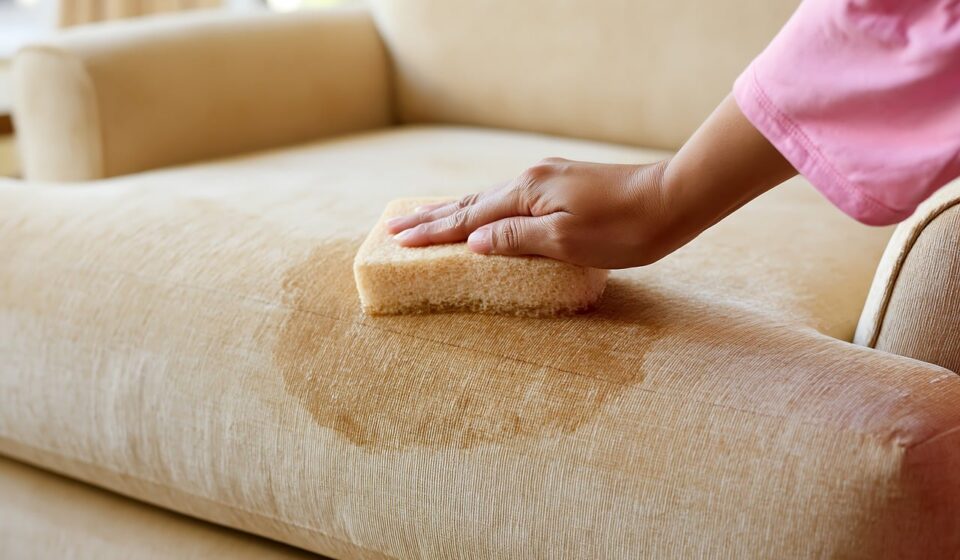
Much of the damage from a spill happens in the first few minutes, and panic cleaning often makes the final mark worse. Hard rubbing can distort pile, push pigment deeper into fabric, spread a greasy stain or remove the surface finish from leather. A slower, staged response is safer.
Use a calm spill response
- Lift solids first. Use the edge of a spoon, dull knife or card to lift food, mud or other solid material. Do not grind it into the upholstery.
- Blot liquids, do not scrub. Use a clean white cloth or plain white paper towel. Colored towels can transfer dye, especially when wet.
- Work from the outside inward. For many stains, this helps prevent spreading. If a fabric is prone to water rings, use very little moisture and feather the area carefully.
- Match the cleaner to the code. Use water-based products only on fabrics that allow them. Use solvent products only with ventilation and in line with the product label.
- Let the area dry fully. Keep people and pets off the damp area. A small fan can improve air movement, but avoid heat guns, hair dryers or direct high heat.
Do not apply heat to a stained area. Heat can set some stains and may damage synthetic fibers, leather finishes or adhesives. If the stain involves ink, oil, dye transfer, nail polish, unknown chemicals, urine or vomit, consider professional help before applying multiple products. Layering cleaners can make the stain harder to diagnose and remove.
Avoid the common ring problem
Water rings often appear when a small wet area dries with soil or cleaner residue concentrated at the edge. To reduce that risk, remove dry soil first, use minimal moisture, blot thoroughly and avoid saturating one small spot. On some fabrics, cleaning an entire panel from seam to seam is safer than wetting only the center of a cushion, but that decision depends on the fabric code and the amount of soil. If the sofa is valuable, delicate or light-colored, get an upholstery cleaner’s opinion first.
Choose the right approach for fabric, leather and performance upholstery
Different sofa materials need different care. A single “all-purpose” method is risky because upholstery performance depends on fiber content, dye stability, finish, construction and backing. The Institute of Inspection Cleaning and Restoration Certification lists fiber identification, construction, spot and stain removal, leather cleaning, fabric protectors, and residential versus commercial maintenance among the components covered by its ANSI/IICRC S300 professional upholstery cleaning standard. That professional framework is a useful reminder that sofa cleaning is not only about the visible cover.
Fabric upholstery
For woven or textured fabric sofas, dry maintenance comes first. Vacuuming removes abrasive particles that can dull fibers. A soft brush can lift pet hair and lint, but stiff metal brushes and aggressive scraping can damage the surface. When wet cleaning is allowed, use the smallest amount of cleaner needed and keep the fabric from becoming saturated. Always pretest in an inconspicuous area and wait until it dries before judging color change, texture change or water marking.
Microfiber often responds well to careful brushing after it dries, but it still needs code-based care. Boucle, velvet, linen blends and rayon-containing fabrics can be more sensitive to abrasion, water rings or pile distortion. If the sofa has a high-pile surface, brush in the direction recommended by the manufacturer and avoid circular scrubbing.
Leather and coated materials
Leather care depends on whether the leather is protected, aniline, nubuck, suede or another finish type. Leather Naturally’s care guidance emphasizes regular cleaning and maintenance, patch testing, natural drying for wet leather and avoiding hard rubbing on stubborn stains. These points matter because absorbent leathers can darken or mark when exposed to moisture or oil.
For most home leather sofas, a practical routine is dusting with a dry microfiber cloth, wiping light soil with a barely damp cloth if the finish allows it, and using leather-specific products only after a hidden-area test. Do not use saddle soap, alcohol, bleach, abrasive pads, household degreasers or heavy oil treatments unless the sofa maker specifically recommends them for that leather type. Faux leather and polyurethane-coated upholstery are not the same as natural leather; they may crack, peel or react differently to conditioners. See also: solar products.
Performance fabrics
Performance upholstery can be more stain-resistant than ordinary fabric, but it is not maintenance-free. Stain resistance may slow absorption and give you more time to blot a spill, but dirt, body oils and cleaner residue can still build up. Follow the specific brand or furniture maker’s instructions, because some performance fabrics tolerate diluted bleach solutions while others do not. Never assume that a performance label means steam cleaning, disinfecting or machine washing is safe.
Know when professional cleaning is the better choice
Professional cleaning is not necessary for every sofa, but it is sensible when the risk of home damage is high. Consider professional upholstery cleaning when the sofa has an S or X code, no readable care tag, delicate fabric, heavy overall soil, persistent odor, large water marks, pet urine, smoke residue, dye transfer, mold concerns or expensive leather. Professional cleaners can assess fiber type, dye stability, construction and drying conditions before selecting a method.
The ANSI/IICRC S300 standard was updated with a 2025 second edition and is described by IICRC as a procedural standard for professional upholstery cleaning. For homeowners, the practical takeaway is simple: deep cleaning should include inspection before and after cleaning, stain assessment, method selection and controlled drying. A quick wet pass with a rented or consumer extraction machine may work on some durable W-coded sofas, but it can damage others if the fabric is over-wet, the detergent is too strong or the cushions dry too slowly.
Ask any cleaner whether they handle your upholstery type, whether they perform a colorfastness test, what drying time to expect, and how they will manage stains versus overall soil. Be cautious if a cleaner promises that every stain will disappear. Some stains permanently alter dye, finish or fiber structure.
Make sofa maintenance lower waste and safer at home
Good maintenance supports a lower-waste home because it can delay premature replacement and reduce unnecessary product use. The most sustainable cleaning method is often the one that prevents damage: vacuum first, blot quickly, use washable throws in high-wear zones, keep food and oily products away from delicate upholstery, and repair small seam issues before they expand.
Cleaning product choice also matters. The EPA’s greener cleaning guidance warns consumers to be careful with vague claims such as “green” or “eco safe” and identifies Safer Choice as a program for products that meet criteria for safer ingredients. For sofa care, that does not mean every greener cleaner is suitable for every fabric. The fabric code, manufacturer instructions and spot test still come first.
Be especially careful with disinfectants and antimicrobial sprays. EPA guidance on indoor cleaning notes that antimicrobial products usually have an EPA registration number and that many are not intended for absorbent surfaces such as fabrics or upholstery. In normal sofa maintenance, cleaning and soil removal are usually more relevant than attempting to disinfect a porous couch. If a household illness, contamination event or odor problem raises hygiene concerns, follow product labels carefully and consider professional advice.
- Use removable, washable covers or throws on seats used by pets or young children.
- Keep a dedicated white cloth set for spill blotting so dye transfer is less likely.
- Store cleaners in original containers and follow ventilation instructions.
- Repair loose buttons, seams and cushion zippers promptly to prevent larger failures.
- Replace cushions or refill backs when structure is still sound but comfort has declined.
Frequently asked questions
How often should I vacuum my sofa?
Once a week is a practical baseline for most upholstered sofas. Increase the frequency if the sofa is used daily by pets, children, allergy-sensitive family members or anyone eating on the couch. Vacuuming is not just cosmetic; it removes particles that can abrade fabric and collect in seams.
Can I use a carpet cleaner on a sofa?
Only if the sofa’s care code and manufacturer instructions allow water-based extraction, and only with an upholstery tool and controlled moisture. Carpet machines can overwet cushions or leave detergent residue. For S-coded, X-coded, delicate, antique or leather sofas, do not use a carpet cleaner.
Should sofa cushion covers be machine washed?
Not unless the manufacturer clearly says they are removable and washable. Many zippered cushion covers are installed for manufacturing access, not home laundering. Washing them separately can cause shrinkage, color change, backing damage or a poor fit when reinstalled.
What is the safest first step for an unknown stain?
Remove loose material, blot any liquid with a clean white cloth and avoid adding cleaner until you identify the care code. If the stain is oily, chemical, ink-based, urine-related or on a delicate fabric, professional advice is safer than experimenting with multiple household products.
Do fabric protectors replace regular maintenance?
No. Fabric protectors may help some upholstery resist liquid or oily soil for a period of time, but they do not stop dust, abrasion, body oils or everyday wear. Vacuuming, quick spill response and correct cleaning methods remain the foundation of sofa care.