Electric car charging equipment explained for homes, workplaces and public sites
What electric car charging equipment includes
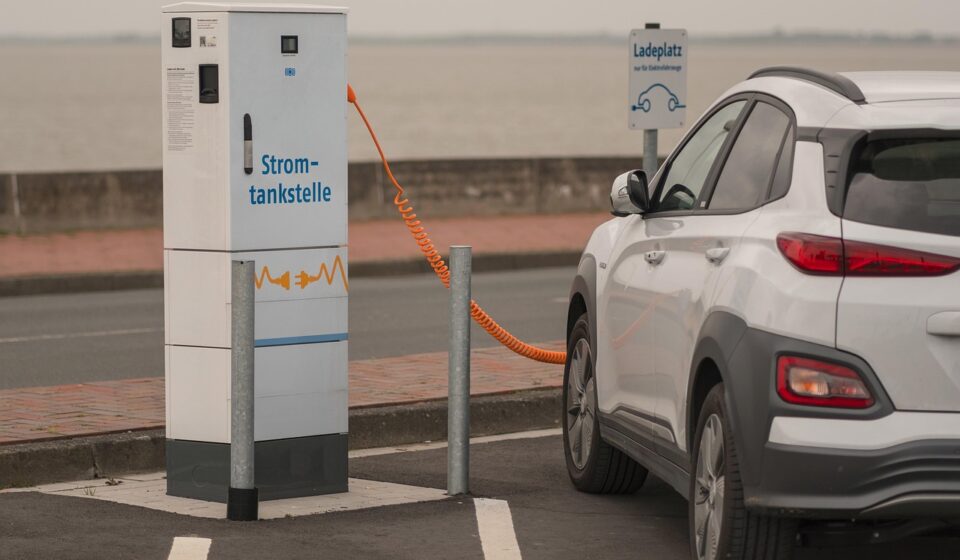
Electric car charging equipment is more than the visible cable and connector. A complete installation may include EV supply equipment, electrical protection, mounting hardware, metering, network communications, payment tools, cable management and software for monitoring use. The right configuration depends on the installation site, vehicle dwell time, available electrical service and the types of vehicles that need to charge.
For most homes and workplaces, Level 2 AC charging remains the practical baseline because it can add useful range while vehicles are parked overnight or during the workday. For highway corridors, retail hubs and high-utilization fleets, DC fast charging is usually the relevant category. The key point for buyers is that power rating alone is not enough. Connector compatibility, safety certification, load management, uptime and software interoperability all influence whether equipment performs reliably over years of operation. For more coverage of this topic, visit the charging equipment category.
Charging levels and where they fit
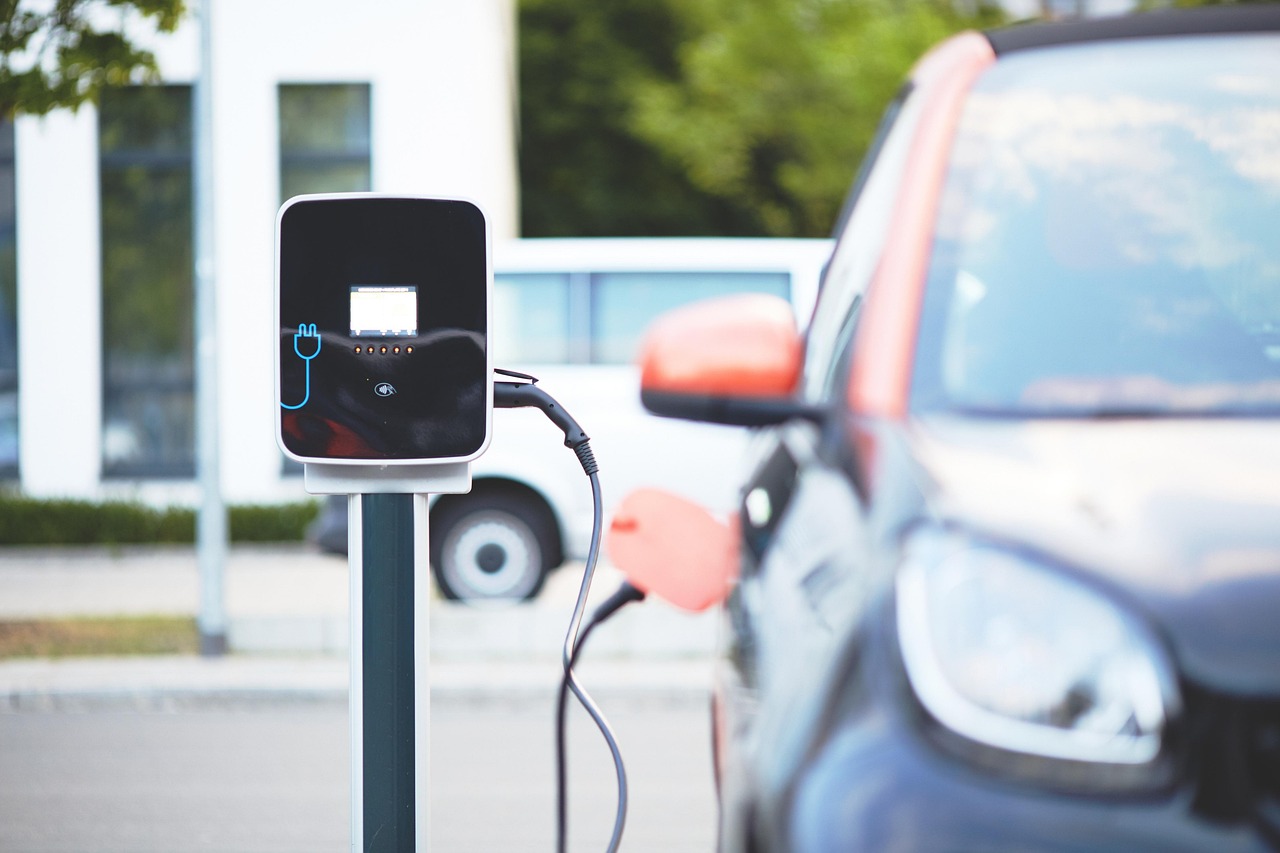
In industry use, electric vehicle charging is commonly grouped into AC Level 1, AC Level 2 and DC fast charging. The U.S. Department of Energy’s Alternative Fuels Data Center explains that charging time depends on battery state of charge, battery size, the vehicle’s onboard charger capability, charger output and electrical service. That is why two chargers with the same general label can deliver different charging experiences on different vehicles.
| Equipment type | Typical power context | Common use case | Main limitation |
|---|---|---|---|
| AC Level 1 | 120 V AC outlet in North America | Occasional home charging or low daily mileage | Slow replenishment, often unsuitable for shared sites |
| AC Level 2 | 208 V commercial or 240 V residential AC service | Homes, apartments, workplaces, hotels and destination charging | Requires dedicated electrical planning and may need load management |
| DC fast charging | Off-board DC power conversion, often from three-phase input | Highway corridors, public hubs, taxi and delivery fleets | Higher equipment cost, utility coordination and heat management |
Level 1 equipment is simple but slow. It may work for a driver who only needs to replace a small number of miles each day, but it is rarely the best choice for a commercial property that needs predictable turnover. Level 2 equipment is more flexible for long dwell-time locations such as offices, multifamily parking, hotels, schools and retail destinations. DC fast charging shortens dwell time, but it also brings larger site design issues, including grid capacity, demand charges, transformer upgrades, cooling and maintenance access.
A useful planning rule is to match charger speed to parking behavior instead of choosing the highest available rating by default. A workplace where cars sit for eight hours may benefit more from additional Level 2 ports and smart load sharing than from a small number of expensive high-power chargers. A highway rest stop has the opposite requirement: drivers expect a short session, so DC fast charging capacity and stall availability matter more.
Connectors are becoming a strategic decision
Connector planning is one of the most important changes in electric car charging equipment. In North America, many legacy and current non-Tesla vehicles use J1772 for AC charging and CCS1 for DC fast charging. Tesla-developed NACS has moved toward wider standardization through SAE J3400, which was issued in December 2023 and revised in September 2024. As a result, equipment buyers in North America increasingly need to evaluate both CCS/J1772 and J3400 compatibility.
This transition does not mean every site should immediately remove existing connector types. Vehicle fleets turn over slowly, and chargers often remain in service for many years. A hotel, office park or municipal site may need to support current vehicles with J1772 or CCS while also preparing for vehicles that use J3400. In practice, that can mean selecting dual-cable equipment, planning replaceable cable assemblies, confirming adapter policies, or choosing cabinets that can be upgraded as the vehicle mix changes.
Outside North America, connector decisions follow different regional rules and market norms. Europe commonly uses Type 2 for AC charging and CCS2 for DC fast charging. China has its own GB/T ecosystem. For global operators and equipment manufacturers, product selection should start with the target region and vehicle population rather than a universal connector assumption.
Safety, certification and electrical design cannot be an afterthought
Charging equipment handles sustained electrical loads in public and private spaces, so safety requirements matter as much as convenience features. In North America, UL Solutions identifies ANSI/UL 2594 as a key standard for EV supply equipment and ANSI/UL 2202 as a key standard for DC charging equipment. It also points to the National Electrical Code in the United States and Mexico and the Canadian Electrical Code in Canada for installation requirements.
For buyers, the practical takeaway is straightforward: ask for evidence of listing or certification to the relevant standard, and confirm that the installation will be designed by qualified electrical professionals under local code. A charger that appears inexpensive at purchase can become costly if it lacks the correct certification, cannot pass inspection, or requires unexpected site upgrades.
Electrical design should account for continuous use, not just nameplate power. Several Level 2 units on one panel can exceed available capacity unless the system includes load management. DC fast charging can require utility coordination, protective equipment, communications, ventilation or liquid cooling, and enough physical space for cabinets, dispensers, bollards and service access. Cable reach and connector height also affect accessibility and daily usability.
Maintenance should be planned before installation. Outdoor equipment faces water, dust, heat, freezing conditions, impact risk and cable wear. Sites with heavy public use need clear signage, lighting, parking enforcement, remote diagnostics and a process for repairing broken connectors quickly. A charger that is technically installed but frequently unavailable does not solve the driver’s problem.
Software and interoperability shape the user experience
Modern charging equipment often depends on software as much as hardware. Networked chargers can support user authentication, pricing, reservations, energy reporting, remote troubleshooting, firmware updates and demand management. For public and commercial sites, these functions affect revenue, compliance reporting and customer satisfaction.
OCPP, maintained by the Open Charge Alliance, is widely used as an open communication protocol between charging stations and charging management systems. OCPP 1.6 remains common, while OCPP 2.0.1 and OCPP 2.1 add stronger support for security, device management, smart charging and ISO 15118-related functions. OCPP versions are not automatically interchangeable, so a site owner should confirm which version the charger supports and whether the selected network software is compatible.
ISO 15118 is another important standard family because it addresses the communication interface between the vehicle and supply equipment, including identification, charge control, payment-related functions, load levelling, cybersecurity and privacy. In everyday terms, ISO 15118 is associated with Plug & Charge and future vehicle-to-grid use cases. Not every vehicle, charger and network combination supports those functions in the same way, so claims should be verified at the product and deployment level.
For equipment selection, software questions should be specific. Can the owner export utilization data? Can pricing be changed remotely? Are firmware updates included? What happens if the network connection fails? Does the charger support local authorization lists? Can it integrate with building energy management systems or solar-plus-storage controls? These details often determine whether a site can scale from a few ports to a larger charging program.
How public charging growth changes equipment priorities
Public charging infrastructure is growing quickly, but growth is uneven across markets. The International Energy Agency reported in its Global EV Outlook 2026 that nearly 1.8 million public charging points were added worldwide in 2025, bringing the global stock to more than 7 million by the end of that year. The same report estimated around 11 electric light-duty vehicles per public charging point globally and about 4.5 kW of public charging capacity per electric light-duty vehicle.
The IEA data also shows why equipment decisions should not focus only on the number of plugs. In the United States, public fast and ultra-fast charging points grew to nearly 70,000 in 2025, while slow public charging exceeded 160,000 points. However, the United States still had about 33 electric light-duty vehicles per public charging point at the end of 2025, a higher ratio than the global average. For site planners, this points to continued demand for reliable public infrastructure, especially in locations where drivers do not have home charging. See also: solar products.
At the same time, ultra-fast charging is not useful for every vehicle. The IEA noted that in 2025 only a portion of battery-electric car models could accept charging above 150 kW, and far fewer could charge above 250 kW. That matters because installing higher-power equipment than vehicles can use may not improve customer throughput enough to justify the cost. A balanced site may combine high-power DC charging for capable vehicles with lower-power DC or Level 2 options for longer stays.
Federal and regulatory programs are also shaping expectations. The National Electric Vehicle Infrastructure program in the United States established minimum standards for federally funded public charging projects, including installation, operation, maintenance, interoperability, network connectivity, data and public information such as pricing and real-time availability. Even sites outside that funding structure can learn from the same priorities: uptime, transparent pricing and accurate availability information are now part of the charging experience, not optional extras.
Choosing equipment by site type
Different locations need different charging strategies. A single-family home usually needs a safe, code-compliant Level 2 charger sized to the electrical panel and the driver’s daily mileage. Smart scheduling can reduce charging during expensive peak periods if the utility offers time-of-use rates. For many households, a hardwired Level 2 unit provides a cleaner and more durable installation than a portable cord set, although the right choice depends on local code and homeowner needs.
Multifamily properties require more planning because access, billing and capacity sharing become central issues. Owners may need networked Level 2 chargers, assigned or shared parking rules, tenant billing, load management and a plan for future expansion. Installing conduit and panel capacity during construction or renovation can reduce later retrofit costs.
Workplaces typically benefit from moderate-speed charging spread across more parking spaces. Employees park for long periods, so Level 2 equipment with access control and load balancing often delivers more value than a small number of faster chargers. Employers should decide whether charging is a benefit, a paid amenity, a fleet requirement, or a mix of all three.
Retail and hospitality sites should focus on dwell time and customer turnover. A grocery store may need faster charging than a hotel, while a restaurant could use either Level 2 or DC fast charging depending on visit length. Visibility, lighting, payment simplicity and charger status accuracy can be as important as the hardware rating.
Fleet depots need the most operational analysis. Route schedules, return times, battery sizes, charging windows and backup plans all affect equipment choice. Some fleets can use overnight Level 2 or lower-power DC charging, while others need higher-power DC charging to support multiple shifts. Fleet operators should model energy demand, not just vehicle count.
Frequently asked questions
What is the difference between EVSE and a charger?
In AC charging, the equipment on the wall or pedestal is often called EVSE because it supplies controlled AC power to the vehicle, while the vehicle’s onboard charger converts that AC power to DC for the battery. In DC fast charging, the off-board equipment performs the power conversion and delivers DC power directly to the vehicle battery system.
Is Level 2 charging enough for most sites?
Level 2 charging is enough for many homes, workplaces, apartments and destination sites because vehicles remain parked for several hours. It may not be enough for highway travel, high-turnover public sites, ride-hailing hubs or fleets with short charging windows.
Should new equipment support J3400?
For North American deployments, J3400 should be part of the planning discussion because vehicle and network support is expanding. However, existing J1772 and CCS vehicles remain in use, so the best choice depends on the expected vehicle mix, upgrade path and whether drivers can use approved adapters safely.
Why does OCPP matter when buying charging equipment?
OCPP matters because it can reduce dependence on a single proprietary network and make it easier to connect chargers with compatible management software. Buyers should still verify the exact OCPP version, certification status and supported functions before assuming interoperability.
What is the most common mistake in selecting electric car charging equipment?
The most common mistake is choosing by maximum kW rating alone. A better decision compares vehicle dwell time, electrical capacity, connector needs, certification, software support, maintenance access, payment requirements and expected growth. The right charger is the one that fits the site’s actual operating pattern.
Bottom line for equipment planning
Electric car charging equipment should be selected as infrastructure, not as a simple accessory. The best plan starts with the user: where vehicles park, how long they stay, which connectors they use and how much energy they need before leaving. From there, the site owner can match charging level, electrical design, certification, software and maintenance requirements.
The market is moving toward higher power, more open communication standards and broader connector options, but practical reliability still depends on careful site design. For homes, that often means properly installed Level 2 charging. For workplaces and multifamily buildings, it means shared capacity and network management. For public and fleet sites, it means uptime, serviceability and a charging mix that matches real vehicle capability.