Solutions for renewable energy projects for homes, businesses and communities

Choosing the right solutions for renewable energy is not a matter of picking the newest technology first. It starts with power demand, local resources, roof or land constraints, utility tariffs, outage exposure and ownership goals. For most homes and small businesses, efficiency upgrades, solar PV and batteries are the most accessible entry points. Larger facilities and communities may also evaluate wind, microgrids, power purchase agreements or renewable procurement. The market case is stronger than it was a decade ago: the International Energy Agency expects global renewable power capacity to double by 2030, while IRENA’s 2024 cost review found that most newly commissioned utility-scale renewable capacity produced power below the cost of the cheapest new fossil-fuel alternative. (iea.org)
Start with the problem before choosing the technology
A renewable energy project should begin with a defined operating problem, not a product list. A homeowner may want lower electricity bills and backup power during outages. A warehouse may need to reduce demand charges, support electric vehicle charging or meet corporate emissions targets. A farm may have land, irrigation loads and possible biomass resources. A community facility may value resilience more than the shortest simple payback.

The first buying step is to build a load profile. Monthly electricity bills show total consumption, but interval data from a smart meter or energy management system shows peak demand, evening loads, weekend patterns and seasonal stress. A solar array that looks attractive on annual energy output may be less valuable if the site exports too much midday power at a low credit. A battery may be financially weak under flat rates but useful under time-of-use pricing, demand charges or outage planning.
Buyers should also separate three goals that are often mixed together: cost reduction, carbon reduction and resilience. Solar PV can support all three, but it does not automatically provide backup power unless the system includes suitable inverters, controls and storage. Renewable electricity procurement can reduce market-based emissions claims, but it does not keep lights on during a grid outage. A microgrid can provide resilience, but it normally requires more engineering and higher upfront planning costs than a standard rooftop solar system.
For related clean energy equipment and project-planning comparisons, see the site’s renewable energy buying guides.
Core solutions and where they fit
The most practical renewable energy solution is often a portfolio. The table below compares common options by use case and buyer caution. Costs, incentives and interconnection rules vary by location, so it should guide early screening rather than replace a site-specific quote.
| Solution | Best fit | Main limitation to check |
|---|---|---|
| Energy efficiency and load flexibility | Almost every site, especially before sizing generation | Savings depend on equipment condition, controls and occupant behavior |
| Solar PV | Homes, commercial roofs, parking canopies, brownfields and utility-scale projects | Output depends on sunlight, shading, roof condition, interconnection and export value |
| Onshore wind | Open land, farms, campuses, windy industrial sites and utility projects | Needs strong wind resource, permitting, setbacks and maintenance access |
| Battery energy storage | Time-shifting solar, peak shaving, backup power and microgrids | Must be sized for both power and duration, with safety and degradation considered |
| Solar plus storage | Sites needing daytime generation and backup for critical loads | Backup capability requires the right inverter, islanding controls and protected circuits |
| Microgrid | Critical facilities, campuses, remote sites and communities with outage risk | Higher engineering complexity and controls requirements |
| Renewable procurement | Tenants, data-heavy businesses and sites with poor roof or land conditions | Does not provide physical backup power by itself |
Efficiency deserves first place because the cleanest kilowatt-hour is often the one not needed. LED lighting, high-efficiency motors, variable-speed drives, insulation, building controls and smart scheduling can reduce the size and cost of the renewable system that follows. Load flexibility can also increase the value of renewables by shifting consumption toward periods of high renewable output.
Solar PV is the default starting point for many buyers
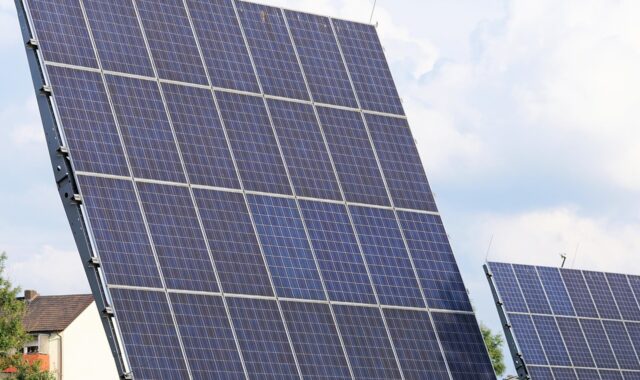
Solar PV has become the leading option for many distributed and utility-scale projects because it is modular, relatively quick to deploy and easier to site than many other generation technologies. The IEA’s 2025 renewable outlook says solar PV accounts for almost 80% of the expected global renewable capacity increase through 2030, driven by low costs, faster permitting in many markets and broad acceptance. That does not make solar suitable everywhere, but it explains why it is often the first technology screened. (iea.org)
For homes, the key questions are roof age, usable unshaded area, orientation, local retail electricity price, export compensation and whether the owner expects to add an EV or heat pump. A roof that needs replacement within a few years should usually be repaired before panels are installed. For commercial buildings, buyers should review structural capacity, insurance requirements, fire access pathways, roof warranty terms and the match between daytime load and expected production.
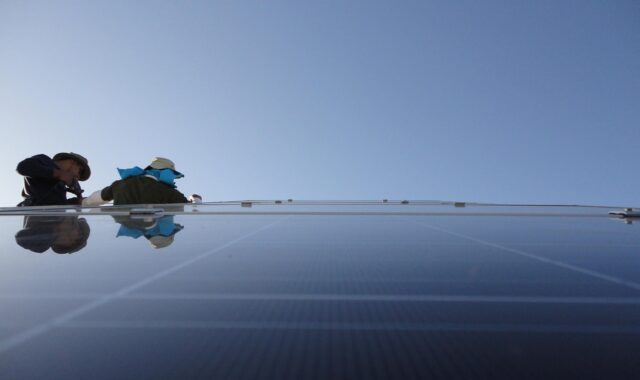
Solar also works beyond rooftops. Carports can generate power while shading parking areas. Ground-mounted arrays can serve farms, water facilities or campuses. Community solar may fit renters or owners without suitable roofs. Buyers should avoid assuming that a larger array is always better. If export credits are low, a system designed around on-site consumption may outperform a larger system that sends more electricity to the grid.
Solar’s main weakness is timing. It produces when sunlight is available, not necessarily when power is most valuable. That is why storage, demand response and rate design matter. In grids with high solar penetration, midday electricity can become less valuable, while evening power becomes more expensive. A useful proposal should show expected hourly production, not only annual kilowatt-hours.
Storage turns variable generation into usable energy
Energy storage is not a generation source, but it often determines how useful renewable generation becomes. The U.S. Department of Energy explains that storage can help match electricity supply and demand, improve resilience and support power quality. It also notes that storage systems differ in energy capacity and power capacity, two specifications that buyers should not confuse. (energy.gov)
Power capacity, usually measured in kilowatts or megawatts, describes how much electricity a battery can deliver at one time. Energy capacity, measured in kilowatt-hours or megawatt-hours, describes how long it can deliver. A battery sized to run a few critical loads for several hours is different from one designed to offset a whole facility for a day. Asking for “backup” without defining critical loads, duration and recharge assumptions leads to poor designs.
Battery economics depend heavily on tariffs. Under time-of-use rates, a battery can charge when solar output or grid electricity is cheaper and discharge when electricity is expensive. Under demand charges, it can reduce short peaks that drive monthly bills. Under outage planning, it can support refrigeration, communications, medical devices, lighting or pumps. Each value stream has different control settings, and using one battery for all purposes may require trade-offs.
Cost trends have improved the case for storage, but buyers should still examine warranties, cycle life, thermal management, fire safety, software controls and degradation assumptions. IRENA’s 2024 cost analysis reported a large long-term decline in battery storage costs from 2010 to 2024, but project economics still vary by market, duration, installation conditions and revenue model. (kenergia.it)
Wind, hydro, geothermal and biomass are more site-specific
Wind can be a strong renewable energy solution where the resource is proven and siting conditions are favorable. Onshore wind remains highly competitive in many utility-scale markets; IRENA’s 2024 review listed new utility-scale onshore wind at a global weighted average levelized cost of about USD 0.034 per kWh, below the reported average for new utility-scale solar PV. (kenergia.it)
Small wind needs a more cautious review. Turbulence from buildings, trees and terrain can reduce output. Towers, setbacks, sound rules, visual concerns and maintenance access can make a small project more complicated than a rooftop solar array. Buyers should ask for measured or modeled wind-speed data at hub height, realistic capacity-factor assumptions and a maintenance plan. See also: solar products.
Hydropower, geothermal and biomass can be excellent in the right place, but they are not general-purpose purchases. Hydropower depends on water rights, flow, environmental permits and seasonal conditions. Geothermal heat pumps can be practical for building heating and cooling where drilling or loop installation is feasible, while geothermal power generation requires much more specific underground resources. Biomass can fit agricultural, forestry or waste-processing operations, but fuel logistics, air rules and feedstock quality are central to the business case.
The broader grid picture also shows why diversity matters. The IEA’s 2025 mid-year electricity update described hydropower as the largest renewable source of global electricity supply, but also noted that drought conditions can affect output in individual regions. Wind and solar are expanding quickly, but they vary with weather and time of day. (iea.org)
Microgrids and renewable procurement solve different problems
A microgrid combines generation, storage, controls and loads so a defined site can operate with the grid or, when designed for it, independently during an outage. It is usually considered when reliability has a high value: hospitals, emergency shelters, water systems, campuses, remote communities, cold storage facilities and critical communications sites. A microgrid can include solar, batteries, wind, generators, demand controls or combined heat and power, but the core purchase is really the control architecture and operating strategy.
The National Renewable Energy Laboratory describes microgrid and energy-system optimization as a way to identify mixes of renewable energy, conventional generation, storage and electrification technologies that meet cost, resilience, emissions and performance goals. That framing is useful for buyers because it avoids treating a microgrid as a single product. (nrel.gov)
Renewable procurement is different. A business may buy renewable electricity through a green tariff, community solar subscription, virtual power purchase agreement or renewable energy certificates. These approaches can support emissions accounting or price-hedging goals when on-site generation is limited. They may be especially relevant for leased buildings, dense urban sites or facilities with shaded roofs. The limitation is physical: procurement does not automatically protect the site from local distribution outages.
Buyers should also be careful with environmental claims. If a project sells its renewable energy certificates, the electricity may still be physically renewable, but the buyer may not be able to claim the associated renewable attributes. Contract language matters, and organizations with public sustainability targets should align procurement with their reporting standard before signing.
A practical buying checklist
Before requesting bids, buyers can reduce risk by preparing a concise project brief. A strong brief helps installers, developers and consultants compare the same facts instead of filling gaps with assumptions.
- Define the goal: bill savings, resilience, emissions reduction, energy independence or a mix.
- Collect at least 12 months of utility bills and, where available, 15-minute or hourly interval data.
- Identify future load changes such as EV charging, heat pumps, production growth or data equipment.
- List critical loads for backup and the required outage duration.
- Check roof age, structural limits, electrical room space, land availability and access constraints.
- Review tariffs, demand charges, net metering or export compensation, and interconnection rules.
- Ask bidders to show annual and seasonal output, not only headline system size.
- Compare warranties for panels, inverters, batteries, workmanship and monitoring software.
- Confirm who owns renewable energy credits and who can make environmental claims.
- Plan for operations, maintenance, cybersecurity for connected controls and end-of-life recycling.
The best proposal is not always the lowest upfront price. A higher-quality bid may include better monitoring, a clearer backup design, safer battery integration, realistic production assumptions and stronger maintenance terms. Buyers should ask each provider to show assumptions for degradation, utility rate escalation, export value and equipment replacement. If those assumptions are hidden, projected payback should be treated with caution.
Frequently asked questions
What is the most common renewable energy solution for homes?
For grid-connected homes, rooftop solar PV is usually the most common starting point because it is modular and widely available. Battery storage becomes more attractive when the homeowner faces outages, time-of-use rates, low export compensation or a need to support critical loads.
Is solar plus storage better than solar alone?
Solar plus storage is better when the buyer needs backup power, wants to shift solar energy into evening hours or can reduce demand charges. Solar alone may still be more cost-effective when retail electricity prices are high, export compensation is fair and outage resilience is not a priority.
Can a business use renewable energy without owning equipment?
Yes. Businesses can consider leases, power purchase agreements, green tariffs, community solar or renewable energy certificates. These options can reduce upfront capital needs, but contract terms determine savings, claims and risk allocation.
Do renewable systems work during a blackout?
Not automatically. Standard grid-tied solar systems usually shut down during an outage for safety. Backup operation requires equipment designed for islanding, such as a suitable inverter, battery storage, transfer equipment and a critical-load panel or microgrid controls.
What should buyers compare first in renewable energy quotes?
Compare the scope before comparing price. Check system size, expected annual and seasonal output, battery duration, backup loads, warranties, maintenance, monitoring, financing terms, interconnection responsibility and ownership of renewable energy credits.
Bottom line
Renewable energy buying decisions are becoming more practical, but they are also more integrated. Solar PV may be the entry point, batteries may unlock timing and resilience value, wind may fit resource-rich sites, and procurement may serve buyers without good on-site options. The strongest solution is the one designed around the site’s actual load, risk profile and financial rules. Start with data, define the goal, compare technology combinations and demand transparent assumptions before signing a contract.